
 Available in US
Content

My favourite prop bet of all time landed during a rain-soaked Premiership match in December 2021. I had backed over 4.5 penalties kicked at goal, reasoning that the wet conditions would produce more infringements near the posts and fewer tries in open play. Both fly-halves obliged with metronomic precision from the tee, and the bet settled comfortably by the 55th minute. That is what prop betting rewards: specific knowledge about specific aspects of the game that mainstream markets do not capture.
Proposition bets — “props” or “specials” — cover everything outside the standard match result, handicap and totals markets. They range from the straightforward (total conversions, total cards) to the genuinely exotic (shirt number of the first try scorer, exact winning margin band). The Six Nations 2025 delivered 108 tries in 15 matches, plus hundreds of penalties, conversions, cards and scrums — every one of those events is a potential prop market, and the bookmaker’s attention is spread thinnest at the edges of their market offering.
Popular Rugby Prop Markets
Walk into any sportsbook’s rugby section on a Saturday and the first tier of props you will find covers total tries, total conversions, and first scoring method. These are effectively extensions of the main markets — they draw from the same underlying match dynamics — but they frame the question differently enough to produce distinct pricing.
Total tries in a match is the prop that most closely mirrors the over/under market. If the total points line is set at 44.5, the implied try count sits around four to five, depending on how many penalties and drop goals the bookmaker expects. But the tries-specific market often prices slightly differently from what the totals line implies, because the composition of scoring matters. A match decided by penalty kicks produces a low try count despite potentially high total points. The Six Nations 2025 averaged 7.2 tries per match alongside 55 total points per match — those numbers do not always move in lockstep, and spotting when they diverge is where the value lives.
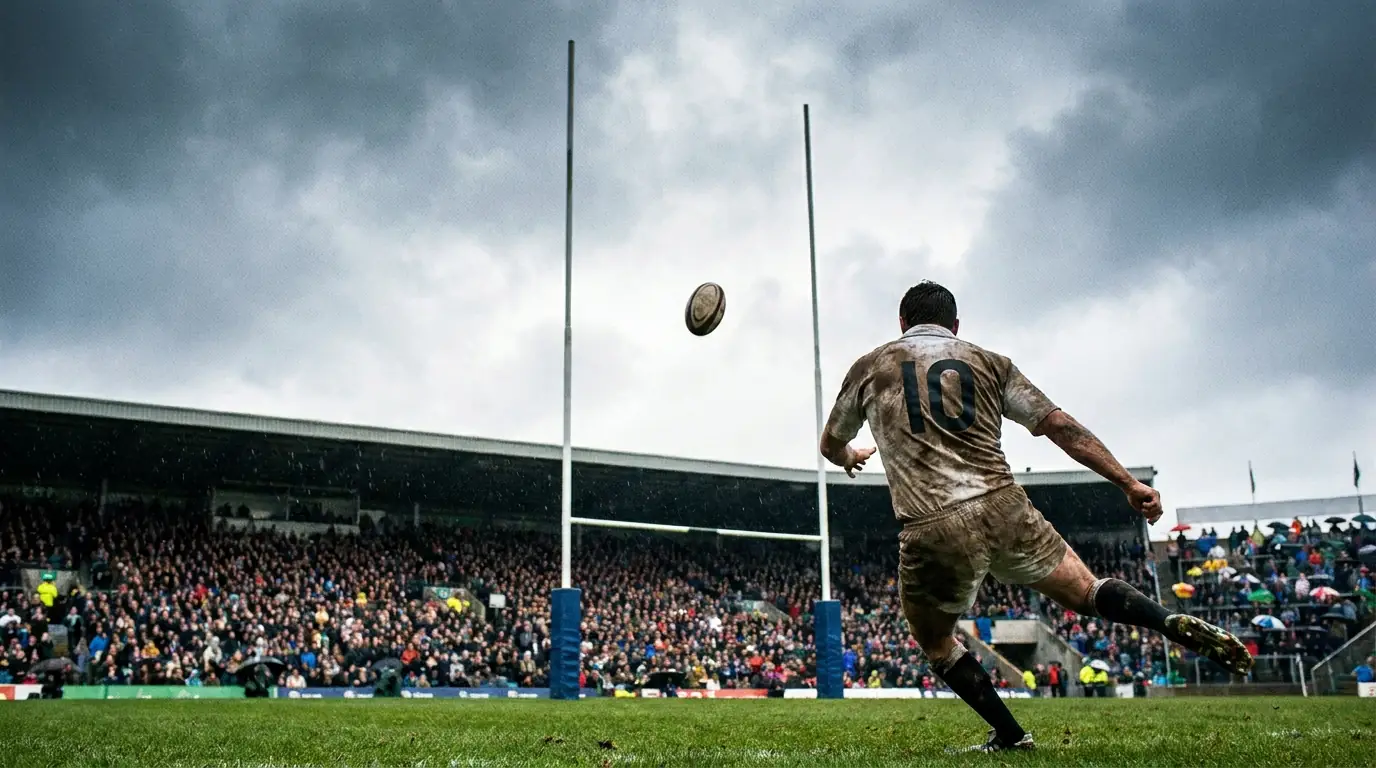
Man of the match is another popular prop, though I approach it cautiously. The outcome depends on a subjective award, often influenced by the narrative of the match rather than raw statistical performance. A fly-half who kicks the winning penalty from halfway in the 79th minute will claim the award over a flanker who made 25 tackles and carried 80 metres. Pricing subjectivity is inherently harder than pricing measurable outcomes, which is why I generally avoid this market unless there is a clear statistical outlier in the running.
Conversion Kick Markets
Conversion kick markets are one of the quieter corners of rugby betting, and that lack of attention from the broader punting public creates genuine inefficiencies. The market typically offers over/under on total successful conversions, total missed conversions, and occasionally a head-to-head between the two starting kickers on conversion percentage.

What makes this market interesting is the predictability of kicking data. A fly-half’s goal-kicking percentage across a season is one of the most stable metrics in professional rugby — the best kickers convert at 80-85% consistently, while average kickers sit around 70-75%. The variable is not the kicker’s ability but the positions from which tries are scored. Tries under the posts produce easy conversions; tries in the corner require far more difficult kicks from wide angles. A team that scores through driving mauls (central tries) will produce higher conversion rates than a team that finishes through their wings (wide tries).
I cross-reference each team’s typical try-scoring locations with their kicker’s wide-angle accuracy. If a team scores predominantly on the flanks and their kicker converts at just 65% from wide, the under on total conversions becomes attractive. This is especially relevant in matches where the appointed referee tends to produce high penalty counts, as more penalties mean more kicks at goal from tee positions the kicker can choose — inflating the total kicked goals but not necessarily the conversions.
Card and Penalty Markets
Total cards (yellow and red combined) is the prop market where referee data matters most. Each professional rugby referee has a measurable tendency towards card frequency — some average 1.2 cards per match, others sit closer to 0.4 — and these tendencies are remarkably consistent across seasons. The prop market prices an average, but the variance between referees is wide enough that knowing who is officiating gives you a meaningful edge.
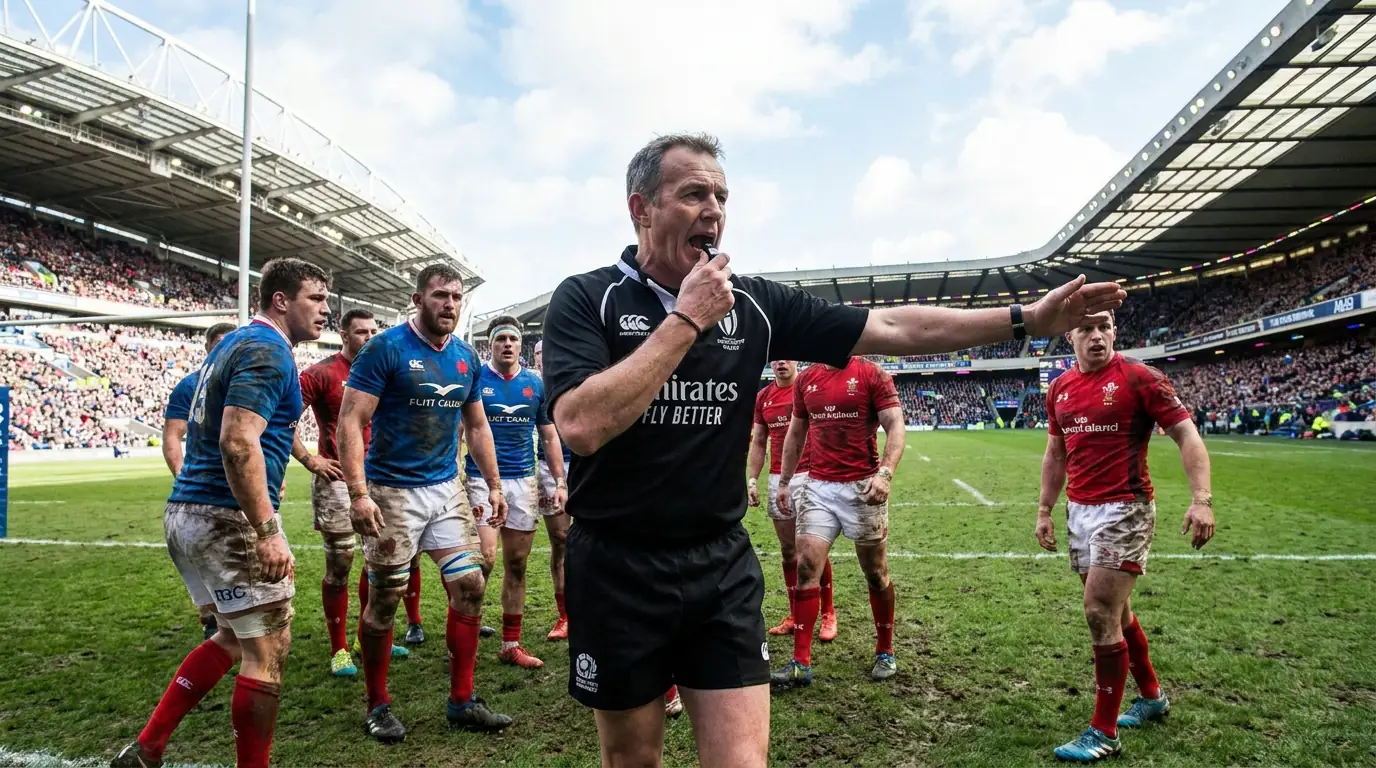
Total penalties is a related but distinct market. High-penalty referees do not always produce high-card outcomes, because the threshold between blowing a penalty and reaching for a card involves a judgement call that varies by individual. I track penalty counts per referee per competition because domestic and international fixtures produce different baseline rates — the Six Nations, with its Test-match intensity and the scrutiny of multiple TMO angles, tends to produce higher penalty counts than club fixtures officiated by the same referee.
One practical approach: check the referee appointment (usually announced 48-72 hours before kick-off), pull their last 10 matches in the same competition, and calculate the average penalty count. If the prop line is more than two penalties away from that average, there is a bet worth considering.
Finding Edges in Prop Markets
Prop markets carry wider margins than main markets. The bookmaker knows that fewer punters scrutinise the data behind props, so they embed a larger cushion. The average overround in Six Nations 2025 was 55 points per match, and the data environment was rich enough that props based on scoring composition offered multiple angles per fixture.
The edge in props comes from specificity. The more niche the market, the less attention the bookmaker’s trading desk gives it, and the more likely the price reflects a generic model rather than match-specific analysis. Shirt number betting — backing the total shirt numbers of try scorers to be over or under a certain figure — sounds absurd, but it rewards anyone who understands which positions score tries. If wings (11, 14) and the full-back (15) are the likeliest scorers, the total shirt number of try scorers will skew high. If back-row forwards (6, 7, 8) dominate from mauls, it will skew low. The bookmaker prices the average; you price the match.
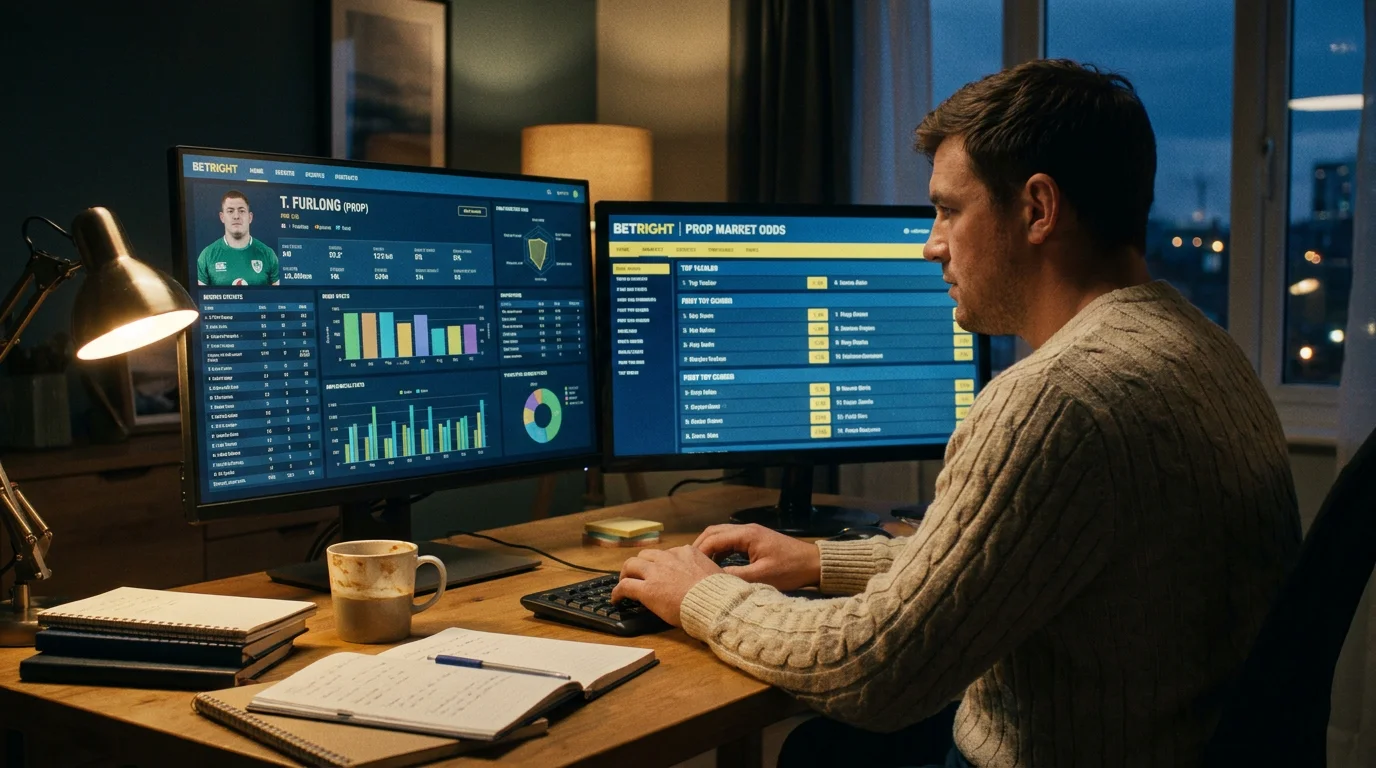
Prop betting is not about volume. I might place one or two prop bets per weekend, only when I have identified a specific data-driven angle that the general market is unlikely to share. The hit rate is lower than match result or handicap betting, but the odds are longer, and over a season the returns from a disciplined prop approach contribute meaningfully to the overall portfolio.
What is shirt number betting in rugby?
Shirt number betting involves wagering on the total shirt numbers of try scorers in a match. If a player wearing number 11 and a player wearing number 8 score, the total is 19. The bookmaker sets an over/under line, and you bet on whether the actual total will be higher or lower. Since backs (higher numbers) score more frequently than forwards (lower numbers), the market tends to set the line in the mid-to-high range.
Are rugby prop bet odds less competitive than main markets?
Prop markets typically carry wider overrounds than match result or handicap markets, meaning the bookmaker takes a larger percentage. This is partly because lower betting volume on props gives bookmakers less incentive to sharpen prices. However, the wider margins also mean less precise pricing, which creates more opportunities for punters who analyse the specific data behind each prop.
