
 Available in US
Content
- Pre-Match Research: Building the Foundation Before You Bet
- Value Identification: When the Odds Are in Your Favour
- Reading Line Signals: What Odds Movement Actually Tells You
- Form and Injuries: The Variables That Move Markets Overnight
- Timing Your Bets: Early Bird or Last Minute?
- Tournament-Specific Angles That Generic Tips Miss
- Cognitive Traps: The Biases That Quietly Drain Your Bankroll
- Record-Keeping: The Habit That Separates Punters From Gamblers

I spent my first two years betting on rugby following tipsters. I would check three or four sites every Friday, aggregate their picks, and place my bets based on consensus. My results were mediocre at best — hovering around break-even after accounting for the time I invested. The turning point came when I stopped asking “what should I bet on?” and started asking “how do I figure out what to bet on?” That shift from consumption to analysis changed everything.
The UK processes approximately 290 million online bets on real events every single month. Most of those bets lose. The minority that win consistently do so not because they have better luck or better tipsters, but because they have a framework — a systematic process for identifying when the odds on offer exceed the actual probability of an outcome. That framework is what this article is about. Not tips in the conventional sense — not “back France this weekend” — but the analytical approach that produces consistently better decisions across every fixture and every market.
What I am sharing here is the process I have built over more than a decade of betting on rugby. It is not the only valid process, but it is tested, it is repeatable, and it works for me. The principles apply whether you bet on the Six Nations, the Premiership, European competition, or any other rugby fixture.
Pre-Match Research: Building the Foundation Before You Bet
There is a statistic that stays with me every time I sit down to analyse a match: international rugby generates roughly $12 million in revenue per Test match, while the leading club tournaments produce only $1-2 million per fixture. That gap reflects something important — the amount of attention, money, and analytical resource that flows into different levels of the game varies enormously. And where attention varies, so does the quality of the odds.
Pre-match research is not about reading everything available. It is about identifying the specific variables that are most likely to influence the outcome and focusing your energy there. For rugby, those variables fall into five categories: team form over the last four to six matches, squad selection and injury news, head-to-head record between the two sides, venue and conditions, and tactical matchups between the coaching staffs.
Team form is the most obvious input, but it demands nuance. A team that has won three of their last four matches is in good form — unless two of those wins were against significantly weaker opposition and the single loss was a close defeat against a side of similar quality. Context matters. I weight recent results by opponent strength, using a rough Elo-type rating system that accounts for whether the result was home or away. This is not a complex model; it is a simple adjustment that prevents you from overvaluing wins against weak sides or penalising narrow defeats against strong ones.
Six Nations TV audiences regularly exceed five million per match, dwarfing the 250,000 to 350,000 that tune in for Premiership fixtures. This disparity in attention means international matches are more thoroughly analysed by the public and the media — which, paradoxically, can make them harder to find value in. Club rugby, where the public spotlight is dimmer and data is less widely disseminated, sometimes offers edges that persist longer because fewer people are looking for them.
Squad announcements are a critical trigger. In rugby, unlike football, the team is typically named 48 hours before kick-off, and the composition of the starting XV can significantly alter the tactical profile of the match. A team missing their first-choice fly-half or scrum-half is a fundamentally different proposition, and the odds do not always adjust fully in the window between the announcement and kick-off. I schedule my final pre-match assessment for the hours immediately after squad announcements, when the market is still digesting the information.

Value Identification: When the Odds Are in Your Favour
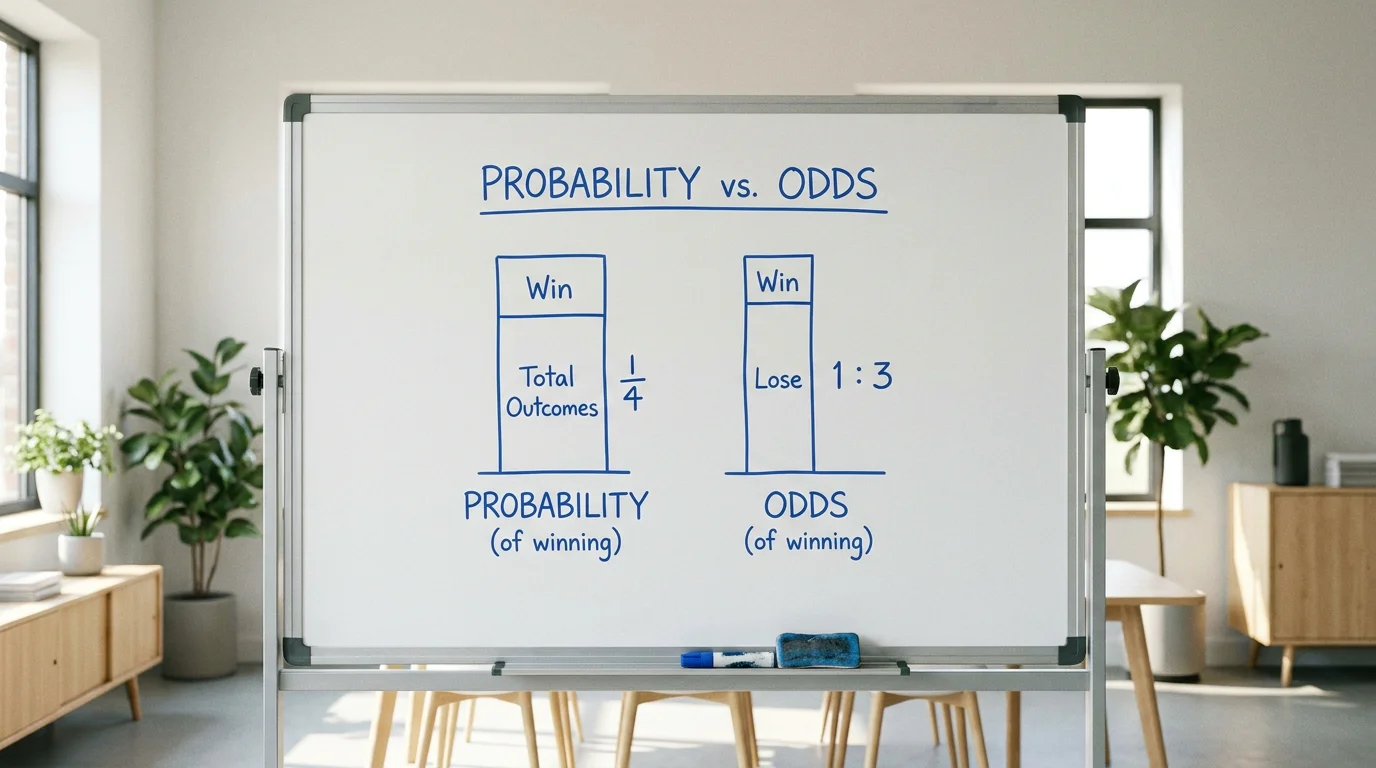
Value is the single most important concept in betting, and it is also the most misunderstood. Finding value does not mean backing underdogs. It means identifying situations where the probability you assign to an outcome is higher than the probability implied by the bookmaker’s odds. If you believe a team has a 55% chance of winning and the odds imply only a 45% chance, that is a value bet regardless of whether the team is favourite or underdog.
The mathematics of value betting are straightforward once you understand implied probability. Decimal odds of 2.50 imply a 40% probability. If your analysis puts the true probability at 50%, the expected value on that bet is positive. The challenge is not in the calculation — it is in the accuracy of your probability estimate. And this is where most punters fall short. They either do not estimate probabilities at all, relying instead on gut feeling, or they estimate them poorly because their analysis is superficial.
My approach to value identification is comparative. I build my own prices for each match — a rough set of odds based on my analysis — before I look at the bookmaker’s prices. I do this deliberately to avoid anchoring to the market. If I see the bookmaker’s odds first, my own assessment is unconsciously pulled towards those numbers. By setting my prices blind, I get a cleaner comparison. The matches where my prices diverge most significantly from the bookmaker’s are the matches where I concentrate my betting activity. The matches where we broadly agree are the ones I skip.
This process requires discipline. In any given Six Nations round, I might analyse all three matches and conclude that only one of them offers a value opportunity. The temptation to bet on all three — because you have done the work and you are watching them anyway — is real. Resist it. Betting without value is entertainment, not strategy.
Reading Line Signals: What Odds Movement Actually Tells You
I check odds movement at three specific points: when the market opens, after squad announcements, and in the final hour before kick-off. Each snapshot tells me something different about where the money is flowing and what the market believes has changed.
Odds movement — when the price on a selection drifts or shortens between opening and kick-off — is a signal, not a verdict. Shortening odds mean money is flowing towards that outcome, which could indicate informed bettors who have identified value, or it could simply mean a popular team is attracting casual money. The distinction matters. A price that shortens rapidly in the final hour before kick-off, when the professional and semi-professional bettors are placing their bets, is a stronger signal than a price that shortens gradually over several days as public money accumulates.
Drifting odds — where a price moves out from its opening position — are equally informative. If a team opens at 4/5 and drifts to 11/10, the market is telling you that the initial assessment was too generous. This could reflect injury news, weather changes, or simply a rebalancing of the bookmaker’s book. I pay particular attention to drift that occurs after squad announcements, because it often reflects specific personnel concerns that the opening odds did not account for.
The critical thing is to use line movement as an input to your analysis, not as a substitute for it. Chasing steam — blindly following the direction of odds movement — is a losing strategy over time because you are always reacting after the sharpest bettors have already moved the line. Your edge comes from having your own assessment and using line movement to confirm or challenge it, not from outsourcing your thinking to the market.

Form and Injuries: The Variables That Move Markets Overnight
When the 2025 Six Nations opened, one particular squad announcement reshaped an entire weekend’s betting landscape. A key fly-half was ruled out through injury, and the replacement had two caps to his name. The match result odds shifted by nearly a full point within an hour. I had already done my analysis assuming the first-choice squad, so I had to re-run my numbers quickly — but the market moved faster than most punters could react.
Form and injury data are the two variables that change most rapidly in the days before a rugby match, and they are the two variables that have the most direct impact on the odds. A team’s form guide tells you how they are playing right now — their patterns, their confidence level, their defensive solidity. Injuries tell you whether the players executing those patterns will actually be on the pitch.
The Six Nations in 2025 produced 108 tries in 15 matches, but that average masked huge variation driven partly by selection. Matches where both sides fielded full-strength lineups tended to be tighter and lower-scoring. Matches where one side was depleted through injury tended to produce wider margins and more tries. The same pattern holds in the Premiership and in European competition: the gap between a team at full strength and a team missing two or three key players is larger in rugby than in most sports, because the game’s physical demands mean that individual quality in the forward pack and at half-back has an outsized influence on the match.
I track injury updates from official club and union sources, not from social media speculation. The final team sheet, released at the deadline set by the competition’s regulations, is the authoritative document. Everything before that is a probability, not a certainty. I factor injury risk into my pre-match assessment as a range — “there is a 70% chance this player starts” — rather than a binary outcome, and I adjust my prices accordingly.

Timing Your Bets: Early Bird or Last Minute?
There is no single “best time” to place a rugby bet, but there is a best time for different types of bets. I operate on a simple framework: outright and futures bets go on early, when the prices are longest and the uncertainty is highest. Match-level bets go on late, after squad announcements and as close to kick-off as my schedule allows.
The logic is straightforward. Outright markets are priced with maximum uncertainty at the point of opening. The bookmaker does not know which players will be fit for the tournament, how pre-season form will translate, or what tactical innovations the coaches have been working on. That uncertainty is reflected in longer prices. As the tournament progresses and information becomes available, the prices adjust — usually shortening on the strong contenders and drifting on the weaker ones. By getting on early, you lock in the value that uncertainty creates.
Match-level bets benefit from the opposite approach. The more information you have, the more accurate your assessment. Waiting until after squad announcements gives you the fullest picture of who will actually be playing. Waiting until the final hour before kick-off gives you the benefit of weather updates and any late changes. The trade-off is that the odds at kick-off are typically sharper than the early prices because the market has incorporated all the same information. But I would rather bet at a slightly shorter price with a more accurate assessment than at a longer price based on incomplete information.
Tournament-Specific Angles That Generic Tips Miss
Generic rugby tips — “back the team with better form,” “take the under in bad weather” — are not wrong, but they are not enough. Each competition has its own structural characteristics that create specific betting angles, and ignoring those characteristics means leaving value on the table.
The Six Nations, with its 55 points per match average in 2025 and its concentrated format, rewards totals and handicap specialists who understand fixture-level scoring patterns. The Premiership, with its 22-round regular season and play-off structure, rewards outright bettors who can identify mid-season form trends before the market reacts. European competition, where teams from different domestic leagues meet in cross-border fixtures, rewards the punter who can accurately assess relative strength across leagues that rarely play each other.
The structural angle I return to most often is the revenue gap in rugby. Test matches generate roughly $12 million per fixture, dwarfing the $1-2 million per match in club competition. This gap means that international fixtures attract disproportionate public attention and betting volume, which in turn makes those markets more efficient. Club rugby — particularly mid-table Premiership fixtures or early-round European games — attracts less scrutiny, and the odds are correspondingly less sharp. If you are looking for edges, the fixtures with the smallest audience and the least media coverage are often the best hunting ground.
Cognitive Traps: The Biases That Quietly Drain Your Bankroll
Mark Oliver, a leading sports industry analyst, once observed that rugby is simply not moving fast enough — competitors from UFC to F1 and cricket have innovated and left it behind. The same criticism applies to how many rugby punters think about their betting. They rely on the same mental shortcuts they used years ago, without updating their framework for a sport and a betting market that have both evolved significantly.
Confirmation bias is the trap I catch myself falling into most often. If I have identified a team as a value bet for the season, I will unconsciously seek out information that supports that view and dismiss data that contradicts it. The antidote is simple but uncomfortable: before finalising any bet, I spend five minutes deliberately arguing the opposite case. If I cannot construct a plausible scenario where my bet loses, I have not done enough analysis — I have just looked for reasons to believe what I already believe.
Anchoring is another persistent issue. The first piece of data you encounter about a match — often the opening odds — becomes an anchor that pulls your subsequent analysis towards it. If the opening handicap line is -14.5, your brain treats that as the starting point for adjustment rather than building your own assessment from scratch. This is why I set my own prices before looking at the market. It takes more effort, but it produces cleaner thinking.
Availability bias — overweighting information that is vivid, recent, or emotionally charged — is particularly dangerous in rugby betting. The global rugby audience exceeds 800 million people who show some interest in the sport, yet only 24 million are deeply engaged “superfans” of professional club rugby. Most casual bettors are forming opinions from a tiny sample of high-profile matches they actually watched, not from a systematic analysis of the broader data. If the last match you watched featured a spectacular comeback, your brain will overestimate the probability of another comeback in the next match. The data does not support that — it supports the long-term averages. Trust the data, not the highlight reel.

Record-Keeping: The Habit That Separates Punters From Gamblers
The single best piece of advice I ever received about betting came from a grizzled punter I met at Twickenham during the 2016 Autumn Internationals. He asked me a simple question: “What was your ROI last season?” I could not answer it. I had a vague sense that I was profitable, but I had no actual data to support that belief. He told me to go home and start a spreadsheet, and not to place another bet until I had one. I did, and it changed my approach entirely.
Record-keeping is not optional for anyone who takes rugby betting seriously. At a minimum, you need to track: the date, the fixture, the market, the selection, the odds, the stake, and the result. From those basic fields, you can calculate your profit and loss, your ROI per market type, your ROI per competition, and your strike rate. These numbers are the only objective measure of whether your betting is working. Everything else — your confidence, your intuition, your memory of that brilliant accumulator that landed in March — is unreliable.
I review my records at the end of every month during the season and at the end of each tournament. The monthly review checks whether I am on track. The tournament review asks deeper questions: which markets performed best? Where did I lose money consistently? Were there patterns in my losing bets — overconfidence on certain teams, poor timing, markets I should not have been betting at all? The answers to those questions shape how I adjust my approach for the next block of fixtures.

Record-keeping also protects against self-deception. The human memory is not a reliable database — it selectively remembers wins and forgets losses. Your spreadsheet does not have that problem. It tells you the truth, even when the truth is uncomfortable. And that truth is the foundation on which you build a better process.
How far in advance should I place rugby bets?
It depends on the market type. Outright and futures bets benefit from early placement when prices are longest. Match-level bets are best placed after squad announcements, typically 48 hours before kick-off, when you have the fullest picture of team selection and conditions. Placing match bets weeks in advance means you are absorbing unnecessary uncertainty without being compensated for it in the odds.
What should a pre-match analysis checklist include beyond statistics?
A complete pre-match checklist covers team form weighted by opponent strength, confirmed squad selection with any late changes, head-to-head record between the two sides at the specific venue, weather forecast and ground conditions, the referee appointment and their historical penalty patterns, and the tournament context — whether the match is a dead rubber, a title decider, or a routine fixture. Statistics inform several of these areas, but the checklist as a whole captures qualitative factors that numbers alone miss.
How do squad announcements affect rugby betting lines?
Squad announcements are one of the most significant triggers for odds movement in rugby. The exclusion of a key player — particularly a fly-half, scrum-half, or front-row forward — can shift match result odds by a full point or more. The market reacts quickly but not always efficiently, especially for less prominent players whose impact is not widely appreciated by casual bettors. The window between squad announcement and kick-off is one of the most fertile periods for finding mispriced odds.
Should I follow tipsters or build my own rugby analysis?
Building your own analysis is more sustainable in the long term. Tipsters can provide useful starting points, but their recommendations are based on their assessment of value, which may not match your risk tolerance, bankroll, or market focus. Following tipsters without understanding their reasoning also prevents you from learning and improving. The most effective approach is to develop your own framework and use tipster opinions as one input among many, not as the sole basis for your bets.
