
 Available in US
Content
- How the Six Nations Works and Why Its Format Matters for Betting
- Scoring Trends That Shape the Odds Year After Year
- Team Profiles: What the Data Says About Each Nation in 2026
- The Markets That Matter Most During the Championship
- Home Advantage: The Numbers Behind the Fortress Effect
- Round-by-Round Betting: How Odds Shift as the Tournament Unfolds
- Audience Size, Broadcast Reach and Their Ripple Effect on Markets
- What Historical Odds Movements Reveal About Six Nations Value
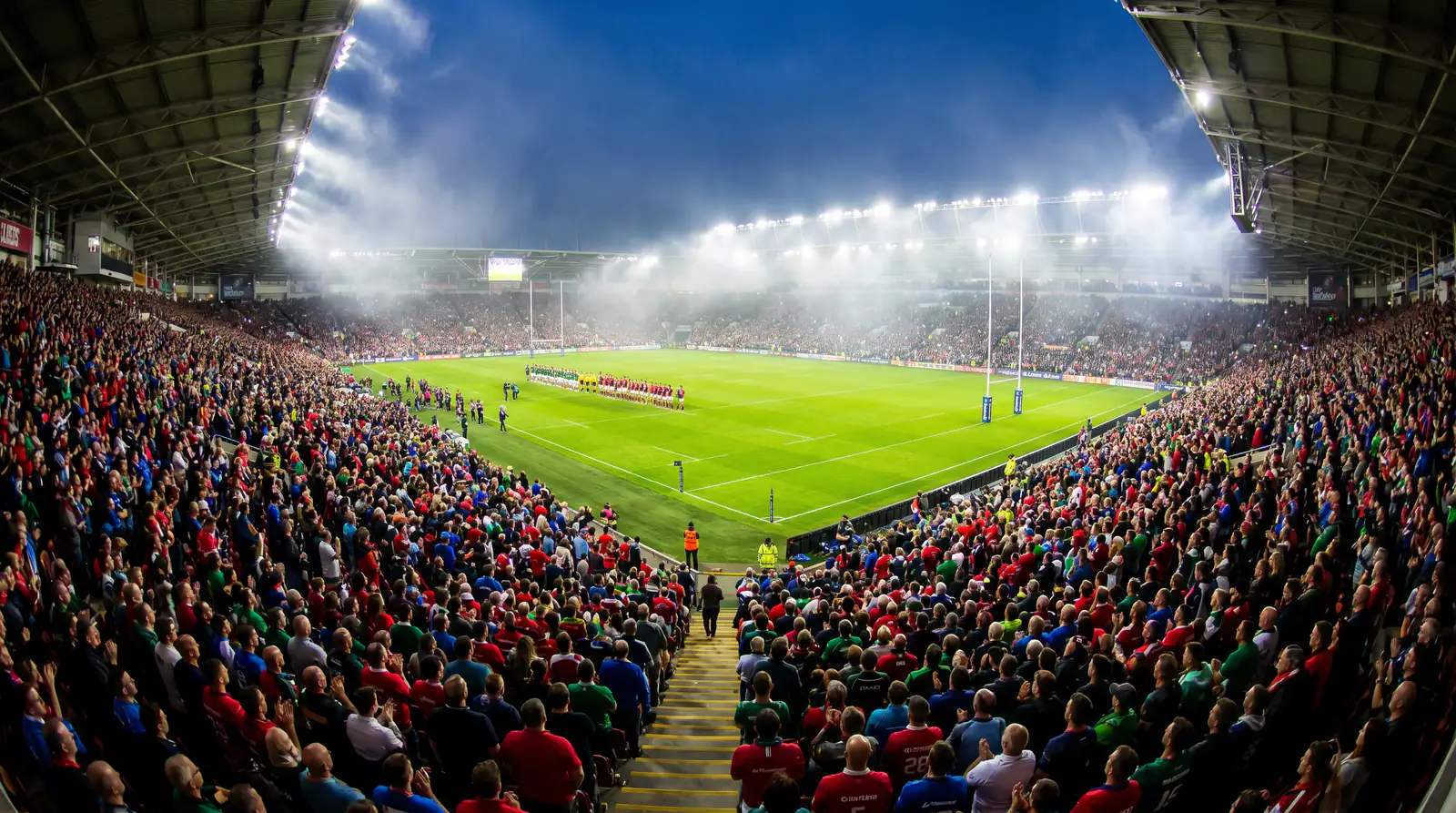
The first time I watched Six Nations betting odds open for a new tournament, I felt like a kid in a sweet shop with a spreadsheet. There were 15 matches to pick apart, outright markets running alongside individual fixtures, and data from decades of championship history to mine. That feeling has not faded. The Six Nations remains, hands down, the most exciting betting tournament on the rugby calendar — and one of the most analytically rewarding in all of sport.
The 2025 edition delivered 108 tries across its 15 matches — an average of 7.2 per game — with over a million supporters turning up across the five host stadia. In 2026, that figure ticked up to 111 tries at 7.4 per match. These are not static numbers. They tell a story about how the championship is evolving, how teams are playing, and where the betting value sits in any given year. If you approach the Six Nations without understanding its scoring patterns, its structural quirks, and its historical tendencies, you are handing money to the bookmaker before the anthems have even started.
I have been betting on the Six Nations since 2012, and I have developed a framework that I refine every year. What follows is not a set of predictions — it is a method for reading the tournament and finding opportunities that the broader market undervalues.
How the Six Nations Works and Why Its Format Matters for Betting
Every year, new punters approach the Six Nations as if it were a simple round-robin — and every year, the structure catches them out. Yes, each team plays five matches over seven weekends. Yes, the team with the most championship points wins the title. But the specifics of how those matches are arranged, and what happens when points are level, make the structure far more important for betting than a quick glance suggests.
The fixture schedule alternates home and away advantage annually. A team that plays three home matches one year gets only two the following year. This is not trivial — it fundamentally shifts the balance of the tournament. A side playing at Twickenham, the Aviva Stadium, or the Stade de France in three of their five matches has a measurably different tournament profile from the same side with only two home fixtures. When you see outright odds that look too generous for a traditionally strong side, check whether this is their away-heavy year. It often explains the price.
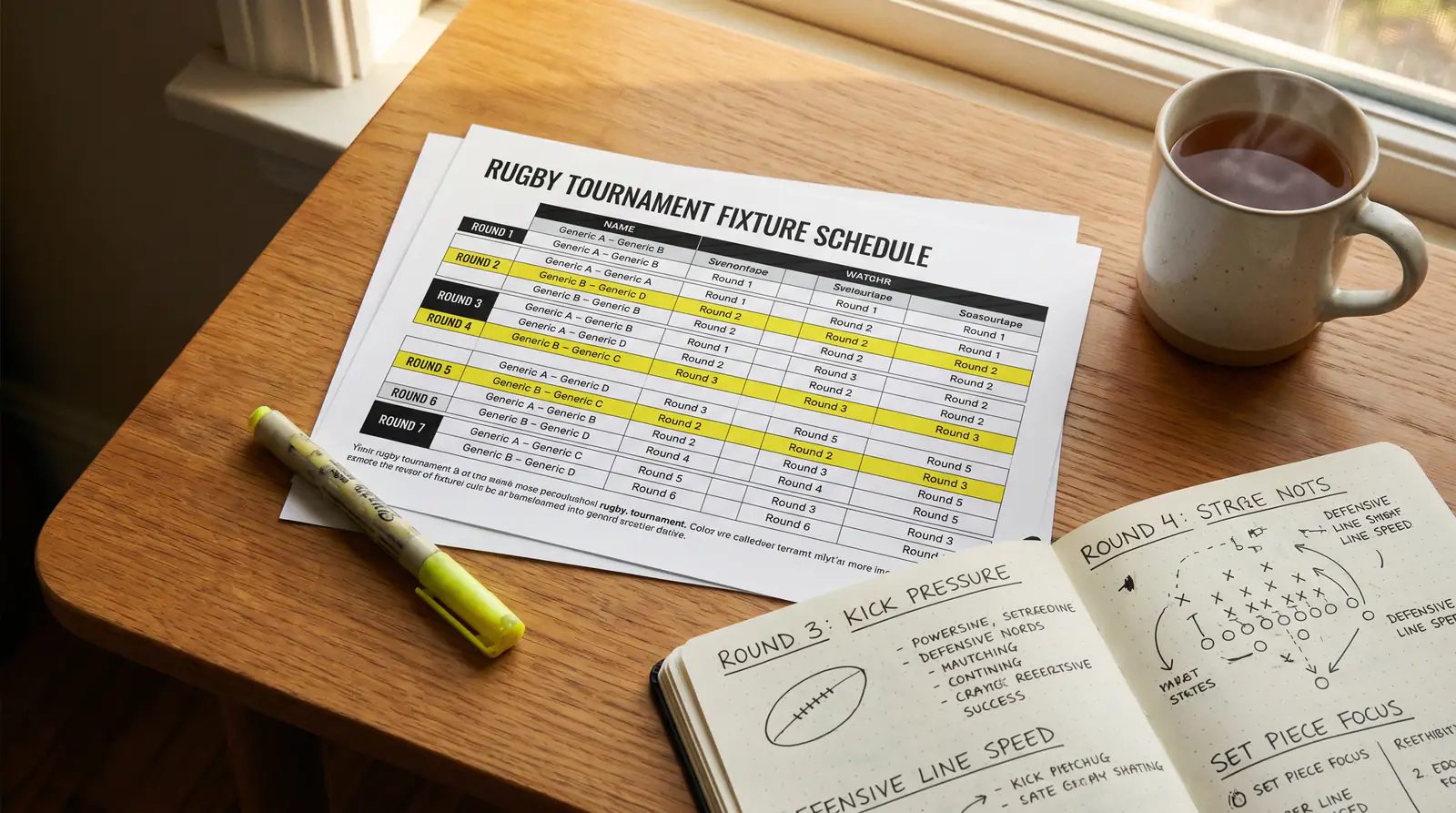
Bonus points add another layer. A team earns a bonus point for scoring four or more tries in a match, and a losing bonus point is available for sides defeated by seven or fewer points. These incentives shape how teams approach the final quarter of a match. A side leading comfortably with three tries will push for a fourth; a side trailing by a single score will take risks to stay within the seven-point margin. Both behaviours create in-play opportunities and affect final scorelines in ways that totals and handicap bettors need to account for.
The Grand Slam — winning all five matches — is a separate outright market. Historically, Grand Slams are rare enough that the prices reflect genuine risk, but bookmakers tend to adjust them sluggishly as the tournament progresses. A side that wins their first two games may see their Grand Slam odds shorten dramatically, even if the remaining three fixtures include away trips to their toughest opponents. This is where a clear-eyed assessment of the remaining schedule beats the narrative-driven pricing.
Scoring Trends That Shape the Odds Year After Year
I keep a simple spreadsheet that tracks Six Nations scoring data going back to 2015. Every year, I update it after the final round, and every year, the patterns tell me something useful. The numbers are not predictions — they are boundaries. They tell you what is normal, what is unusual, and where the bookmaker’s line sits relative to actual scoring history.
The 2025 tournament averaged 55 points per match — a figure that aligns with the broader upward trend in Six Nations scoring over the past decade. France were the dominant attacking force that year, putting up 218 points across their five fixtures. In 2026, France again led the way en route to their 20th championship title, with 111 tries shared across the tournament at 7.4 per match. But these tournament-wide averages obscure the variation between fixtures. France versus Italy routinely produces 60-plus combined points, while Ireland versus England or Wales versus France tend to be tighter, more tactical affairs that sit well below the tournament average.
This is where fixture-level analysis matters. When a bookmaker sets an over/under line for a Six Nations match, they are balancing the tournament average against fixture-specific history. If you know that England versus Ireland has averaged 38 points per game over the last five editions, and the line is set at 44.5, you have a directional lean before you have even considered current form. Combine that historical fixture data with information about team selection, tactical approach, and weather conditions, and you have a much sharper read on the totals market than someone who just looks at the tournament average and guesses.

Try-scoring trends also vary by round. Opening weekend fixtures tend to be cagier — teams are finding their rhythm, combinations are still bedding in, and coaches are cautious about early mistakes. By Rounds 4 and 5, when the championship standings are taking shape and some teams are playing for pride while others are pushing for the title, try counts tend to rise. I weight my totals positions accordingly: slightly under-biased in Round 1, slightly over-biased in the closing rounds.
Team Profiles: What the Data Says About Each Nation in 2026
I once lost a season’s worth of Six Nations profit by treating Ireland as a lock in 2023. They were the best team in the world — ranked number one, playing expansive rugby, winning at home and away. I went heavy on Ireland in the outright market and across individual fixtures. They won the Grand Slam that year, and I felt vindicated. Then I replicated the approach the following year, and the margins narrowed. The lesson was not that Ireland were bad — they were still excellent — but that the market had caught up. The value that existed at 3/1 before the 2023 tournament was nowhere to be found at 6/4 the next year.
Team profiles in the Six Nations shift gradually. France claimed their 20th title in 2026, confirming a multi-year resurgence built on extraordinary depth and a home-grown generation of talent. Their scoring output has been consistently high — they topped the points charts in 2025 with 218 — and they play an attacking style that translates into over-friendly betting profiles. But the market knows this, and France’s match odds often reflect their strength accurately, leaving less room for value.
England operate in cycles. Their home record tends to be strong — Twickenham is one of the most imposing venues in world rugby — but their away form fluctuates with squad transitions and coaching changes. Wales have been in a rebuilding phase, which means their odds drift longer and occasionally overshoot, creating value on the other side of the handicap when they play at home. Scotland are an intriguing proposition: competitive enough to beat anyone on their day at Murrayfield, inconsistent enough that the market struggles to price them accurately. Italy have improved markedly in recent years — they are no longer the guaranteed bonus-point win they once were — but the market still prices them as underdogs in every fixture, which sometimes overestimates the gap.
The profile that matters for betting is not “who is best” but “where is the gap between team quality and market pricing.” A mediocre team at generous odds is a better bet than an excellent team at stingy odds. I map each team’s current form, their home-away schedule for the year, their scoring trends, and their injury situation, and I compare that picture to the outright and fixture odds. The discrepancies are where the bets live.
The Markets That Matter Most During the Championship
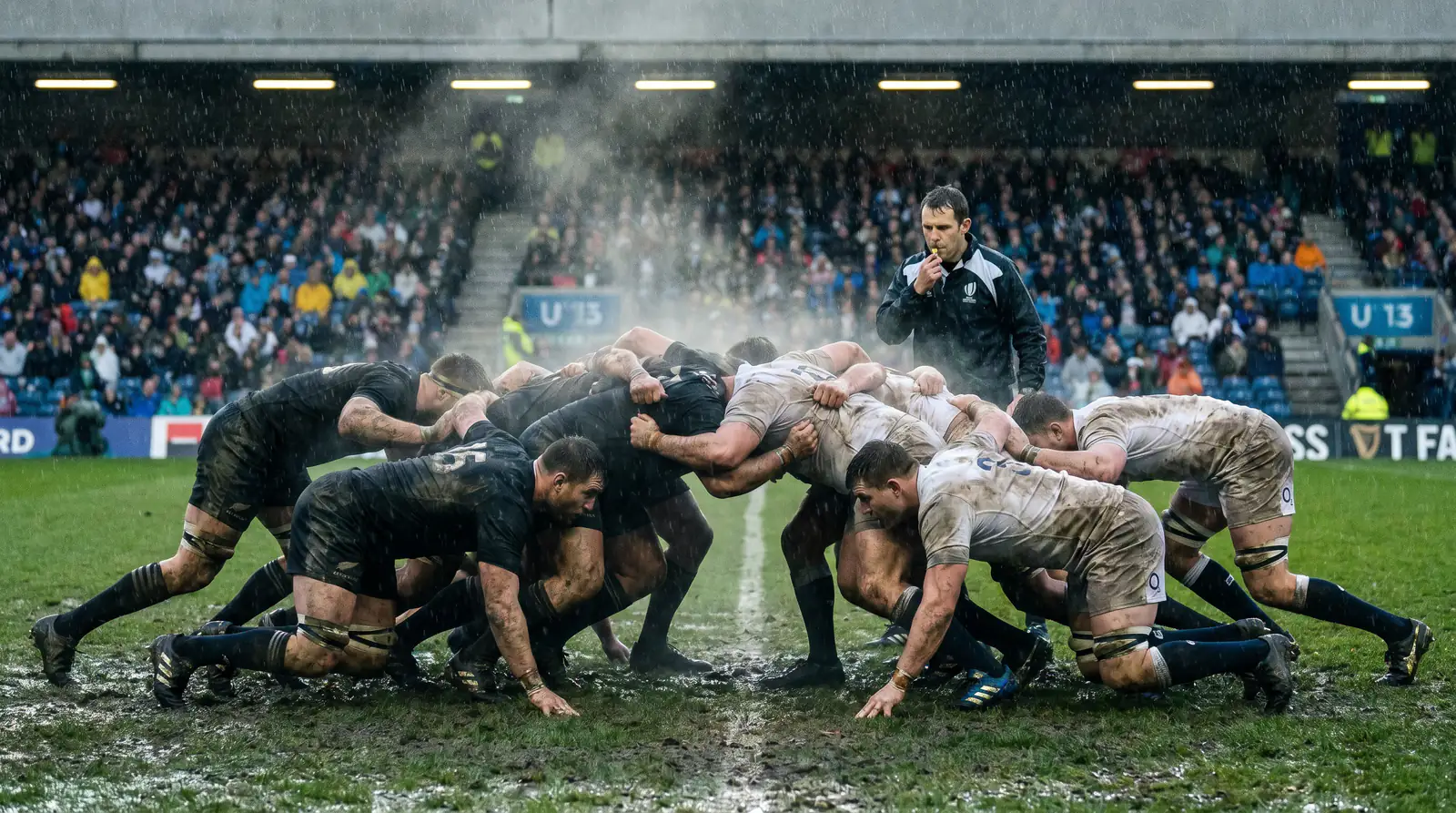
Not every market type is equally suited to tournament betting. During the Six Nations, I concentrate about 60% of my activity on three market types: handicap, totals, and outright. The remaining 40% goes to try scorer markets and selective live positions. Match result, which dominates my Premiership betting, takes a back seat during the championship because the fixture list is short and the public attention is intense — both of which tighten the match result margins to the point where edges are difficult to find.
Handicap is my primary Six Nations market. The scoring gaps between the top two or three nations and the bottom half of the table make handicap lines the natural battleground. France -15.5 against Italy is a fundamentally different proposition from France to win at 1/12, and the analytical depth required to assess that 15.5 line is where my pre-tournament work pays off. I set my own predicted margins for every fixture before the tournament begins and then compare them to the bookmaker’s handicap lines when they appear.
Tournament top try scorer is a market I approach differently from the fixture-level try scorer markets. The cumulative nature of the bet — your player needs to outscore everyone else across the entire championship — means that you need to identify players who will feature in all five fixtures and whose teams are likely to score heavily. A winger from France or Ireland in a year when their schedule favours attacking rugby is the prototypical profile, but the value often lies in players from the second tier of contenders who are priced longer but have realistic scoring opportunities.
Home Advantage: The Numbers Behind the Fortress Effect
In 2025, the Six Nations drew 1,050,465 supporters through the turnstiles — an average of 70,031 per match. Those are not background noise numbers. A wall of 80,000 at Twickenham or the Stade de France creates an environment that measurably affects performance and, by extension, betting outcomes.
Home advantage in the Six Nations is not a myth or a cliché — it is a quantifiable edge that shows up consistently in the data. Over the past decade, home teams have won approximately 60-65% of Six Nations fixtures. The figure fluctuates year to year, but the direction is always the same: playing at home is a significant advantage, particularly for the nations with the largest and most vocal support bases.
For betting purposes, the question is not whether home advantage exists — it does — but whether the market prices it correctly. My experience is that the market does a reasonable job on the big fixtures: England at Twickenham, France at the Stade de France. Where I have found recurring value is in the less obvious home advantages — Scotland at Murrayfield, where the tight ground and passionate crowd create an intensity that visiting teams sometimes underestimate, and Ireland at the Aviva Stadium, where the crowd noise in the redeveloped ground has become a genuine factor in close matches. The bookmaker’s model accounts for home advantage as a statistical input, but the magnitude of that input sometimes lags behind the reality when a specific venue is going through a particularly strong or weak period.
Round-by-Round Betting: How Odds Shift as the Tournament Unfolds
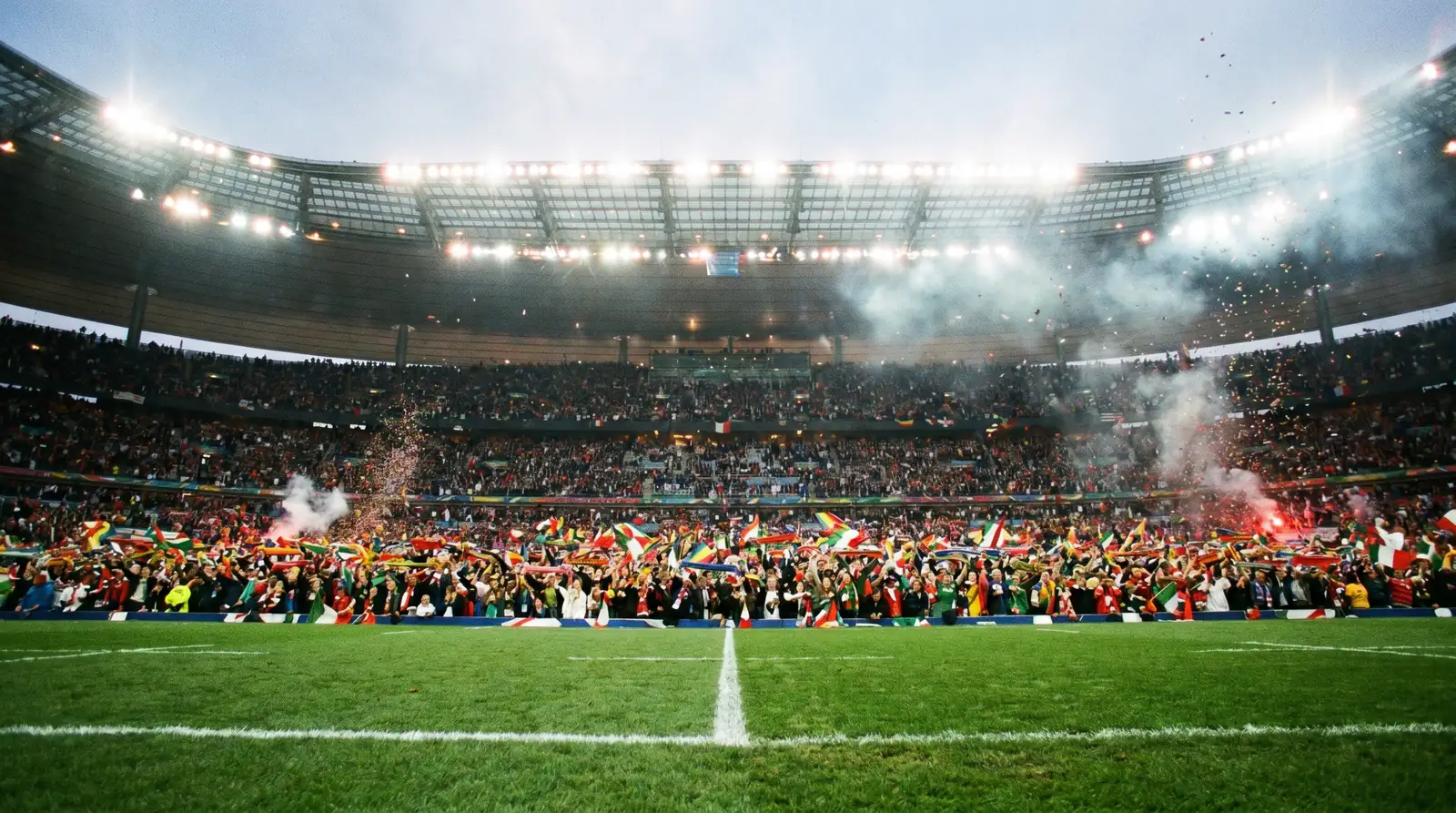
I treat each Six Nations weekend as its own micro-tournament. Round 1 has a different character from Round 5, and betting the same way in both rounds ignores information that is freely available if you pay attention.
Opening weekend is characterised by uncertainty. Teams may have played only one or two warm-up fixtures, new players are bedding in, and tactical plans are untested under championship pressure. The bookmaker’s pre-tournament models are at their most uncertain here, which means the odds reflect a wider range of possible outcomes. I tend to be cautious with my Round 1 stakes and more selective with my market choices — totals under and small handicap positions are my preferred approach when there is limited current-form data to work with.
By Rounds 3 and 4, the championship picture has crystallised. You can see which teams have found their rhythm, which are struggling with combinations, and where the tactical battles are trending. The odds become sharper because the bookmaker has match data to refine their models, but the narrative-driven pricing also becomes more pronounced. A team that wins their first two games will see their outright odds collapse, sometimes beyond what the underlying quality justifies. Equally, a team that loses their opener may see their Round 2 odds drift further than the single result warrants. These overreactions — both positive and negative — are where I concentrate my mid-tournament activity.
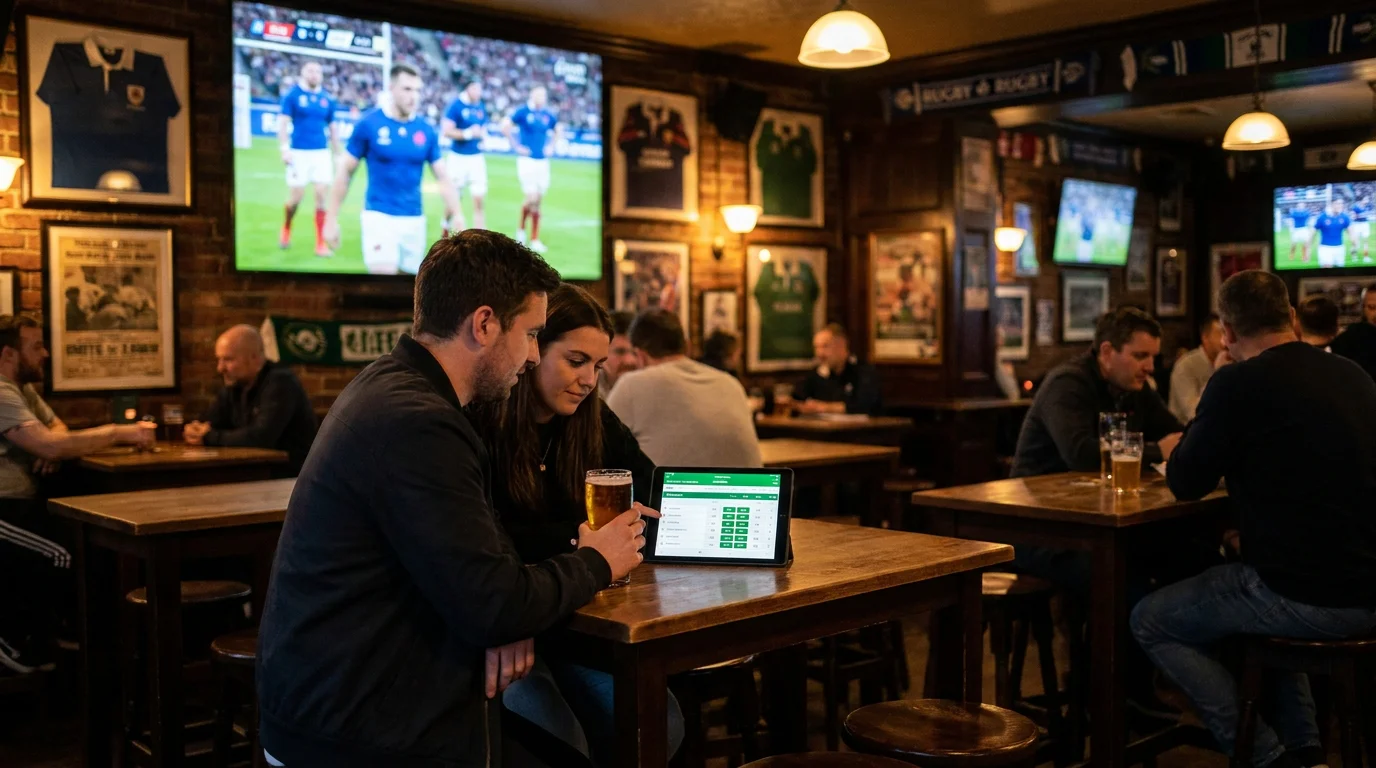
Round 5 is often a round of dead rubbers and deciders. If the title race is still live heading into the final weekend, the pressure on the contending teams creates specific betting dynamics: tight games, conservative first halves, and high-intensity finishes. If the title is already decided, the final round can produce expanded scorelines as teams with nothing to play for take risks they would not take in a championship race. Adjusting your approach to the tournament context — not just the teams involved — is what separates a good Six Nations bettor from someone who treats every round the same.
Audience Size, Broadcast Reach and Their Ripple Effect on Markets
Something that most punters never consider is the relationship between broadcast audience, public betting volume, and odds efficiency. It matters more than you might expect. The Six Nations consistently draws television audiences of five million or more per match in the UK. Compare that to the Premiership, where average TV viewership sits between 250,000 and 350,000 per fixture. That 15-to-1 ratio in eyeballs translates directly into a difference in betting behaviour — and, by extension, into differences in how efficiently the market prices each fixture.
High-audience matches attract more recreational money. The casual punter who watches England versus France once a year is not running a model or checking form guides; they are betting with their gut, their loyalty, or whatever the pundits said on Saturday morning television. This influx of recreational money can push odds away from their true value, particularly on popular outcomes like a home win or the over in a match between traditional rivals. Bookmakers are aware of this and adjust their prices to manage liability, but they cannot perfectly offset the weight of public money without moving lines — and when lines move in response to volume rather than information, that is where value appears for the analytical bettor.
Mark Oliver of Oliver and Ohlbaum Associates has argued that rugby needs to find ways to build outside its core markets and excite the next generation. From a betting perspective, the growth of the Six Nations audience is a double-edged sword: a larger casual betting public means more money flowing into the market, which can create inefficiencies, but it also means bookmakers are devoting more resources to these fixtures, making their core prices sharper. The opportunity for the informed punter lies in the secondary markets — handicap, totals, try scorer — where the recreational money is less concentrated and the bookmaker’s attention is not as finely tuned.
What Historical Odds Movements Reveal About Six Nations Value
I have tracked Six Nations outright opening odds for the past eight tournaments, and the pattern is consistent enough to act on. The eventual champion has been available at 3/1 or longer in pre-tournament markets in five of those eight years. France were 3/1 before their 2026 title run. Ireland were similarly priced before their 2023 Grand Slam. The market underestimates champions more often than it identifies them.
The reason is structural. Pre-tournament outright markets are set weeks before the championship begins, often before final squad announcements, and they are anchored to the previous year’s results and current world rankings. These are reasonable starting points but imperfect predictors. The Six Nations has a short format — five matches is a small sample, and variance plays a larger role than in a 20-round league season. Upsets are not anomalies; they are built into the fabric of the tournament. This variance benefits the punter who bets at pre-tournament prices and accepts that not every position will win, because the prices compensate for the uncertainty.
Fixture-level historical odds tell a slightly different story. The market is better at pricing individual matches than at pricing the tournament outright, largely because fixture-level odds are set closer to the event with more current information. But even here, I find consistent patterns worth exploiting. Markets tend to overvalue the side that won the most recent head-to-head — a form of recency bias that ignores broader trends. I keep a five-year fixture matrix for every Six Nations pairing and compare it to the current year’s pricing. When the odds diverge from the five-year pattern, and the divergence is not explained by a genuine change in squad quality, that is a signal worth investigating.

The Six Nations is a seven-week window in the calendar, and it demands dedicated preparation. But the reward for that preparation — consistent access to mispriced markets in one of the most heavily bet rugby tournaments in the world — is worth the effort every single year.
When do Six Nations betting odds open each year?
Outright markets for the Six Nations typically open three to four weeks before the tournament kicks off, usually in mid-to-late January. Individual match odds appear progressively, starting with Round 1 fixtures and rolling forward as the tournament approaches. The earliest prices tend to offer the best value because they are set with the least amount of current information.
How does the bonus-point system affect Six Nations outright betting?
A team earns a bonus point for scoring four or more tries in a match, and a losing team can claim a bonus point if defeated by seven or fewer points. These additional points regularly decide the final standings when two teams finish with the same number of wins. For outright bettors, the bonus-point system makes attacking play and close defeats genuinely meaningful, so backing a team that scores prolifically — even if they drop a match — can still be a winning outright position.
Which Six Nations matches historically produce the most tries?
Fixtures involving Italy against any of the top three nations — France, Ireland, and England — consistently produce the highest try counts. France versus Italy is the standout, regularly exceeding 60 combined points. Fixtures between the top two championship contenders, such as Ireland versus France, tend to be tighter and produce fewer tries, often staying below the tournament average.
Is Grand Slam winner a separate market from tournament winner?
Yes, the Grand Slam winner market is distinct from the championship winner market. A team can win the championship without achieving the Grand Slam if they lose one match but accumulate enough bonus points or if other results go in their favour. The Grand Slam market pays out only if a team wins all five of their matches. Prices on the Grand Slam market are consequently longer, reflecting the additional difficulty. If you believe a strong team will sweep all five fixtures, the Grand Slam market offers a better price than the championship winner market for the same underlying outcome.
