
 Available in US
Content

I placed my first handicap bet during the 2016 Six Nations. England were hosting Italy at Twickenham, and the match result market offered something like 1/20 on England to win — hardly the kind of price that gets your pulse going. The handicap line, though, was set at -24.5, which told a far more interesting story about how the bookmaker expected the match to unfold. England ended up winning by 27, and that half-point margin was the difference between a loss and a payout. That experience taught me something I still apply today: handicap betting transforms one-sided fixtures into genuine puzzles worth solving.
The core appeal of handicap markets is simple enough. When two teams are unevenly matched — and in rugby, with its tiered competition structure, mismatches are common — the match result market compresses all the value into a single short-priced outcome. Handicap lines redistribute that value by asking a harder question: not who wins, but by how much? In the Six Nations 2025, matches averaged 55 points per game, and the gap between the highest-scoring side (France, 218 points across five matches) and the heaviest conceder (Italy, 188 points conceded) created regular double-digit handicap lines.
For anyone who has been watching rugby long enough to develop opinions about forward packs, kicking games, and bench impact, handicap betting rewards that knowledge in a way the match result market rarely does. This guide breaks down exactly how the market works, the key distinction between Asian and European handicaps, and the situations where I find the most reliable edges.
How Rugby Handicap Betting Works
A friend once described handicap betting as “starting the match with a head start on the scoreboard,” and that is as good a summary as any. The bookmaker assigns a positive number to the underdog and a negative number to the favourite. Your bet settles based on the final score after that adjustment is applied.
Take a Premiership match where Bristol are -7.5 against Exeter. If you back Bristol on the handicap, they need to win by 8 points or more for the bet to land. Back Exeter +7.5, and they can lose by up to 7 points and you still collect. The .5 eliminates any possibility of a draw on the handicap — one side wins, the other loses, no refunds.

Lines are typically set at half-point increments for precisely this reason, though you will occasionally see whole-number lines like -10 or +14, where a push (the margin landing exactly on the line) returns your stake. The bookmaker builds the line using a combination of power ratings, recent form, venue data, and early market money. Once the line is published, it moves in response to where the weight of stakes lands — if money floods in on Bristol -7.5, the line might shift to -8.5 or -9.5 to balance liability.
The Six Nations 2025 averaged 55 points per match, which means that rugby generates wide winning margins with far greater regularity than football. That scoring variance is what makes handicap betting so central to the sport. A 20-point swing in the final quarter is not unusual, and understanding how matches might develop — especially when substitutions shift the momentum — is where the real analytical work begins.
Asian vs European Handicap
I spent my first year of handicap betting not understanding why some lines had whole numbers and others had quarter-point splits. The distinction matters more than most beginners realise, and getting it wrong can mean the difference between a void and a loss.
European handicap operates on three outcomes: home win on the handicap, away win on the handicap, or a tie on the handicap (when the adjusted scores are level). That three-way structure means slightly higher odds on each outcome, because the bookmaker is pricing three possibilities rather than two. You will see this format on most UK-facing sportsbooks as the default.

Asian handicap removes the draw entirely. If the line is a whole number and the margin lands exactly there, you receive your stake back. Asian lines also allow split handicaps — something like -6.5, -7 — where half your stake goes on each line. The practical effect is a safety net: if the margin lands on 7, you win half and push on the other half rather than losing the lot. This split-line format is more common in over/under markets too, so understanding it here carries across to other wager types.
For rugby specifically, I lean towards Asian handicap in matches where I have moderate conviction. The split-line option softens the risk when the margin is a genuine coin toss between two adjacent numbers. European handicap, by contrast, is worth using when you specifically fancy the underdog to lose by a narrow margin — the three-way structure occasionally offers inflated prices on the “draw” outcome that the Asian format cannot replicate.
Six Nations Handicap Examples
The Six Nations is where I do most of my handicap work, and recent tournaments provide instructive case studies. In 2025, the tournament generated 108 tries across 15 matches — that is 7.2 per game — and the high-scoring environment produced some enormous handicap margins.

Consider the France-Italy fixture. France finished the 2025 championship with 218 points scored, comfortably the most in the tournament, while Italy leaked 188 points in defence. Pre-match handicap lines for this fixture tend to settle around -15 to -20, and the question for the handicap bettor is whether France’s attacking depth is priced correctly or whether Italy’s improving defence (particularly their scrum, which has tightened considerably in recent years) can keep the margin closer than the bookmaker expects.
By the 2026 championship, scoring patterns had shifted slightly — 111 tries across the 15 matches, averaging 7.4 per game — but total attendance dipped from 1,050,465 to 995,964. France took the title (their 20th), and matches involving the eventual champions consistently cleared double-digit margins in the group stages. The lesson from tracking these two consecutive tournaments is that Six Nations handicap lines are broadly well-calibrated for the big mismatches but tend to underestimate the closeness of mid-table clashes — Ireland vs Scotland, England vs France, Wales vs Ireland — where the margin regularly falls inside seven points.
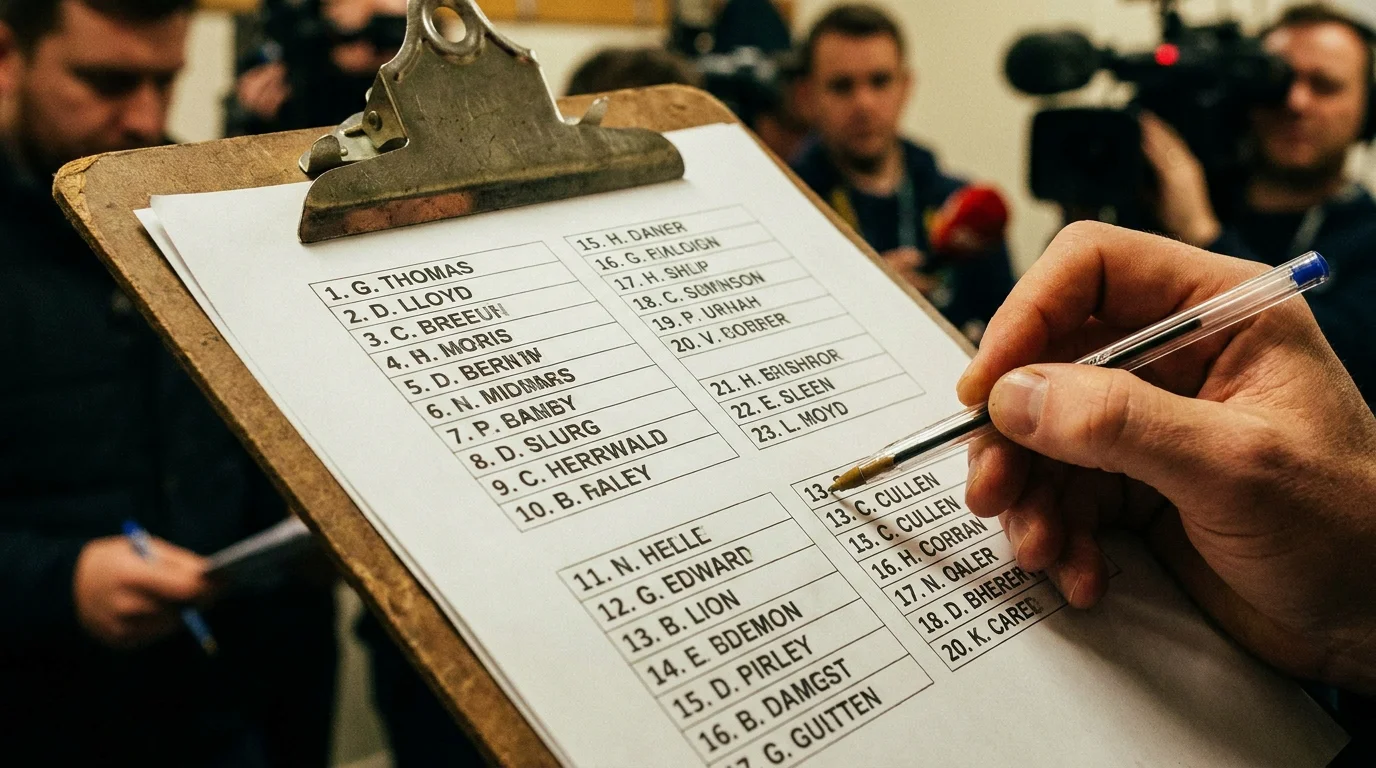
One pattern I have tracked over multiple seasons: Round 1 handicap lines carry more uncertainty than any other round because the bookmaker has no current-tournament data to work with. Squad selections on the Tuesday before a Saturday kick-off routinely shift lines by two to three points, particularly when a key fly-half or scrum-half is rested or injured. If you are disciplined about waiting for confirmed teamsheets, Round 1 often delivers the softest handicap lines of the entire championship.
When Handicap Betting Offers the Best Value
Not every match is a good handicap bet. I have found, through years of record-keeping, that handicap markets offer the most value in three specific scenarios.

The first is the clear mismatch with an uncertain margin. These are matches where the result is not in doubt — think New Zealand hosting Tonga, or Ireland playing Italy at the Aviva — but the precise margin could swing by 20 points depending on how the second half unfolds. Match result odds are essentially dead money here, but the handicap line becomes a genuine analytical challenge. Does the favoured side have the bench depth to keep scoring in the final quarter, or do they tend to take the foot off the throttle once the contest is settled?
The second scenario is derby matches where pride compresses the margin. Premiership fixtures between local rivals (Bath vs Bristol, Harlequins vs Saracens) often produce closer outcomes than the league table suggests, because the emotional intensity lifts the underdog. Handicap lines based purely on form data can overestimate the favourite in these matches.

The third — and this is the one that has delivered the most consistent returns in my own betting — is late-season fixtures where squad management distorts team strength. Premiership clubs that have secured a play-off spot frequently rotate their first-choice players in the final regular-season rounds, meaning a side listed as -10 favourites may be fielding a squad that is functionally five to eight points weaker than their best XV. If the bookmaker is slow to adjust the line for confirmed team news, there is genuine value on the underdog handicap.
Rugby handicap betting rewards patience and homework in equal measure. The information edge almost always comes from knowing what the bookmaker has priced in and spotting where reality — squad selection, weather, tournament context — is about to push the outcome away from the line.
What happens to my handicap bet if the margin exactly matches the line?
If the handicap line is a whole number (e.g. -14) and the favourite wins by exactly 14, the outcome depends on the format. In European handicap, this settles as a draw on the handicap — a separate result you can bet on. In Asian handicap, it is a push and your stake is returned. Half-point lines (-14.5) eliminate this scenario entirely, which is why they are the most common format.
Why do rugby handicap lines differ between bookmakers?
Each bookmaker uses a slightly different combination of power ratings, form algorithms, and market data to compile their opening line. Once the market opens, the line moves based on where punters place their money. A bookmaker receiving heavy action on one side will shift the line further than one that has balanced liability. Comparing lines across three or four sportsbooks before placing a handicap bet regularly uncovers a point or two of difference.
