
 Available in US
Content

Years ago, I sat in a pub with a former odds compiler who had worked for one of the UK’s largest sportsbooks. He told me something that reframed how I thought about every price I had ever taken: “We don’t set odds to predict the result. We set odds to balance the book.” That distinction — between prediction and commercial risk management — is the key to understanding why rugby odds look the way they do.
Sports betting commands 57.1% of the UK’s online gambling market, making it the single largest segment. Every price you see on a rugby match is the product of a process that blends statistical modelling, market intelligence, and commercial calculation. Understanding that process does not guarantee you will beat the bookmaker, but it reveals where the cracks appear.
How an Odds Compiler Builds a Rugby Price
The compilation process starts earlier than most people imagine — often weeks before a fixture, particularly for international matches. A compiler begins with a base model: a mathematical framework that assigns each team a rating based on historical performance, home advantage, squad strength, and competition context. The model produces a set of raw probabilities for every outcome — home win, away win, draw — and the compiler converts those probabilities into decimal or fractional odds.

That raw price is only the starting point. The compiler then applies layers of adjustment. Injury reports shift values, especially for a sport where a single absent fly-half can swing the line by five or six points. Coaching changes, weather forecasts for the match day, and even the travel schedule for touring sides feed into manual overrides on the model output. A compiler working on a Friday evening Premiership match might adjust the line three or four times between the initial price and the opening market.

What separates rugby compilation from football is the smaller body of data. A Premier League team plays 38 league matches per season; a Premiership rugby side plays 18. International teams might only have six to ten meaningful fixtures a year. Compilers compensate by weighting recent results more heavily and by cross-referencing club form with international performance. The smaller sample size also means the model is less stable — a single unexpected result can shift a team’s rating by a noticeable margin, which creates opportunities for bettors who track these movements.
The Margin and What It Costs You
Every set of odds includes a built-in profit margin for the bookmaker, known as the overround. If a two-outcome market had true probabilities of 50/50, fair odds on each side would be 2.00. In practice, the bookmaker might price both sides at 1.90, creating a combined implied probability of 105.3%. That extra 5.3% is the margin — the mathematical edge that ensures the book profits over time regardless of which side wins.
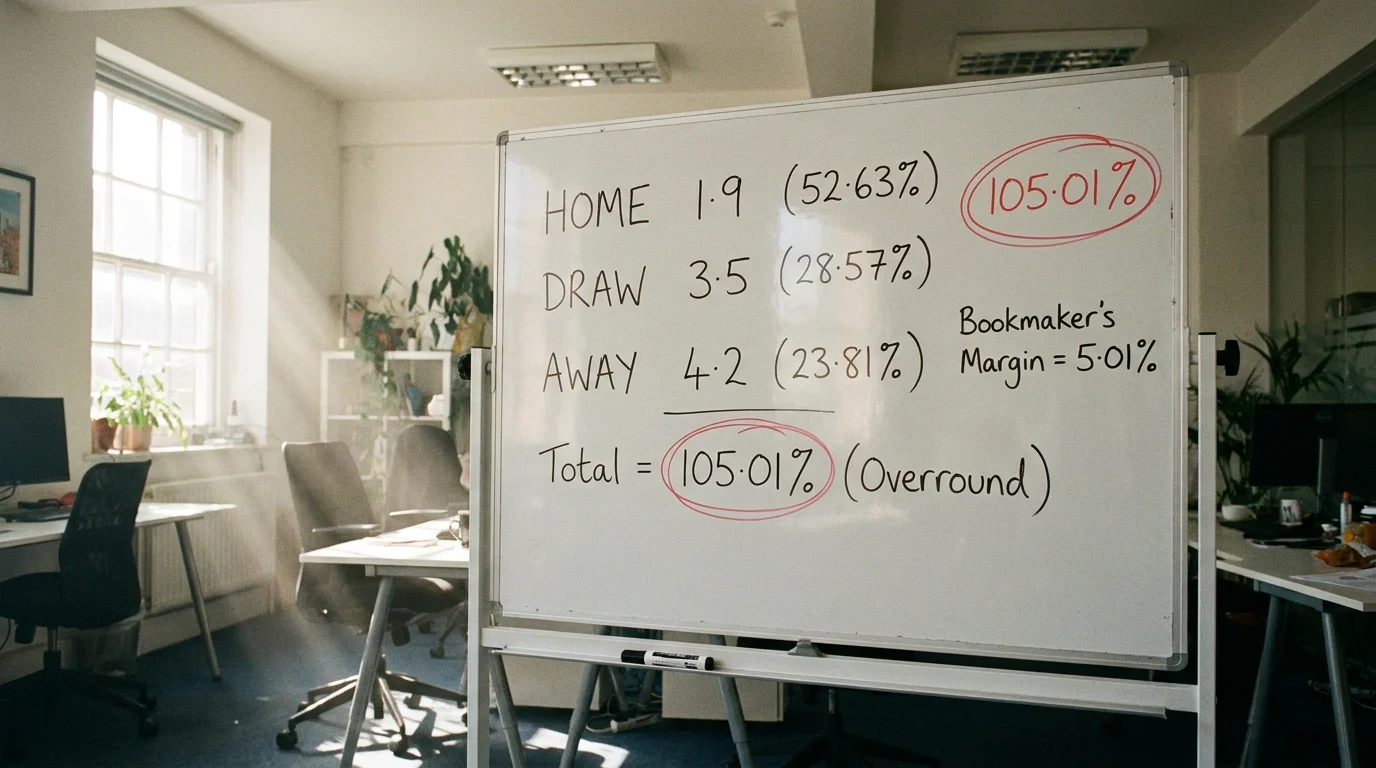
Rugby margins in the UK typically run between 4% and 8% on match-winner markets, depending on the competition. High-profile Six Nations fixtures attract sharper money and tighter margins; a midweek URC match between two mid-table sides might carry a wider margin because fewer people are betting on it and the bookmaker faces less competitive pressure to sharpen the price. The remote betting sector generated GBP 2.12 billion in gross gambling yield in Q4 2025 alone, and margin management is the engine that drives that yield.
Understanding value in rugby betting starts with understanding margin. When you identify a selection where your own assessed probability exceeds the bookmaker’s implied probability even after accounting for the overround, you have found a value bet. The margin does not prevent value from existing — it just means you need to be right by a wider gap than you might think.
Why Lines Move Between Opening and Kick-Off
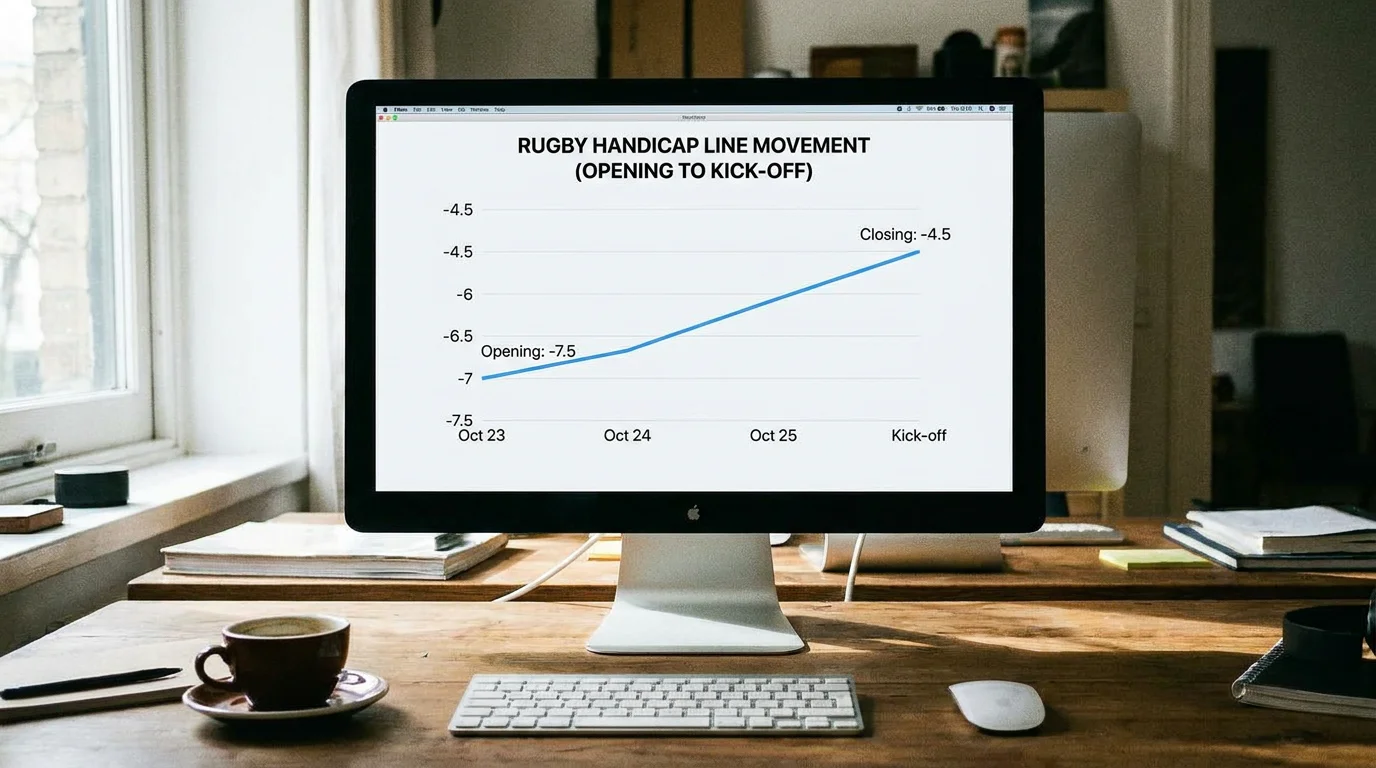
The odds you see when a market opens on Tuesday morning are rarely the same odds available at kick-off on Saturday. Line movement — the shift in prices between opening and closing — tells a story about where money is flowing and what information the market is absorbing.
The most common driver is weight of money. When a disproportionate volume of bets lands on one side, the bookmaker shortens that price and lengthens the other to rebalance liability. With 290 million online bets placed monthly across the UK, even a modest percentage hitting the same rugby market can create meaningful movement. A Six Nations match between Ireland and England might see enough volume to move the line by two or three points between opening and kick-off.
Team news is the second driver. Chris Fawcett, founder of Sharp Betting, has been vocal about the state of the UK market — pointing to online betting turnover falling roughly 30% in real terms and questioning regulatory decisions at the Gambling Commission. Within that tightening market, information edges have become more compressed, but the window between squad announcement and market adjustment remains one of the few exploitable gaps. When a starting XV is announced and it differs from market expectations, the line moves fast. Being positioned before that movement is one of the few consistent advantages available to individual bettors.
Steam moves — rapid, coordinated shifts triggered by professional syndicates — are less common in rugby than in football, but they do occur. If you see a line drop sharply in the absence of any public news, it usually means someone with inside information or a superior model has placed a large bet. Following steam blindly is risky, but noting the direction and investigating the reason can inform your own assessment.
Exchange Betting Versus the Traditional Bookmaker
Betting exchanges changed everything for me when I first started using them for rugby. Instead of accepting the bookmaker’s price, you are betting against other punters, with the exchange taking a commission on winning bets — typically between 2% and 5%. The result is tighter margins and, in many cases, better prices.
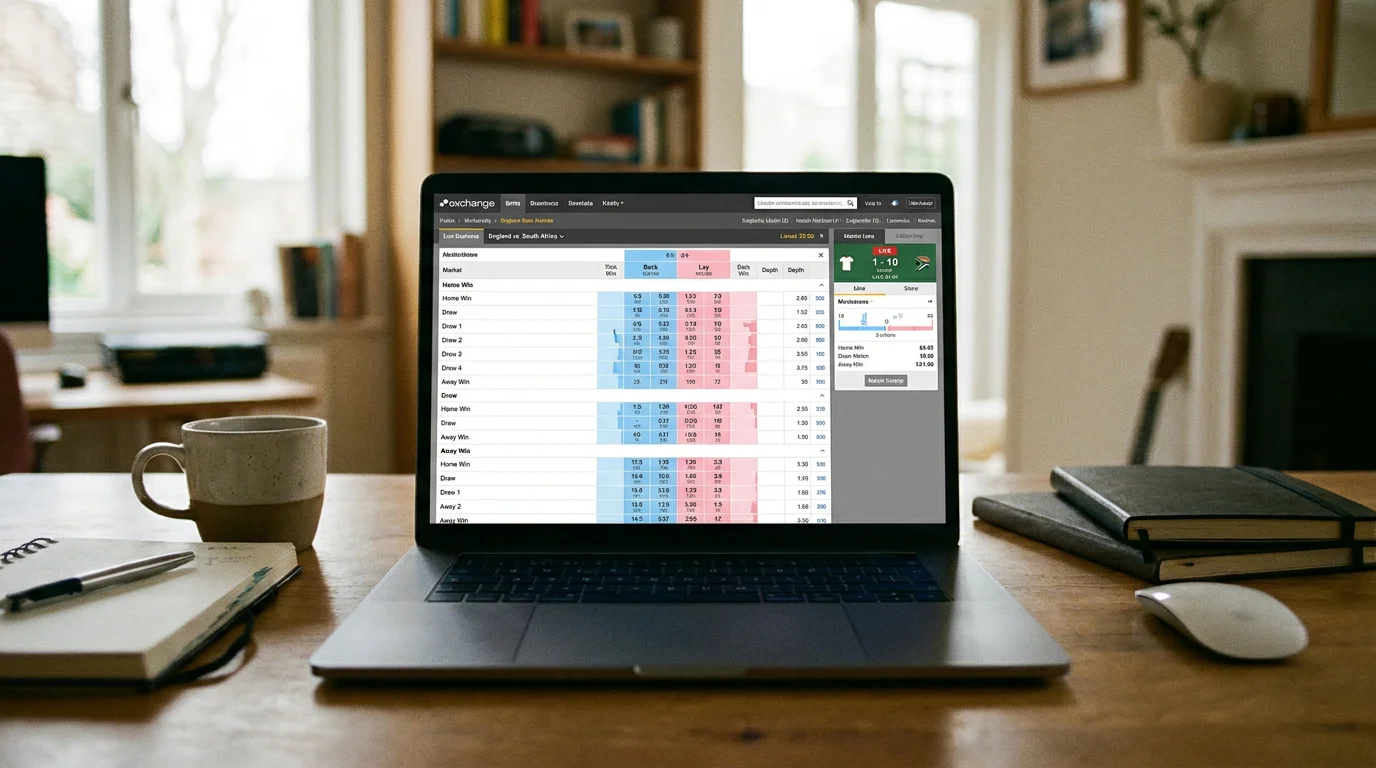
The trade-off is liquidity. Football exchanges are deep enough to place substantial bets without moving the market; rugby liquidity is thinner. A Six Nations fixture might have tens of thousands of pounds matched on the exchange, but a URC Friday night match might have only a few hundred. That means you can get better odds on the major fixtures but struggle to get matched at all on smaller ones.
Exchanges also let you lay outcomes — betting against something happening. That ability is uniquely useful in rugby. If your model says a team is overvalued but you do not have a strong opinion on who will actually win, you can lay the favourite rather than backing the underdog. The risk profile is different, but the strategic flexibility is considerable. I split my rugby betting roughly 60/40 between traditional bookmakers and exchanges, using the bookmaker for smaller markets where exchange liquidity is absent and the exchange for any fixture with enough depth to get matched at fair prices.
Do bookmakers use algorithms or human compilers for rugby odds?
Most UK bookmakers use a combination. An algorithmic model generates base probabilities from historical data, and a human compiler adjusts those prices based on squad news, conditions, and market intelligence. The balance between model and human input varies by operator, but manual oversight remains standard for rugby.
Why do rugby odds change between opening and kick-off?
Odds shift for two main reasons: weight of money from bettors loading one side of the market, and new information such as team announcements or injury updates. Bookmakers adjust prices to manage their liability, so movement reflects both public sentiment and factual developments.
