
 Available in US
Content
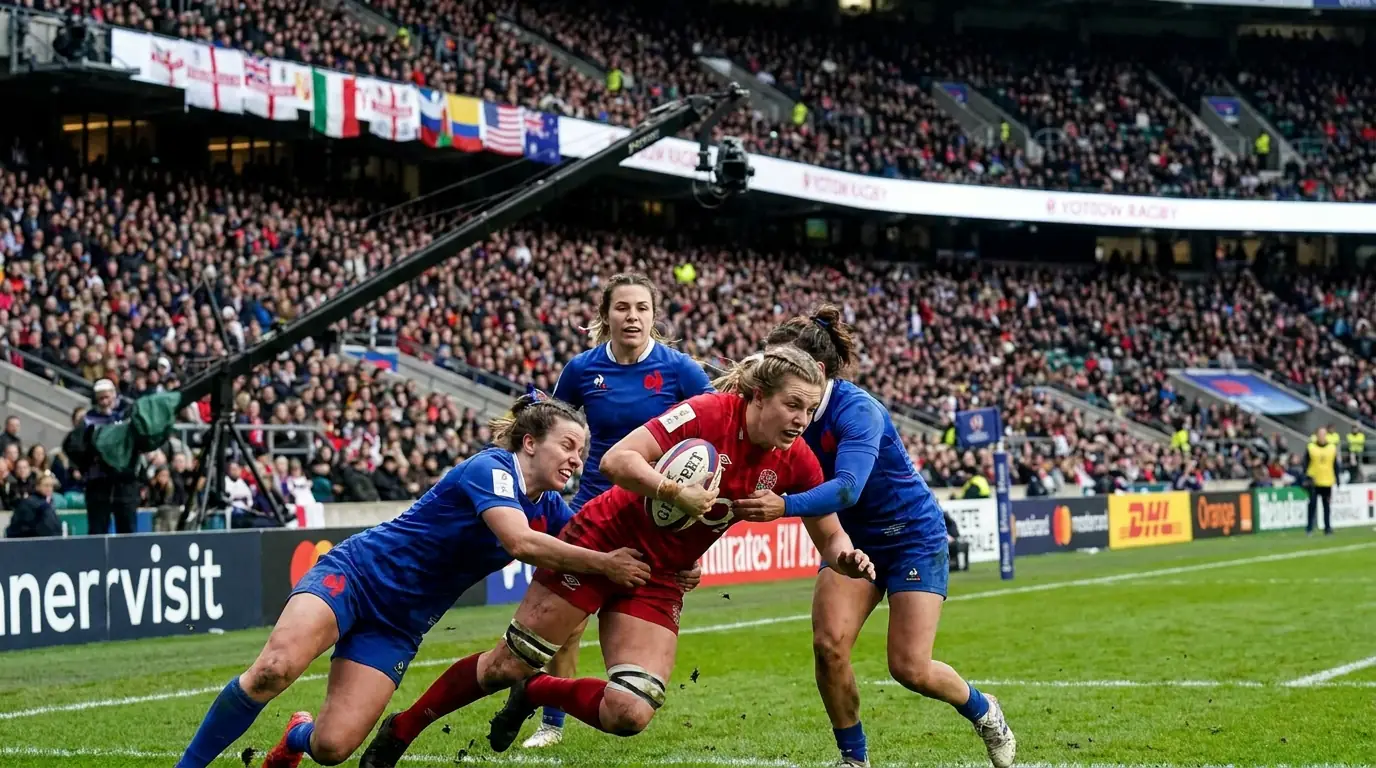
I made my first bet on a women’s rugby match during the 2021 World Cup in New Zealand, and the experience was striking mostly for what was missing. Two bookmakers offered match result markets. One offered a handicap. Try scorer odds were nowhere to be found. I backed England’s Red Roses to win the tournament outright, and the selection was solid enough, but the lack of market depth meant I could not apply any of the analytical tools I use for men’s rugby. The 2025 Women’s World Cup in England changed that picture dramatically — and the betting market is still catching up.
The 2025 tournament sold 444,465 tickets, tripling the figure from the previous Women’s World Cup. The final at Twickenham drew 81,885 spectators, making it the largest crowd ever to attend a women’s rugby match. Those numbers are not just attendance records — they represent a commercial tipping point that has reshaped how bookmakers approach women’s rugby.
The 2025 World Cup Impact
The scale of the 2025 Women’s Rugby World Cup in England went beyond expectations. The tournament generated GBP 294.7 million in economic impact for the host country, and sponsorship revenues rose 330% compared to the previous edition. Four of the five principal commercial partners expanded their commitments in women’s rugby after the tournament concluded. Brett Robinson, the World Rugby chair, described the event as proof of “what our game can deliver when we invest boldly in women’s sport.”

For the betting market, the 2025 tournament was a proof of concept. The viewership numbers, the social media engagement, and the sheer volume of public interest gave bookmakers the commercial justification to invest in compiling odds for women’s rugby to a depth that had previously been reserved for the men’s game. Match result and handicap markets were standard for every pool-stage fixture. Try scorer odds appeared for the knockout rounds. Outright markets opened six months before the tournament — earlier than ever before.
The tournament also produced GBP 201 million in media value for commercial partners, a figure that signals sustained broadcasting interest. Broadcasting drives betting volume, and betting volume drives market depth. The virtuous cycle that transformed women’s football betting from a niche market into a mainstream offering over the past decade is now beginning in women’s rugby, and the 2025 World Cup was the catalyst.
Available Markets in Women’s Rugby
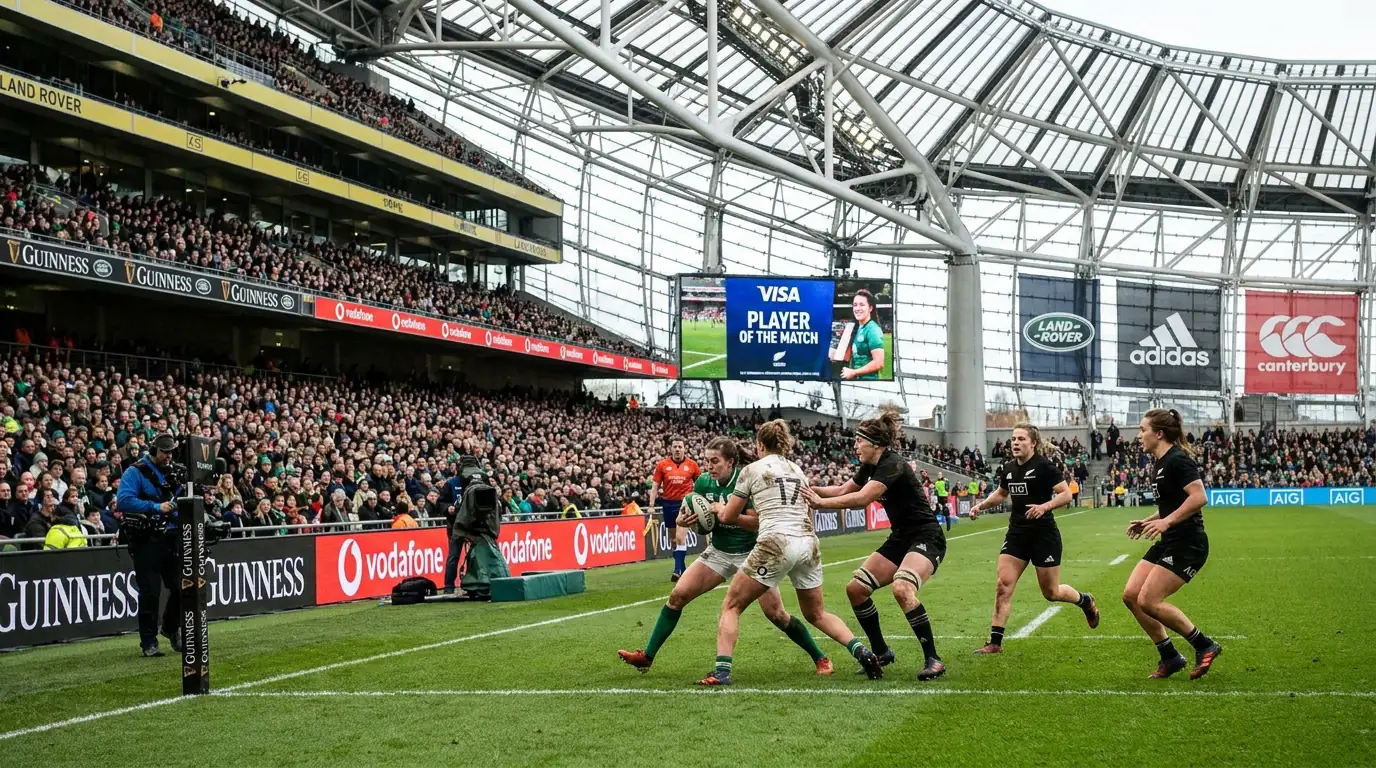
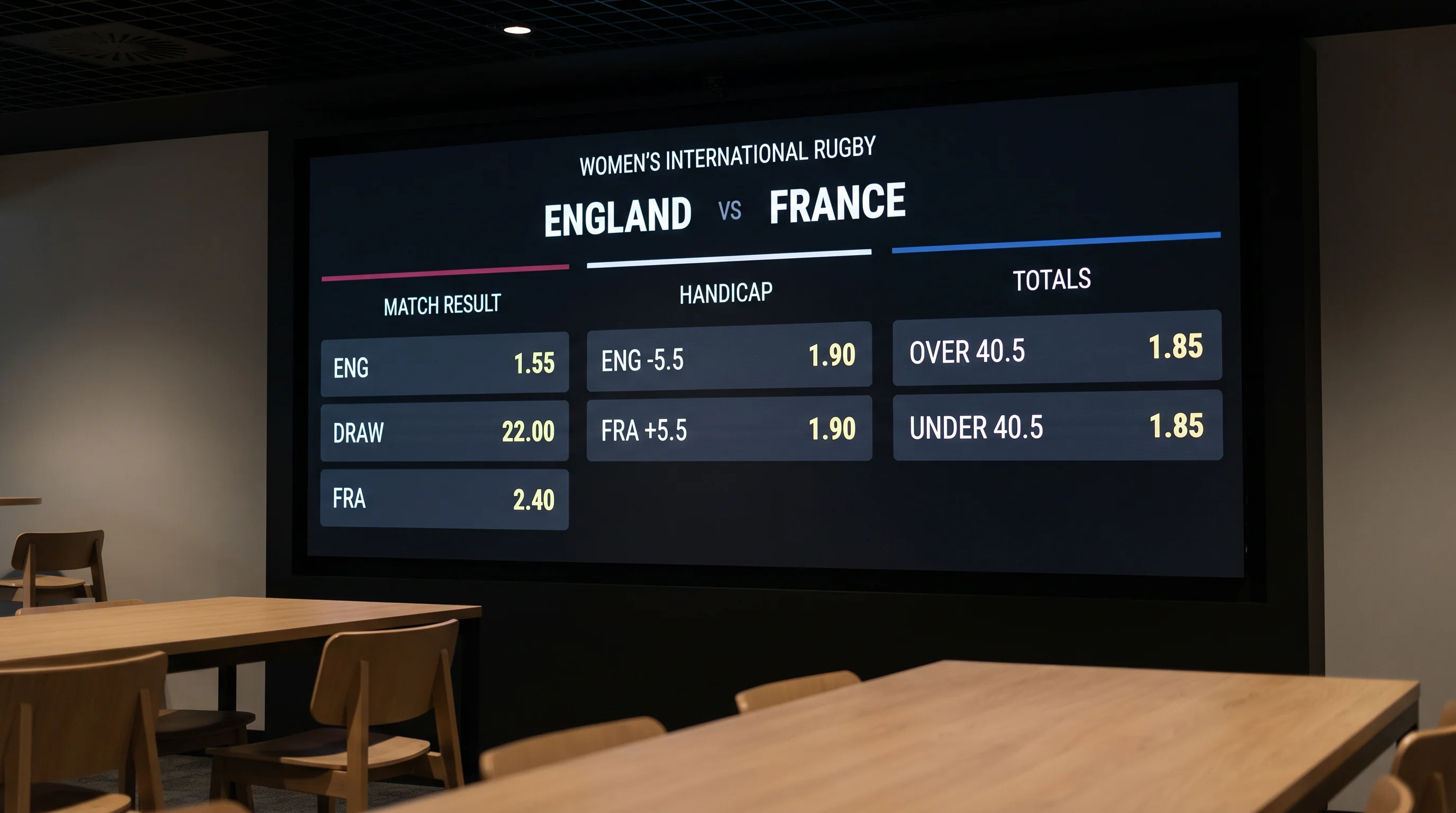
The current market offering for women’s rugby varies significantly by competition. International fixtures — Six Nations, WXV, and World Cup qualifiers — receive the widest coverage. Match result, handicap, and over/under totals are reliably available. Try scorer markets appear for high-profile fixtures (Six Nations rounds, knockout stages of major tournaments) but are not guaranteed for every match.
Domestic women’s competitions — the Premiership Women’s Rugby (PWR) in England, the WXV tiers — are covered less consistently. Some bookmakers offer match result odds for PWR fixtures; most do not offer handicap or totals. The analytical bettor who is prepared to compile their own odds for these under-served competitions has a significant information advantage, because the bookmaker’s pricing (when it exists) is based on thinner data models than the men’s equivalent.
The gap between available markets and analytical opportunity is the defining characteristic of women’s rugby betting in 2026. The teams, the data, and the competition structures are mature enough to support serious analysis. The bookmaker market has not yet caught up, which creates a window of opportunity that will narrow as volume increases.
Market Growth Trajectory
The global rugby market is valued at $6.9 billion and projected to reach $11.9 billion by 2033. Women’s rugby is the fastest-growing segment within that market, driven by the accelerating data infrastructure around women’s competitions, increased broadcasting deals, and the commercial momentum from the 2025 World Cup.
The trajectory mirrors what happened in women’s football. Five years ago, betting markets for the Women’s Super League (football) were patchy and thinly priced. Today, every WSL fixture offers market depth comparable to the men’s Championship. Women’s rugby is approximately two to three years behind that curve, and the 2025 World Cup has compressed the timeline. By the next World Cup cycle, I expect women’s Six Nations and WXV fixtures to offer 30-50 markets per match on major sportsbooks — enough to support handicap, totals, try scorer, and basic prop betting.
For bettors who establish their analytical frameworks now — tracking team form, scoring patterns, and player data across women’s competitions — the advantage is timing. When the market matures, the early-mover edge that currently exists will evaporate. Building a database of women’s rugby performance data during the growth phase is an investment that will pay dividends when the bookmaker’s models are still relying on thinner historical datasets.
Finding Odds and Practical Considerations
Not every UK sportsbook offers women’s rugby markets, and among those that do, the depth varies considerably. My approach is straightforward: maintain accounts with three or four major UK-licensed bookmakers and check all of them before each women’s international round. One might offer match result only, while another offers match result plus handicap plus over/under. The best price is often at a different bookmaker from the one with the widest market selection, so checking multiple platforms is essential.
Timing matters more in women’s rugby markets than in men’s. Because the volume is lower, prices can shift significantly in response to a relatively small number of bets. I have seen opening odds on a Women’s Six Nations fixture move by 15-20% between Tuesday and Saturday because a single piece of team news prompted a wave of early bets. Placing bets as soon as the odds open — rather than waiting until match day — captures the softest prices, particularly on the handicap and totals markets.

One practical caveat: team news for women’s rugby is published less consistently and often closer to kick-off than in the men’s game. The squad announcement cycle that drives line movement in men’s rugby — where the starting XV is typically confirmed by Wednesday for a Saturday match — does not always apply. Being plugged into team social media channels and official competition websites gives you access to this information faster than the bookmaker’s trading desk receives it, which is a genuine edge in a market this young.
Which bookmakers offer markets on women’s rugby?
Most major UK-licensed bookmakers offer match result markets for women’s internationals (Six Nations, World Cup). Handicap and over/under markets are available at two or three of the largest sportsbooks for high-profile fixtures. Domestic women’s competitions receive inconsistent coverage. Checking multiple platforms before each round is the most reliable way to find the widest market selection.
Are women’s rugby betting odds less competitive than men’s?
Women’s rugby odds carry wider overrounds (typically 108-115%) compared to men’s internationals (105-108%), reflecting the lower betting volume. Wider margins mean the bookmaker takes a larger cut, but they also mean the prices are less precisely calibrated. For bettors who compile their own odds using form and scoring data, the wider margins create more frequent opportunities to identify value.
