
 Available in US
Content
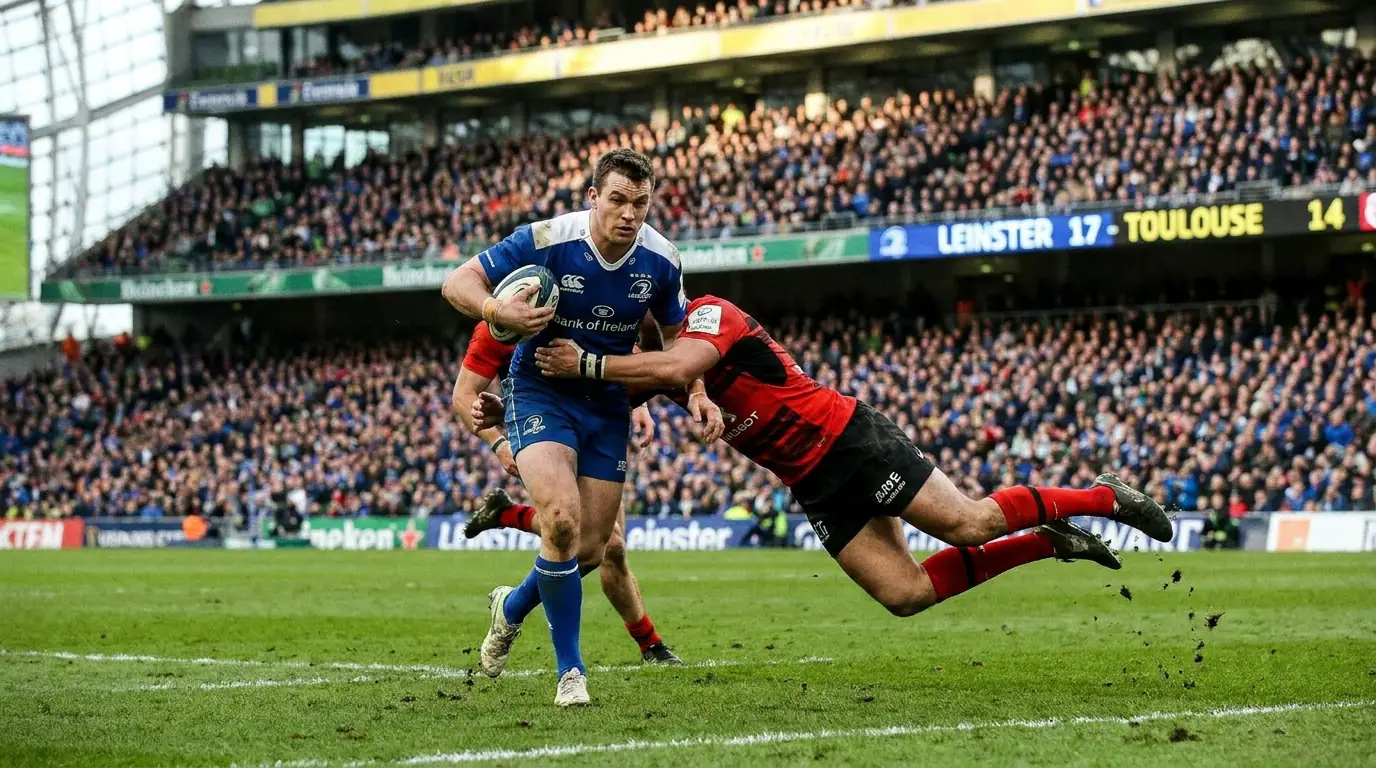
I spent my first three years of rugby betting without placing a single wager on rugby league. My background was union — Six Nations, Premiership, European Champions Cup — and league felt like a different sport entirely. It is, in most practical respects. When I finally started analysing Super League markets in 2020, the first thing I noticed was that the scoring patterns, the market structure, and the bookmaker margins were all different enough to require a completely separate approach. Treating league like union with fewer players is a fast route to an empty bankroll.
Brett Robinson, the World Rugby chair, has spoken about the need to “better explain, sell and celebrate” the sport in an increasingly competitive entertainment market. That challenge applies equally to the betting market, where the two codes compete for punters’ attention but serve fundamentally different analytical profiles. Understanding the structural differences between 15-a-side and 13-a-side rugby is not just a trivia exercise — it is the foundation for making sharper bets in both codes.
Rule Differences That Shape Betting Markets
The rules diverge in ways that directly influence scoring, and scoring is what ultimately determines every betting outcome. Rugby union has 15 players per side, contested scrums, lineouts, rucks and mauls — all of which create set-piece complexity and slow the pace of play. Rugby league has 13 players, a six-tackle possession rule, and limited scrums that function more as a restart mechanism than a genuine contest. The result is a faster, more predictable game flow in league.
Union tries are worth five points with a two-point conversion. League tries are worth four points with a two-point conversion. Penalty goals in union are worth three points; in league, two. Drop goals differ too: three points in union, one in league (except in golden-point extra time, where a drop goal wins the match). These differences compound across 80 minutes to produce materially different scoring profiles. A “high-scoring” union match might finish 35-28 (63 total). A “high-scoring” league match might finish 36-24 (60 total) — similar in absolute terms but with a completely different underlying try count because league’s lower points-per-try pushes total tries higher.
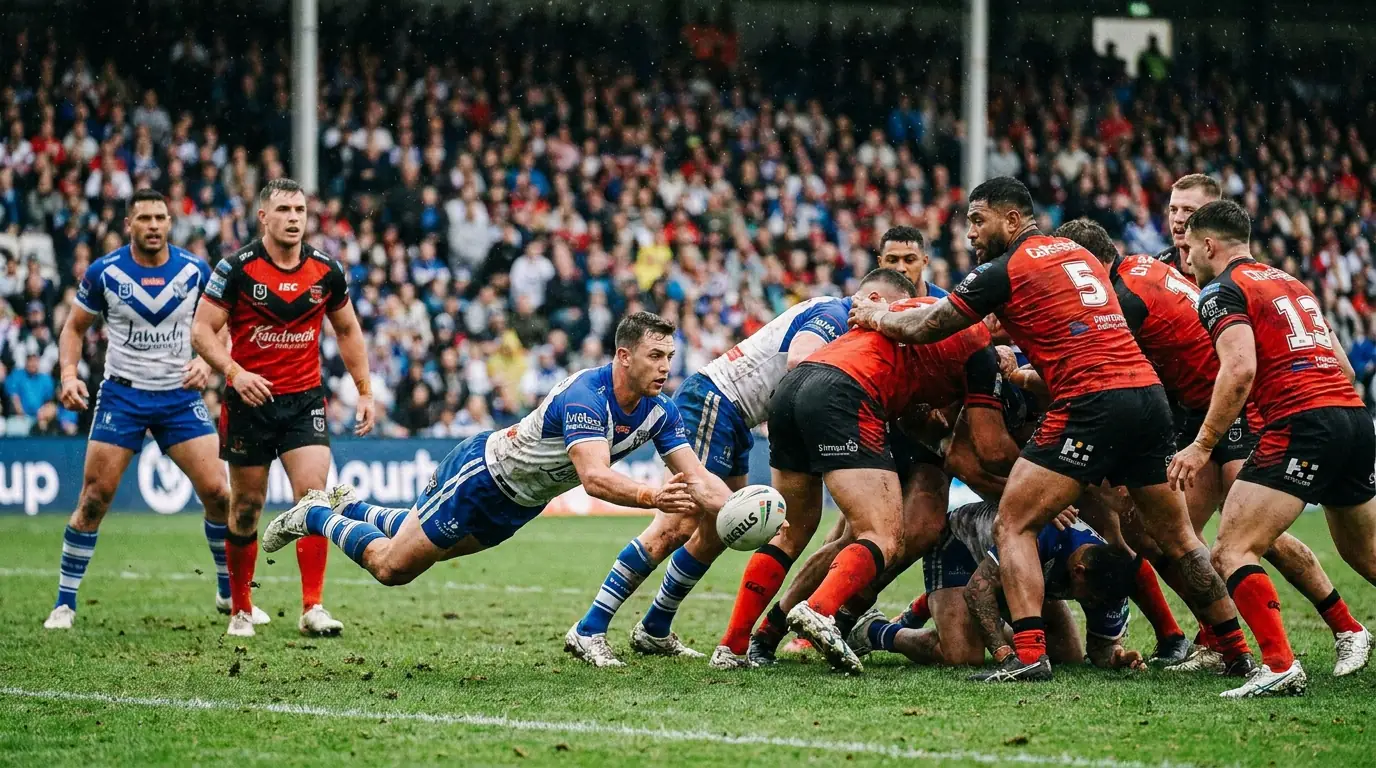
The six-tackle rule in league is the single biggest structural difference for betting purposes. Each team gets six tackles (phases) to advance the ball before handing over possession, which creates a rhythm that union does not have. After the fifth tackle, the attacking team almost always kicks, creating a territorial exchange that resets the game. This predictability makes league easier to model from a scoring perspective — the variance is lower because the structure constrains the range of outcomes.
How Scoring Patterns Differ for Bettors
In the Six Nations 2025, the average match produced 55 total points. Super League fixtures typically average 38-44 total points, but the composition is different. League matches produce more tries per game (eight to ten is normal) at four points each, plus conversions, while union matches produce fewer tries (five to seven) at five points each but add more penalty goals. The practical consequence for the bettor: over/under lines in league cluster around 40-46 points, while union international lines sit around 42-52, and the variance around those lines differs between the two codes.

League scoring is more evenly distributed across the match. The six-tackle structure creates regular scoring opportunities in both halves, and the half-time total in a league match is typically 45-48% of the full-time total. In union, where set-piece dominance and territorial kicking can produce long scoreless periods, the second half tends to be higher scoring than the first, with a spike in the final 15 minutes. This distribution pattern affects first-half and second-half totals markets in both codes, and pricing them identically would be a mistake.
Market Differences Between the Codes
The breadth of betting markets available for union significantly exceeds league. A Six Nations match might offer 80-100 individual markets on a major sportsbook, covering everything from match result and handicap to try scorer, conversion totals, penalty counts, card markets, and exotic props. A Super League match typically offers 40-60 markets, with less depth in player-specific and prop categories.
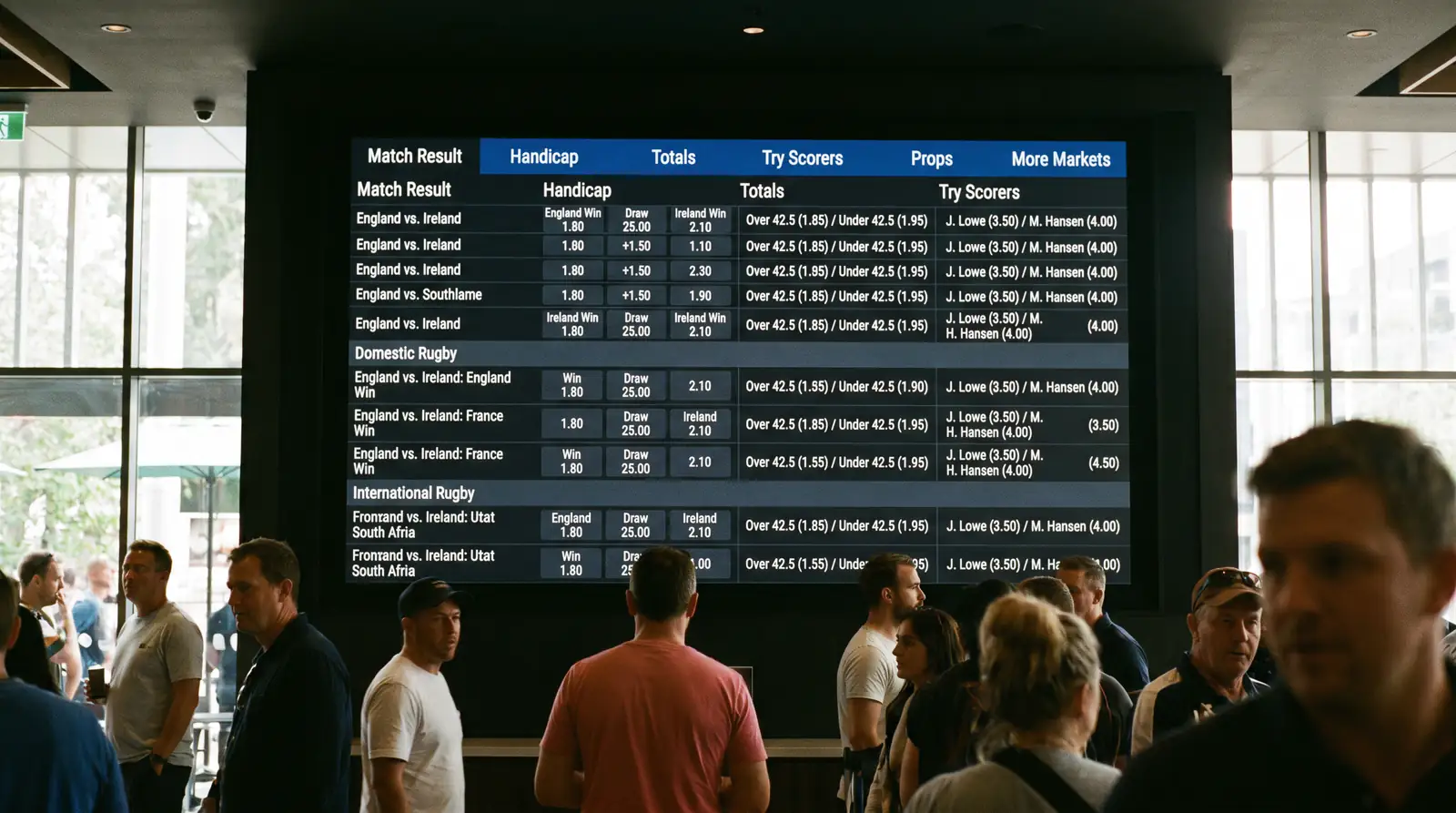
That gap reflects commercial reality. The global rugby market is valued at $6.9 billion (projected to reach $11.9 billion by 2033), and union commands the larger share of global attention, broadcasting revenue, and sponsorship. League’s commercial weight is concentrated in northern England and Australasia, which limits the international betting volume that bookmakers use to justify wide market coverage.
Handicap markets behave differently between the codes. Union handicaps tend to feature wider lines because the talent gap between teams is larger (a Tier 1 nation can beat a Tier 2 side by 50 points). League handicaps are typically tighter because the salary cap in Super League compresses the quality gap — a 20-point handicap in league is considered enormous, whereas the same margin in union is routine for an international mismatch. Tighter handicap lines mean less margin for error, which makes league handicap betting more demanding than union for the punter.
Domestic League Landscapes
The major union competitions for UK bettors are the Premiership, Six Nations, URC, Top 14, Champions Cup, and the international windows (Autumn Internationals, summer tours). Each runs on a different calendar, creating year-round betting opportunities. The major league competition is Super League, supplemented by the Challenge Cup, and international fixtures (primarily the Rugby League World Cup, which runs every four years, and the smaller international calendar).
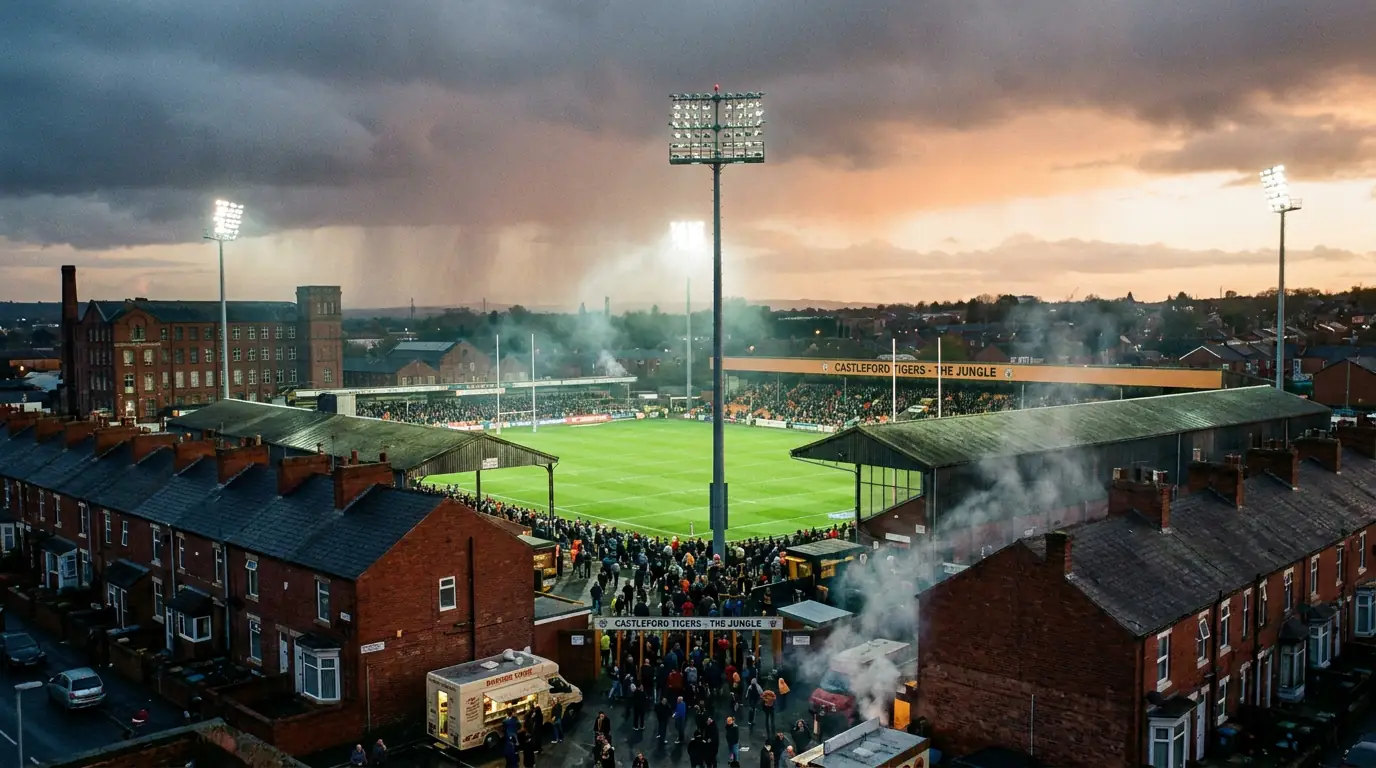
Super League’s season runs from February to October, overlapping with the union season’s busiest periods (Six Nations in February-March, Premiership throughout). The overlap means that sportsbooks split their rugby trading resources between the two codes, and in practice, the union markets receive more attention. For league punters, this creates a recurring edge: Super League prices are less aggressively traded than Premiership or Six Nations prices, meaning soft lines persist longer and the market is slower to correct for team news, injuries, and form shifts.

One practical tip from my experience in both codes: if you are transitioning from union to league betting, start with the totals market rather than the handicap. League totals are more predictable due to the structured possession format, and the learning curve is gentler because you can apply the same scoring-average methodology you use for union without needing to recalibrate your understanding of match dynamics. Handicap betting in league requires a deeper knowledge of the six-tackle rhythm, defensive structures, and fatigue patterns that are unique to the 13-a-side game.
Are draws more common in rugby union or rugby league for betting purposes?
Draws are rare in both codes but marginally more common in rugby league. League’s lower points-per-try and tighter margins produce the occasional tied match, particularly in Super League fixtures between evenly matched sides. Union’s higher scoring variance and the three-point penalty goal make draws even less frequent. In both codes, the draw is priced at long odds (typically 25/1 to 40/1), reflecting its low probability.
Which code offers more betting markets per match?
Rugby union offers significantly more markets per fixture. A major Six Nations match might list 80-100 individual markets on a leading sportsbook, while a Super League match typically offers 40-60. The difference is driven by commercial volume — union attracts more global betting interest, which incentivises bookmakers to maintain wider market coverage. League’s narrower market range means fewer prop and exotic options but also less competition from the general public, which can produce softer prices on the markets that are available.
