
 Available in US
Content
- Match Result Betting: The Straightforward Starting Point
- Handicap Betting: Levelling the Playing Field With Points
- Over/Under Totals: Betting on the Scoreboard, Not the Winner
- Try Scorer Markets: Picking the Players Who Cross the Line
- Accumulators: Stacking Selections for Bigger Returns
- Outright and Futures: The Long Game Before a Ball Is Kicked
- Prop Bets and Specials: The Markets Most Punters Overlook
- Live Betting: Where Rugby's Unpredictability Becomes an Opportunity
- Picking the Right Market for the Right Match

I still remember my first rugby bet — a simple match result punt on England versus Scotland in the 2014 Six Nations. I backed England, they won, and I thought I had figured out the whole game. It took about three months of losing on more complex wagers before I realised that understanding rugby betting markets is not optional — it is the entire foundation. You cannot find value in a market you do not understand, and you cannot assess risk when you do not know what you are actually betting on.
Rugby betting has matured enormously since those early days. Sports betting now accounts for 57.1% of all online gambling activity in the UK, and rugby’s share of that slice has grown steadily alongside the sport’s own commercial expansion. The global rugby market itself reached $6.9 billion in 2025, with a projected climb to $11.9 billion by 2033 — and that growth has dragged the betting markets along with it. More fixtures, more data, more angles, more ways to bet.
What follows is a walkthrough of every major market type you will encounter when betting on rugby in the UK. I have spent over a decade testing these markets across Six Nations, Premiership, and international rugby. Some of them I use every week; others I touch only when specific conditions line up. The goal here is not to tell you which markets are “best” — that depends entirely on your knowledge, your bankroll, and the specific match — but to give you a clear working understanding of each one so you can make that decision for yourself.
Match Result Betting: The Straightforward Starting Point
A mate of mine — someone who had been betting on football for years — placed his first rugby bet and immediately asked me why draws were priced so high. That question tells you everything about why match result betting in rugby works differently from what football punters expect.
Match result is a three-way market: home win, away win, or draw. In rugby union, draws are exceptionally rare, which is why you will typically see them priced at 25/1 or longer. The scoring system — tries worth five points, conversions two, penalties three, drop goals three — makes it statistically difficult for two teams to finish level. Rugby league is slightly different, with four-point tries and two-point conversions, but draws remain uncommon there too.
For most casual punters, match result is the entry point. You watch the game, you have an opinion on who wins, you back that opinion. The margin on three-way rugby markets is generally between 4% and 8%, depending on the bookmaker and the fixture’s profile. High-profile Six Nations matches tend to carry tighter margins because the volume of bets keeps competition between operators fierce. A Friday night Premiership game between mid-table sides will carry wider margins — fewer eyes, less competitive pressure on the bookmaker.
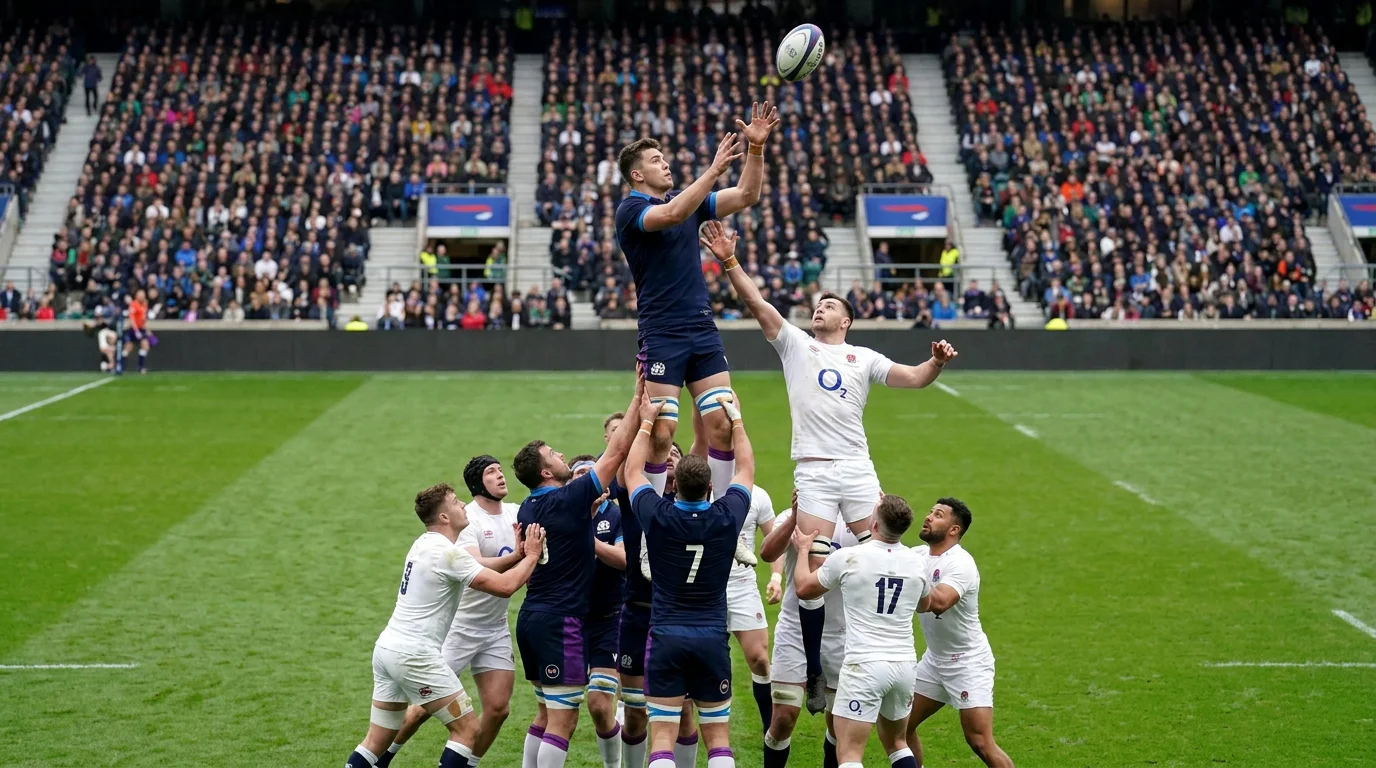
Where match result betting gets interesting is in the assessment of value on strong favourites. When one team is priced at 1/8 or shorter, you are tying up capital for minimal return. I rarely back heavy favourites on match result alone. Instead, I use that strong conviction as a building block — pairing it with a handicap or a totals position where the return justifies the risk. Match result works best for me when the market looks tight, when I have a genuine edge in reading form that the broader market has not priced in. A close three-way split — say, 5/4 home, 6/4 away, 22/1 draw — is where analytical punters earn their money, not on short-priced certainties.
Handicap Betting: Levelling the Playing Field With Points
The 2025 Six Nations averaged 55 points per match, and when you have that kind of scoring range, lopsided results are inevitable. Ireland put up 135 points across their five games while Italy conceded 188. A match result bet on Ireland versus Italy is not really a betting decision — it is a donation to the bookmaker’s margin. Handicap betting exists precisely to make those mismatches worth wagering on.
A handicap market applies a virtual points advantage or disadvantage to one team before kick-off. If Ireland are -18.5 against Italy, they need to win by 19 or more for your handicap bet to land. Italy at +18.5 need to lose by 18 or fewer — or win outright. The half-point eliminates the possibility of a push, forcing a clean win-or-lose outcome.
I use handicap markets more than any other single market type in rugby. The reason is straightforward: they strip away the dead weight of obvious results and force you to think about margin of victory, which demands a much deeper analysis. You need to assess not just who wins but how they win, what their scoring patterns look like, whether they tend to ease off in the final quarter, and whether the opposition have the defensive structure to keep the scoreline respectable.
For a detailed breakdown of handicap mechanics and worked examples, the numbers get more nuanced. European handicaps, for instance, offer whole-number lines where a push is possible. Asian handicaps split your stake across two lines. Each variant changes your risk profile in ways that matter when you are betting systematically rather than casually. The key principle remains the same: handicap betting rewards the punter who understands not just the outcome but the shape of the game.
One thing I have learned through years of handicap betting is that late tries distort results far more than most punters account for. A team trailing by 30 with ten minutes left will sometimes score a couple of consolation tries against a defence that has mentally switched off. Those tries are meaningless in the context of the match but decisive in the context of a -24.5 handicap line. Factor in garbage time, or your handicap record will not match your match-reading ability.
Over/Under Totals: Betting on the Scoreboard, Not the Winner
There was a Premiership match last season — driving rain at the Rec in Bath — where I watched the total points line sit at 44.5 right up until two hours before kick-off. Anyone who had checked the weather forecast and the two teams’ wet-weather records knew that line was too high. The match finished 12-9. Totals betting rewards the punter who does the work that the line does not always reflect.
The over/under market asks you to bet on whether the combined score of both teams will be above or below a specified line. For Six Nations matches, that line typically sits between 40.5 and 55.5 depending on the teams involved. Premiership lines tend to be slightly lower for mid-table clashes but can spike above 50 when two expansive sides meet. That tournament-wide scoring average I mentioned in the handicap section masks enormous variation — some fixtures barely scraped 30 while others blew past 70.
I find totals markets most useful in two situations. The first is when I have a strong view on how the match will be played — a forward-dominated battle in poor conditions, or a running game between two porous defences — but no clear opinion on the winner. The second is when the public sentiment seems to be dragging the line in one direction. Big televised matches, particularly in the Six Nations, tend to attract casual money on the over side because people want to watch an exciting game and bet accordingly. That can push the over line above its true value, creating systematic opportunities on the under.
Totals markets also come in variant forms — first-half totals, team totals, and try totals. First-half unders is a market I return to often in international rugby, where the opening 40 minutes are frequently cagier than the second half as teams feel each other out. Team totals let you isolate your view on one side’s attacking capability without needing to predict the opposition’s output. These sub-markets carry slightly higher margins, but they also carry less public attention, which sometimes means less efficient pricing.
Try Scorer Markets: Picking the Players Who Cross the Line
Try scorer markets are where casual punters and serious analysts collide — and it is usually the casual punters who come off worse. The Six Nations 2025 produced 108 tries across 15 matches, averaging 7.2 per game. In 2026, that ticked up to 7.4 per game with 111 tries. Those are a lot of try-scoring events to bet on, but the market structure means you are fighting an uphill battle against the bookmaker’s margin unless you have done your homework on positional patterns.

There are three main variants. First try scorer asks you to name the player who will score the opening try — highest risk, highest reward, typically priced from 5/1 upwards even for likely candidates. Anytime try scorer is more forgiving: your player needs to score at any point during the match. Last try scorer mirrors the first try scorer but with the added chaos of late substitutions and fatigue-driven defensive errors.
The edge in try scorer markets comes from positional analysis. Wingers and centres score the bulk of tries in both union and league, but the margins on those players are priced accordingly — the bookmaker knows this too. Where I have found consistent value over the years is in back-row forwards and scrum-halves, particularly in matches where I expect a dominant pack to drive over from close range. Number eights and blindside flankers who score from pick-and-go at the base of the ruck are frequently underpriced compared to the wingers who everyone assumes will score.
The other angle worth exploring is replacement players. A winger coming off the bench at 55 minutes against a tiring defence has a genuine try-scoring opportunity, and the anytime try scorer odds on that replacement are often longer than they should be because the market is set before squad announcements. Timing matters in these markets more than almost anywhere else.
Accumulators: Stacking Selections for Bigger Returns
Every Saturday during the Premiership season, my phone lights up with messages from mates asking about their “banker acca” — four or five match results, sometimes mixed with try scorers, always at some eye-catching combined price. And every Monday, those same mates are explaining which leg let them down. Accumulators are the most popular bet type in UK rugby betting and, frankly, the one that costs recreational punters the most money over time.
An accumulator combines multiple selections into a single bet, with the returns from each leg rolling into the next. A four-fold at individual prices of 1/2, 4/5, 1/1, and 2/1 produces a combined return that dwarfs any individual bet. The appeal is obvious — small stake, massive potential payout. The mathematics, however, are brutal. Each additional leg multiplies not just the potential return but also the probability of failure. The bookmaker’s margin compounds across legs too, so a four-fold with a 5% margin per leg carries an effective overround that is significantly higher than any single bet.
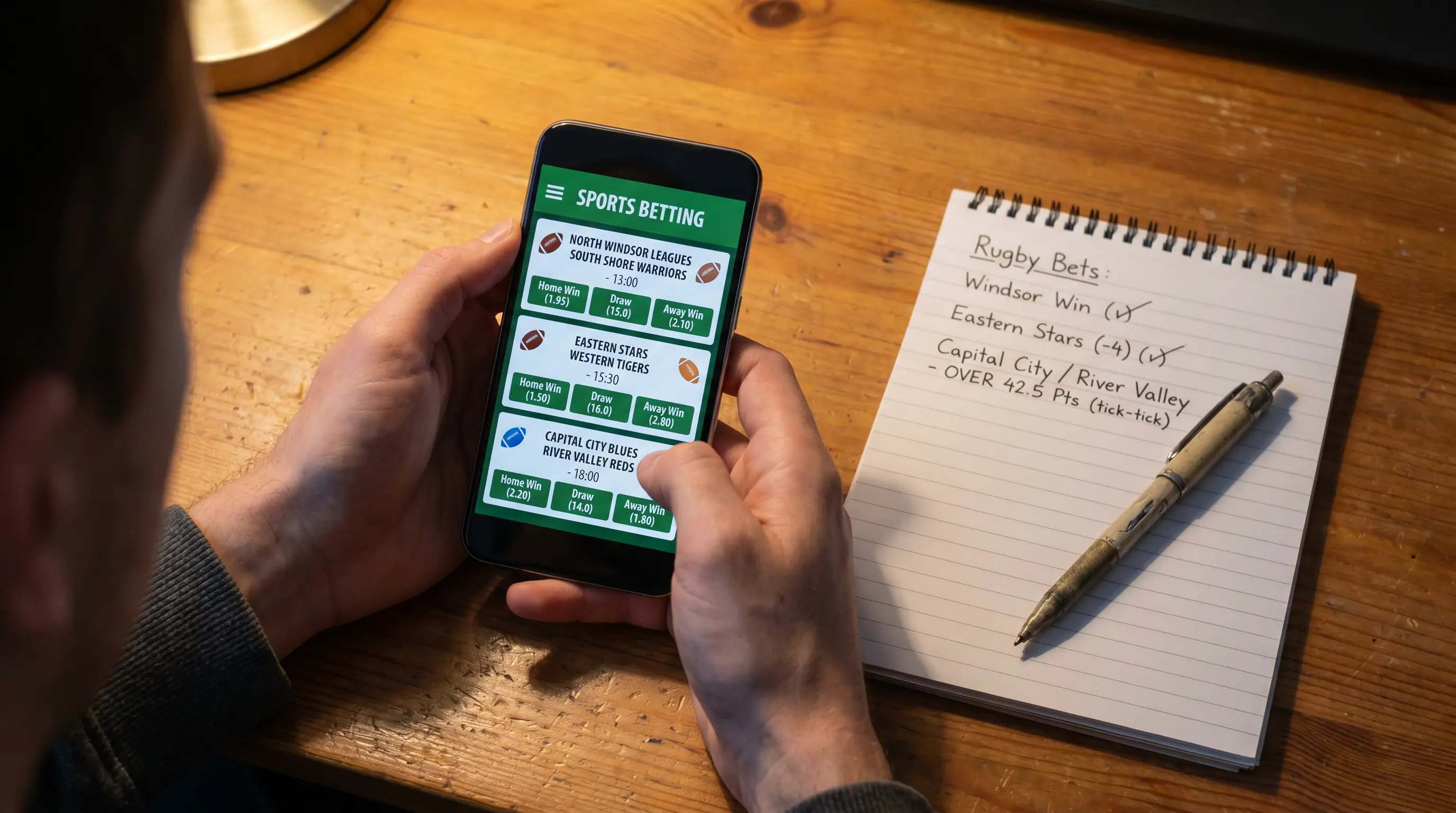
I am not anti-accumulator. I use them selectively, particularly during concentrated fixtures like the Six Nations weekends, where I might combine two or three handicap selections that I have individually assessed as value. The difference between a disciplined acca and a punt is in the selection process: every leg should stand on its own analytical merit. If you would not bet it as a single, it should not be in your accumulator. Acca insurance offers — where the bookmaker refunds your stake if one leg loses — can shift the expected value in your favour, but only if the terms are genuinely generous. Read the conditions; most require minimum odds per leg and a minimum number of selections.
Outright and Futures: The Long Game Before a Ball Is Kicked
France claimed their 20th Six Nations title in 2026 — a result that looked increasingly likely from Round 3 onwards but was available at considerably longer odds before the tournament began. That is the essence of outright betting: you are trading time for value. The earlier you commit, the better the price, but the more uncertainty you absorb.
Outright markets cover tournament winners, top try scorers for a season, Grand Slam winners, conference winners in leagues like the URC, and Premiership champions. The time horizon ranges from weeks for a Six Nations bet to months for a season-long wager to years for a Rugby World Cup position placed well in advance of the tournament.

The pricing mechanics of outright markets differ from match markets in ways that favour patient punters. Bookmakers build larger margins into outrights because the exposure period is longer and the model uncertainty is higher. But this also means the prices are less sharp — there is more room for disagreement between your assessment and the market’s. I keep a list of outright positions I want to take at specific prices, and I wait for those prices to appear rather than betting impulsively when the market opens. The 2026 Six Nations is a good example: I had France flagged as a strong contender at 3/1 pre-tournament and placed my bet at that price, even though the consensus at the time favoured Ireland.
Each-way outrights add another dimension. In markets with six or more runners — which the Six Nations naturally provides — an each-way bet pays out if your selection finishes in the top two or three, depending on the operator’s terms. The each-way fraction (typically 1/4 odds) can represent excellent value on mid-tier nations that are unlikely to win outright but could realistically finish second.
Prop Bets and Specials: The Markets Most Punters Overlook
Prop markets are where I go when I have a strong view on a specific aspect of a match but cannot translate that view into a match result, handicap, or totals position. These are the specialist markets — total conversions, total penalties in a match, shirt number of the first try scorer, man of the match, total cards — and they are often the least efficiently priced markets on the board.
The reason for that inefficiency is straightforward: bookmakers devote their sharpest resources to the high-volume markets. Match result, handicap, and totals attract the most money, so those prices are honed by both the compiler’s model and the weight of informed money. Prop markets attract less volume and less sharp action, which means the initial prices can sit uncorrected for longer. I have found consistent edges in penalty count markets, particularly when I know the referee appointment in advance and can cross-reference it with historical penalty data for that official.
The catch with props is that the margins are typically wider to compensate for the bookmaker’s greater uncertainty, and the maximum stake limits are lower. You will rarely be able to place a significant bet on a prop market the way you can on match result or handicap. Treat props as supplementary positions — small, well-researched bets that add diversification to your overall portfolio for a fixture — rather than the centrepiece of your betting activity.
Live Betting: Where Rugby’s Unpredictability Becomes an Opportunity
The UK processes approximately 290 million online bets on real events every single month, and an increasing proportion of those bets are placed during the event itself. Live betting — also called in-play or in-running — has transformed how I approach rugby wagering. Instead of committing all my capital before kick-off, I now routinely hold back a portion of my stake for moments during the match where I believe the in-play odds have overreacted to what just happened on the pitch.
Rugby is particularly well-suited to live betting because of its momentum swings. A yellow card sends a player to the sin bin for ten minutes, creating a sustained period of numerical advantage. A red card removes a player entirely. A team conceding an early try might see their in-play match result odds drift significantly, even if the overall quality gap between the sides has not changed. These are the moments where analytical punters who are watching the game — genuinely watching, not just checking the score — can find mispriced odds.

The remote casino, betting, and bingo sector generated GGY of £2.12 billion in Q4 2025 alone, and live betting is a major driver of that revenue. Bookmakers know this market is profitable, and their in-play margins reflect that — typically wider than pre-match equivalents. The speed of the market also works against you: odds update rapidly after a score or a card, and the best prices are available for only seconds. Cash-out features add another layer of complexity, letting you lock in a profit or cut a loss before the final whistle. Cash-out is a useful tool, but the prices offered are always slightly worse than the theoretical fair value, because the bookmaker builds in a margin on that transaction too.
My live-betting approach is selective. I identify one or two scenarios before the match where I think in-play value might emerge — a specific sin-bin opportunity, a second-half scoring burst from a team that starts slowly — and I only bet live if those scenarios materialise. Reacting on instinct to whatever happens in real time is the fastest way to erode a bankroll.
Picking the Right Market for the Right Match
Mark Oliver, chairman of sports consultancy Oliver and Ohlbaum, put it bluntly when he said rugby stakeholders have spent too much time trying to extract incremental commercial returns without doing enough to engage fans and followers more regularly and meaningfully. That observation applies just as directly to how most punters approach rugby markets. Too many bettors default to the same market type — usually match result or an accumulator — for every fixture, without considering whether a different market might better reflect their actual analytical edge.
Picking the right market for a given match is a skill in itself, and it develops with experience. I think of it as a matching exercise: match the strength of your insight to the market that rewards that insight most directly. If your edge is in reading defensive patterns and predicting close games, handicap markets are your territory. If you have a detailed understanding of scoring trends for specific teams, totals markets will serve you better. If you study player data and positional patterns, try scorer markets are where your work pays off.
Some practical guidelines I have developed over the years. For heavy mismatches — where one team is odds-on at 1/5 or shorter — match result is almost never worth it; move to handicap or team totals. For matches between evenly rated sides, match result or draw-no-bet offers better risk-adjusted returns than a handicap where the line is tight. For tournaments with a predictable structure, outright positions placed early give you leverage that no single-match market can replicate.
The biggest mistake I see among developing punters is treating all markets as interchangeable. They are not. Each market type has different margin structures, different liquidity, different volatility, and different data requirements. A punter who spreads their activity intelligently across three or four market types, selecting the right one for each fixture, will outperform the punter who bets the same market every time — assuming equal analytical ability in both cases. Rugby gives you a wider menu of market options than most people realise. Use the full menu.
Which rugby betting market has the lowest bookmaker margin?
Handicap and match result markets on high-profile international fixtures — particularly Six Nations and Rugby World Cup matches — tend to carry the tightest margins, typically between 3% and 5%. These matches attract the highest volume of bets, which forces bookmakers to keep their pricing competitive. Prop markets and try scorer markets generally carry wider margins because they attract less informed money and are harder for bookmakers to model precisely.
Can I combine different rugby market types in one bet?
Most UK bookmakers allow you to combine selections from different market types into an accumulator or a bet builder, provided the selections are from different matches or are deemed independent within the same match. You can typically combine a match result from one fixture with a try scorer from another and a handicap from a third. Same-match multiples — such as combining a team to win with an over/under line from the same fixture — are increasingly available through bet builder tools, though the margins on these products tend to be higher than on standard accumulators.
What is the difference between first try scorer and anytime try scorer?
First try scorer requires your selected player to score the opening try of the match. This is a high-risk, high-reward market with prices typically starting at 5/1 or longer. Anytime try scorer is more forgiving — your player needs to score at any point during the 80 minutes. Prices are shorter, often starting around 2/1 for likely candidates, but the probability of winning is significantly higher. The expected value on both markets is broadly similar once you account for the bookmaker’s margin, so the choice between them is largely about risk appetite.
Are prop markets available for all rugby fixtures?
Prop markets are most commonly available for international matches, Six Nations fixtures, and high-profile Premiership games. Lower-tier club matches, European Challenge Cup games, and women’s fixtures may only have core markets — match result, handicap, and totals. The availability depends on the bookmaker and the level of data they have for the specific fixture. If you regularly bet on prop markets, it is worth checking multiple operators because coverage varies significantly between platforms.
