
 Available in US
I placed my first rugby bet on a Six Nations match in 2014 — a tenner on Ireland to cover a seven-point spread against Italy. I had watched every minute of Ireland's previous two rounds, studied their pack weight and lineout success rate, and felt genuinely confident. They won by 22. That single wager, modest as it was, taught me something I still carry a decade later: rugby rewards the punter who does the homework.
Sports betting commands 57.1% of the UK's online gambling market, making it the dominant segment by a wide margin. Roughly one in ten British adults places an online sports bet in any given quarter, and a significant chunk of that activity flows through rugby fixtures — from the raw intensity of a Premiership Friday night to the continent-shaking drama of a Six Nations decider. Yet most rugby betting content online reads like a recycled glossary: here is what a handicap means, here is how odds work, good luck. That is not what I am building for you here.

This guide is the product of more than ten years spent analysing rugby markets, tracking line movements, and — I will be honest — making plenty of costly mistakes that eventually became lessons. I have watched the UK betting landscape shift from high-street dominance to a mobile-first ecosystem where 290 million online bets land every single month. I have seen bookmakers sharpen their rugby models, and I have seen punters sharpen theirs in response. What I want to share across these pages is not a quick-start manual but a genuine framework: how to read the market, where the data matters most, and which traps swallow bankrolls whole.
Whether you are brand new to rugby wagering or you have been punting on the oval ball for years without a coherent system, this guide walks you through every layer — the UK regulatory environment, core markets, tournament dynamics, analytical tips, platform selection, strategy fundamentals, the rise of women's rugby as a betting frontier, and the responsible gambling infrastructure that keeps this entire ecosystem accountable. Every claim is anchored in data, every opinion earned through practice. Let's get into it.
What a Decade of Rugby Betting Taught Me in Five Bullet Points
- UK remote gambling GGY hit GBP 7.8 billion in the year to March 2025; sports betting holds 57.1% of the online market, with rugby growing at 8.1% annually.
- Three markets — match result, handicap, totals — carry the bulk of rugby turnover; master their interplay before exploring exotic props.
- Club-level fixtures (Premiership, URC) offer consistently softer lines than international matches because fewer punters scrutinise them.
- Flat staking at 1-2% of bankroll plus a written bet log is the minimum system for long-term survival.
- Women's rugby is an emerging betting frontier — the 2025 World Cup tripled attendance and sponsorship surged 330%.
Inside the Numbers: How the UK Gambling Machine Actually Works
A few years ago, I sat in a Gambling Commission stakeholder session where an analyst projected a single slide: total industry GGY — gross gambling yield, the amount operators keep after paying out winners — broken down by sector. The room went quiet. The numbers were staggering, and they have only grown since.
UK Gambling Industry GGY, Q4 2025
Total GGY (incl. lotteries): GBP 4.5 billion
Remote Casino, Betting and Bingo GGY
GBP 2.12 billion in Q4 2025 alone
Annual Remote GGY (Apr 2024 - Mar 2025)
GBP 7.8 billion, up 13.1% year-on-year
Monthly Online Bets on Real Events
290.03 million wagers placed per month across the UK
Strip away lotteries and the UK gambling industry still produced GBP 3.3 billion in a single quarter at the end of 2025. The remote sector — everything you access through a screen — generated GBP 2.12 billion of that, with remote casino alone accounting for 70% of the online pie. Over the full financial year, remote gambling turnover hit GBP 7.8 billion, a 13.1% jump that outpaced inflation, wage growth, and most FTSE sectors. Land-based gambling grew too, but at a more modest 3.6%, confirming what any punter with a smartphone already knows: the migration to digital is relentless.

The sheer volume of activity tells its own story. Every month, UK punters collectively place 290 million online bets on real-world events. That is roughly 9.6 million wagers every single day, flowing through platforms licensed by the Gambling Commission — a regulator that, whatever you think of its enforcement record, maintains one of the strictest licensing frameworks on the planet. The overall UK online gambling market reached USD 9.0 billion in 2025, and industry projections place it at USD 13.2 billion by 2034, driven by mobile penetration, in-play technology, and expanding market coverage across niche sports — rugby very much included.
If those 290 million monthly bets were laid end-to-end as betting slips, they would wrap around a rugby pitch more than 36,000 times. The volume of UK online wagering is genuinely industrial in scale.
Understanding this landscape is not academic trivia for the rugby bettor. The size and liquidity of the UK market directly affect odds quality, market depth, and how quickly lines move. A GBP 7.8 billion remote ecosystem means bookmakers compete fiercely for your custom — and that competition, when you know how to exploit it, is your single biggest structural advantage.
Where Rugby Sits in the UK Betting Ecosystem
Here is a number that surprised me when I first encountered it, even as someone immersed in this world: over 800 million people globally express some level of interest in rugby. That is not a typo — eight hundred million. Only 24 million of those qualify as "superfans" of professional club rugby, and around 200 million tune in for at least part of the men's Rugby World Cup every four years. The gap between casual awareness and active engagement is enormous, and it mirrors the betting market perfectly.

Rugby's Market Position
Sports betting holds a 57.1% share of the UK's online gambling revenue, making it the single largest segment. Within that, rugby occupies a growing but still underserved niche. The global rugby market was valued at USD 6.9 billion in 2025 and is forecast to reach USD 11.9 billion by 2033, expanding at an 8.1% compound annual growth rate. For bettors, this growth translates into deeper markets, tighter odds, and more in-play opportunities with each passing season.
Brett Robinson, the Chair of World Rugby, acknowledged the challenge candidly when he noted that the sport's on-field product is broadly positive but that rugby must do better at explaining, promoting, and celebrating itself in an increasingly competitive entertainment market. That tension — a strong core product with underexploited commercial potential — is precisely why rugby betting offers value that more saturated markets like football often cannot. Football odds are hammered into razor-thin margins by millions of recreational and sharp punters alike. Rugby lines, particularly at club level, tend to be softer.
From a UK-centric perspective, rugby betting peaks around international windows. Six Nations matches draw television audiences of five million or more, triggering a surge in wagering volume that shifts odds noticeably in the 48 hours before kick-off. Premiership fixtures, by contrast, attract 250,000 to 350,000 TV viewers per match — passionate but niche — and the betting lines reflect that smaller pool of attention. If you know where to look, club-level rugby offers pockets of inefficiency that international rugby rarely does.
The sport's commercial trajectory matters for another reason: a market growing at 8.1% annually attracts operator investment. More operators investing means more rugby-specific markets, better live-betting infrastructure, and promotional offers targeted at oval-ball punters. Five years ago, finding a bookmaker that offered try-scorer props for a URC match was a genuine challenge. Today, it is standard on most major UK platforms. That expansion is not slowing down.
With the financial machinery mapped out, the next question is practical: what exactly can you bet on in a rugby match?
Core Rugby Betting Markets: Three Wagers Every Punter Must Understand
My first season of serious rugby betting, I stuck exclusively to match-winner bets. Simple, clean, comforting. Then I watched a Premiership match where my backed team won by a single point after trailing by 14 at half-time — and I realised I had left money on the table by ignoring the handicap and totals lines that would have paid handsomely. The match-winner market is the front door of rugby betting, but the real architecture sits behind it.
Rugby offers a wide menu of wagering options, and the depth of that menu has expanded dramatically in recent years. For this overview, I am focusing on the three foundational markets that account for the vast majority of pre-match rugby turnover. Each one rewards a slightly different analytical skill, and together they form the backbone of any competent rugby betting approach. For a detailed breakdown of every wager type worth knowing, the dedicated markets guide goes much deeper.
Match Result
The simplest rugby bet: pick the winner. In rugby union, a draw is possible but rare — roughly 2-3% of professional matches end level. Rugby league virtually never draws. This market suits punters who trust their read of overall team strength and matchday conditions. Margins tend to be tighter on high-profile fixtures and wider on lower-tier club matches where bookmaker models rely on thinner data.
Handicap (Spread)
The bookmaker assigns a points advantage or deficit to each team, levelling the perceived gap. If you back a -7.5 favourite, they must win by 8 or more points for your bet to land. Handicap betting is where rugby knowledge truly pays — understanding how a dominant scrum translates into territorial advantage, or how a leaky lineout inflates scoring, gives you an edge the casual punter simply does not have.
Totals (Over/Under)
A wager on the combined score of both teams. The bookmaker sets a line — say 44.5 points — and you decide whether the match will produce more or fewer. The 2025 Six Nations averaged 55 points per match across its 15 fixtures, which tells you something critical: international rugby, especially in the northern hemisphere, has been trending higher in scoring output. Conditions, squad rotation, and referee appointments all shift this number.
The interplay between these three markets is where strategic punters find their edge. A match where you fancy the underdog to keep it tight might present value on the handicap and the under simultaneously. A fixture featuring two high-tempo, error-prone sides might scream over on totals even if the match-winner market looks like a coin flip. Cross-referencing markets is not overthinking — it is how you extract maximum value from a single fixture.

Sample Handicap Calculation
Suppose Team A is a -6.5 favourite at decimal odds of 1.90. You stake GBP 20. If Team A wins by 7 or more points, the handicap bet lands and your return is 20 x 1.90 = GBP 38.00 (profit GBP 18.00). If Team A wins by exactly 6, the handicap bet loses — the margin did not clear the 6.5-point line. This half-point line eliminates draws on the handicap, forcing a clean win-or-lose outcome on every slip.
One pattern I track closely: when the totals line and the handicap line diverge from their expected relationship, it often signals that the bookmaker has received lopsided money on one market but not the other. That dissonance is a flag, not a guarantee, but it prompts me to dig deeper into team news and conditions before committing.
Rugby Union vs Rugby League: What Changes for the Bettor
People outside the UK sometimes assume union and league are minor variations of the same sport. Spend ten minutes with a betting slip for each and that illusion evaporates. The structural differences between the two codes alter every market you touch.
| Feature | Rugby Union | Rugby League |
|---|---|---|
| Players per side | 15 | 13 |
| Points for a try | 5 | 4 |
| Conversion value | 2 | 2 |
| Penalty/drop goal | 3 | 2 (penalty); 1 (drop goal) |
| Set-piece complexity | High (scrums, lineouts, mauls) | Low (play-the-ball restarts) |
| Average match points | 40-55 (international) | 35-50 (Super League) |
| Draw frequency | 2-3% of matches | Under 1% |
| Handicap relevance | Critical — set-piece dominance creates blowouts | Important — faster scoring can produce late covers |
The practical takeaway is this: union's set-piece complexity means that forward dominance — scrum penalties, lineout steals, rolling mauls — translates directly into territorial control and scoreboard pressure. A union team with a superior pack can suffocate opponents for long stretches without scoring, then convert three penalties in quick succession. League, with its structured six-tackle sets and faster ball recycling, produces a more even distribution of scoring opportunities across the match. Momentum swings are sharper and more frequent in league, which makes in-play wagering a different beast entirely.
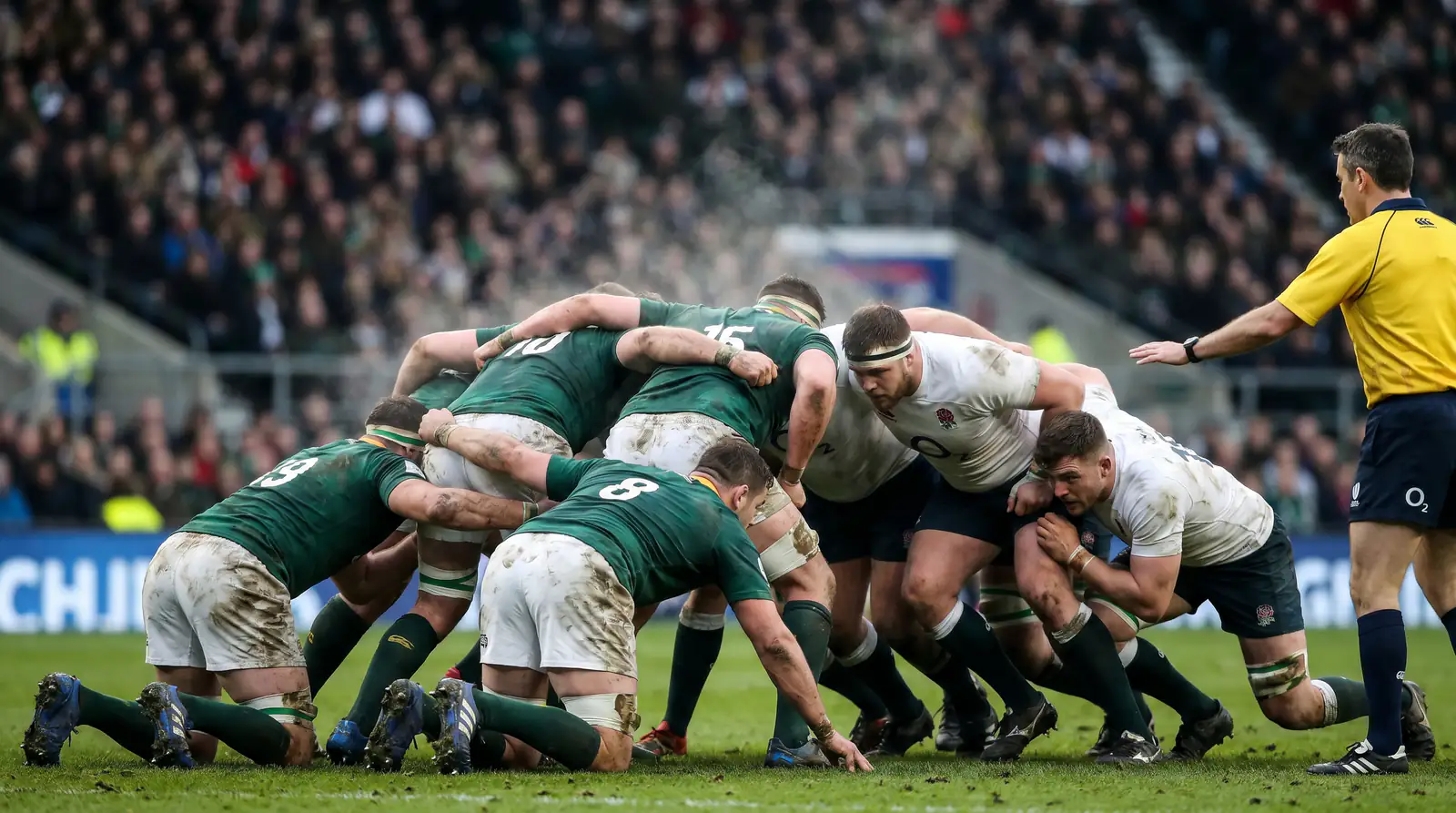
From a betting standpoint, I find union handicaps more predictable at the top level because set-piece advantages are measurable and relatively stable across a season. League handicaps carry more variance because a single line break can shift the scoreboard by six points in seconds. If you are new to rugby wagering, starting with union's more structured rhythm will give you a better analytical foundation before tackling league's chaos.
Six Nations Betting: Why This Tournament Reshapes the Entire Market
Every February, my workload doubles. Not because rugby suddenly gets more complicated, but because the Six Nations turns casual sports fans into active bettors overnight. Colleagues who spend the rest of the year betting on Premier League football suddenly want to know about Ireland's scrum stats or whether France can cover a 12-point spread in Paris. The tournament's gravitational pull on UK wagering is genuinely unique.
Six Nations 2025
1,050,465 stadium attendance; 108 tries in 15 matches (7.2 per match); average 55 points per game
Six Nations 2026
995,964 attendance (66,398 avg); 111 tries in 15 matches (7.4 per match); France crowned champions for the 20th time
TV Audience Gap
Six Nations draws 5 million+ viewers per match vs 250,000-350,000 for a Premiership fixture
Those TV numbers explain everything about Six Nations betting dynamics. When five million people watch a match, a substantial fraction of them place bets — many recreationally, many for the first time that season. This flood of casual money moves lines in ways that regular-season club fixtures never experience. I have tracked Six Nations opening lines versus closing lines for seven consecutive tournaments, and the pattern is consistent: favourites in marquee matches (England-France, Ireland-Scotland) see their handicap lines tighten by 1.5 to 3 points between Tuesday morning and Saturday kick-off, because recreational money overwhelmingly backs the perceived stronger side.
For the analytical punter, this creates a structural window. If your model gives you a number before the market opens, and you agree with the early line, placing your bet before that recreational surge compresses the value is a repeatable edge. It is not glamorous, but consistent early-week positioning on Six Nations fixtures has been one of the most reliable patterns in my decade of rugby wagering.

The scoring data reinforces why totals markets deserve special attention during the tournament. The 2025 edition produced 108 tries across 15 matches, and 2026 pushed that even higher to 111 tries — 7.4 per match. France's 20th title in 2026 was built on attacking rugby that generated points in bunches, and Italy continued to concede at a rate that makes their fixtures particularly interesting for over/under punters. For a full breakdown of strategies for Six Nations wagering, the dedicated tournament guide covers round-by-round analysis and historical trends.
France's 2026 Six Nations title was their 20th in the tournament's history, yet they did not win a single Grand Slam along the way — proof that consistency across all five rounds matters more than any individual blowout result.
The Rugby Betting Calendar: When the Value Windows Open
Rugby's structure creates distinct betting seasons, each with its own character and analytical demands. Understanding the calendar is not just about knowing when to bet — it is about knowing when bookmaker attention is thinnest and lines are softest.
Six Nations (Feb - Mar)
The crown jewel of European rugby betting. Fifteen matches across five rounds, each one nationally televised. Highest liquidity, sharpest lines, but also the greatest influx of recreational money. Ideal for punters who work with early-week positioning.
Rugby World Cup (every 4 years)
The global event. The 2027 edition in Australia will generate massive market depth across pool stages, knockouts, and outright futures. World Cup cycles produce the widest outright markets and the longest-duration positions in rugby betting.
Premiership / URC / Top 14 (Sep - Jun)
Club rugby runs for the bulk of the year and offers the most consistent volume of fixtures. Lines tend to be softer here because bookmaker modelling relies on smaller data sets and fewer eyeballs scrutinise the odds. This is where dedicated punters find their bread-and-butter value.
Autumn Internationals (Nov)
Northern hemisphere hosts meet southern hemisphere touring sides. These matches produce some of the most interesting handicap dynamics because the teams play infrequently, creating genuine uncertainty that softens bookmaker confidence.
The revenue gap between international and club rugby is instructive for bettors. An international Test match generates roughly USD 12 million in revenue, while a leading club fixture produces just USD 1-2 million. That commercial disparity maps directly onto betting volume: bookmakers devote more resources to pricing international matches accurately, leaving club fixtures with wider margins and greater opportunity for the informed punter. My strongest returns over the past three years have come not from Six Nations or World Cup bets but from Premiership and URC fixtures where I had data the market clearly did not.

Sharpening Your Rugby Betting Analysis: The Habits That Separate Winners
Mark Oliver, the co-founder of Oliver & Ohlbaum Associates and one of the sharpest commercial minds in sports consulting, made a blunt observation about rugby's competitive position: the sport is not moving fast enough, while competitors from UFC to Formula One and cricket have innovated and left rugby behind. That criticism was aimed at rugby's governing bodies, but it applies equally to most rugby bettors. The majority punt on instinct, loyalty, or whatever the TV commentator said five minutes before kick-off. A structured, analytical approach to selecting your bets is what separates the punter who grinds out a positive year from the one who wonders where the bankroll went.
Over the years, I have distilled my pre-match process into a set of habits rather than a rigid checklist. Habits survive busy weeks and Friday-night temptation; checklists get abandoned by round three of the Six Nations. The foundation is data: I pull team-level statistics for the current season — points scored and conceded, try count, penalty count, scrum and lineout success rates, metres carried, and tackle completion. None of this data is hidden behind a paywall; most of it lives on free rugby statistics sites if you know where to look.
The gap between high-profile fixtures and the rest of the schedule is where research pays off most. Premiership and URC weeks are when I do the heaviest analytical work — pulling scrum success rates, lineout steal percentages, penalty counts, and territory metrics from the current season. Bookmakers price these fixtures with less precision than an Ireland-France showdown because the modelling inputs are thinner and public attention is lower. I spend 70% of my research time on these quieter rounds for exactly this reason. The Six Nations might be more exciting, but the best return-per-hour of analytical effort sits elsewhere.
Do
- Build a personal stats database — even a simple spreadsheet tracking tries, penalties, and margins by team per season
- Compare your own pre-match projection to the bookmaker's line before checking any tipster content
- Record every bet you place with stake, odds, reasoning, and outcome — this log is your most valuable learning tool
- Focus research time on fixtures where public attention is lowest and bookmaker models are thinnest
Don't
- Chase losses by increasing stakes after a losing weekend — this is the single fastest route to a blown bankroll
- Rely on a single metric (form, home advantage, head-to-head) in isolation — rugby is multivariate
- Ignore squad announcements — a last-minute injury to a goal-kicking fly-half can swing a handicap line by 3-5 points
- Back accumulators as your default bet type — the compounding margins work against you exponentially
One habit that took me embarrassingly long to adopt: writing down my reasoning before placing the bet, not after. When you force yourself to articulate why you believe the line is wrong, you catch lazy thinking in real time. Half the bets I nearly placed last season died in that step — and my return on investment thanked me for it.

Evaluating a Rugby Betting Platform: What Actually Matters
I once spent three months on a platform that offered brilliant football markets and absolutely skeletal rugby coverage — three match-result options and a single handicap line for Premiership fixtures, nothing for the URC, no try-scorer props at all. Lesson learned: a bookmaker's general reputation tells you very little about how well they serve rugby bettors specifically. The UK currently hosts 8,148 licensed gambling premises, including 5,669 betting shops, but the online space is where rugby market depth varies most dramatically from one operator to the next.
Choosing a platform is not about finding the "best" bookmaker in some abstract ranking — it is about matching an operator's strengths to your betting style. If you primarily bet pre-match handicaps on the Six Nations, you need competitive handicap odds and early market release (some operators open Six Nations lines on Monday, others wait until Thursday). If you specialise in live wagering during Premiership matches, you need a platform with fast in-play updates and a cash-out function that does not lag behind the broadcast by 30 seconds. These are different requirements, and no single platform excels at everything.
The non-negotiable starting point is licensing. Every operator you use must hold a valid licence from the UK Gambling Commission. This is not a suggestion — it is a legal requirement for any platform accepting bets from UK residents. A UKGC licence means the operator is subject to mandatory affordability checks, advertising standards, self-exclusion protocols, and financial auditing. If you cannot find a licence number on the operator's website (usually in the footer), walk away.
Platform Evaluation Checklist for Rugby Bettors
- Verify a valid UK Gambling Commission licence number on the operator's site
- Check rugby-specific market depth: do they cover union and league, club and international?
- Compare handicap and totals odds across at least three platforms for the same fixture
- Test the in-play interface during a live match before committing significant stakes
- Confirm the availability and terms of cash-out on rugby markets
- Review deposit limits, reality checks, and self-exclusion tools in your account settings
- Assess how early they release lines for upcoming rugby fixtures (Monday vs Thursday matters)
One detail I have become almost obsessive about is odds comparison. Even a 0.05 difference in decimal odds on a regular bet compounds meaningfully over a full season. I maintain accounts with three licensed operators and routinely compare lines before placing any stake above GBP 15. It takes 90 seconds and has added measurable value to my annual return. For a thorough walkthrough of platform evaluation criteria and what to look for in a rugby-focused bookmaker, the dedicated guide covers licensing, market depth, odds competitiveness, and mobile experience in granular detail.

Beyond odds, pay attention to how an operator handles rugby promotions. Enhanced odds on Six Nations matches are common, but the terms vary enormously. Some operators cap the enhanced-odds stake at GBP 1 (essentially a marketing gimmick), while others allow meaningful stakes at genuine value. Read the small print. Always.
Strategy Fundamentals: Building a System That Survives Losing Streaks
There is a moment every rugby bettor encounters, usually in their first or second serious season: a losing run of five, six, seven bets in a row — all of them well-reasoned, all of them backed by data — and the overwhelming urge to double the next stake just to "get back to even." I have been there. More than once. The bettors who survive that moment are the ones with a system; the ones who do not are the ones who reload their accounts and start the cycle again.
A rugby betting strategy is not a magic formula that identifies winners. It is a framework that manages risk, sizes stakes proportionally, and keeps you in the game long enough for your analytical edge to compound. The two pillars are bankroll management and staking discipline, and they are non-negotiable regardless of how skilled your match analysis becomes.
The Flat-Staking Baseline
Flat staking — wagering the same fixed amount on every bet, typically 1-2% of your total bankroll — is the simplest and most robust staking method for rugby bettors. It eliminates emotional escalation after losses, caps your downside exposure on any single wager, and makes it straightforward to track your true yield over a season. More sophisticated models like the Kelly Criterion or percentage staking can improve returns, but flat staking is where every disciplined bettor should start.
Beyond staking, strategy encompasses specialisation. The punter who tries to cover Six Nations, Premiership, URC, Super League, Top 14, and international tours simultaneously is spreading attention too thin. My best seasons have always been the ones where I narrowed my focus to two or three competitions and went deep — tracking every squad announcement, every injury update, every weather forecast for a given set of fixtures. Depth beats breadth in rugby betting, every time.
Record-keeping is the third pillar, and the one most bettors neglect. If you cannot calculate your actual yield (profit divided by total stakes, expressed as a percentage) at any point during the season, you are guessing about whether your approach works. I log every bet in a spreadsheet with columns for date, competition, market, selection, odds, stake, result, and a brief note on my reasoning. At the end of each month, I review which competitions and market types are profitable and which are not. That review session, boring as it sounds, has driven more improvement in my results than any single analytical insight. For a deep dive into systematic frameworks and bankroll management models, the strategy guide covers Kelly Criterion, percentage staking, and closing-line value tracking in full.
Women's Rugby and the Emerging Betting Frontier You Should Not Ignore
I will admit something that does not reflect well on me: until 2023, I barely paid attention to women's rugby from a betting perspective. The markets were thin, the data was scarce, and I assumed the analytical infrastructure simply was not there. Then the Women's Rugby World Cup 2025 happened in England, and it obliterated every assumption I held.
The numbers from that tournament are difficult to overstate. A total of 444,465 tickets were sold — three times the figure for the previous women's tournament. The final at Twickenham drew 81,885 spectators, filling the stadium to near capacity for a women's rugby match that, a decade earlier, would have struggled to attract five figures. The economic impact for England reached GBP 294.7 million, and sponsorship revenues surged by 330% compared to the prior edition. Brett Robinson, the Chair of World Rugby, captured the shift precisely when he described the tournament as a phenomenal celebration of the sport, noting that the impact reports demonstrate how transformative it was for players, fans, communities, and the entire global rugby ecosystem, adding that what made him most proud was how the event changed perceptions of women's rugby.
Women's rugby is transitioning from a novelty market to a genuine betting vertical. The combination of rapid audience growth, expanding broadcast deals, and improving data availability means that bookmakers are investing in women's rugby coverage at a pace that mirrors the early years of women's football betting. Punters who build analytical models for women's rugby now — while the market is still maturing — are positioning themselves for a period when operator pricing is less efficient than it will be in three to five years.
From a betting standpoint, women's international rugby currently offers the most viable markets: the Women's Six Nations, the WXV competition, and World Cup qualifiers all receive coverage from the major UK operators. Club-level women's rugby — the Premiership Women's Rugby (PWR) in England, for instance — is starting to appear on platforms, though the market depth remains limited. The analytical approach is identical to men's rugby: track scoring patterns, set-piece data, discipline rates, and squad news. The difference is that fewer punters are doing this work, which means the lines are softer and the opportunities for value are more frequent.
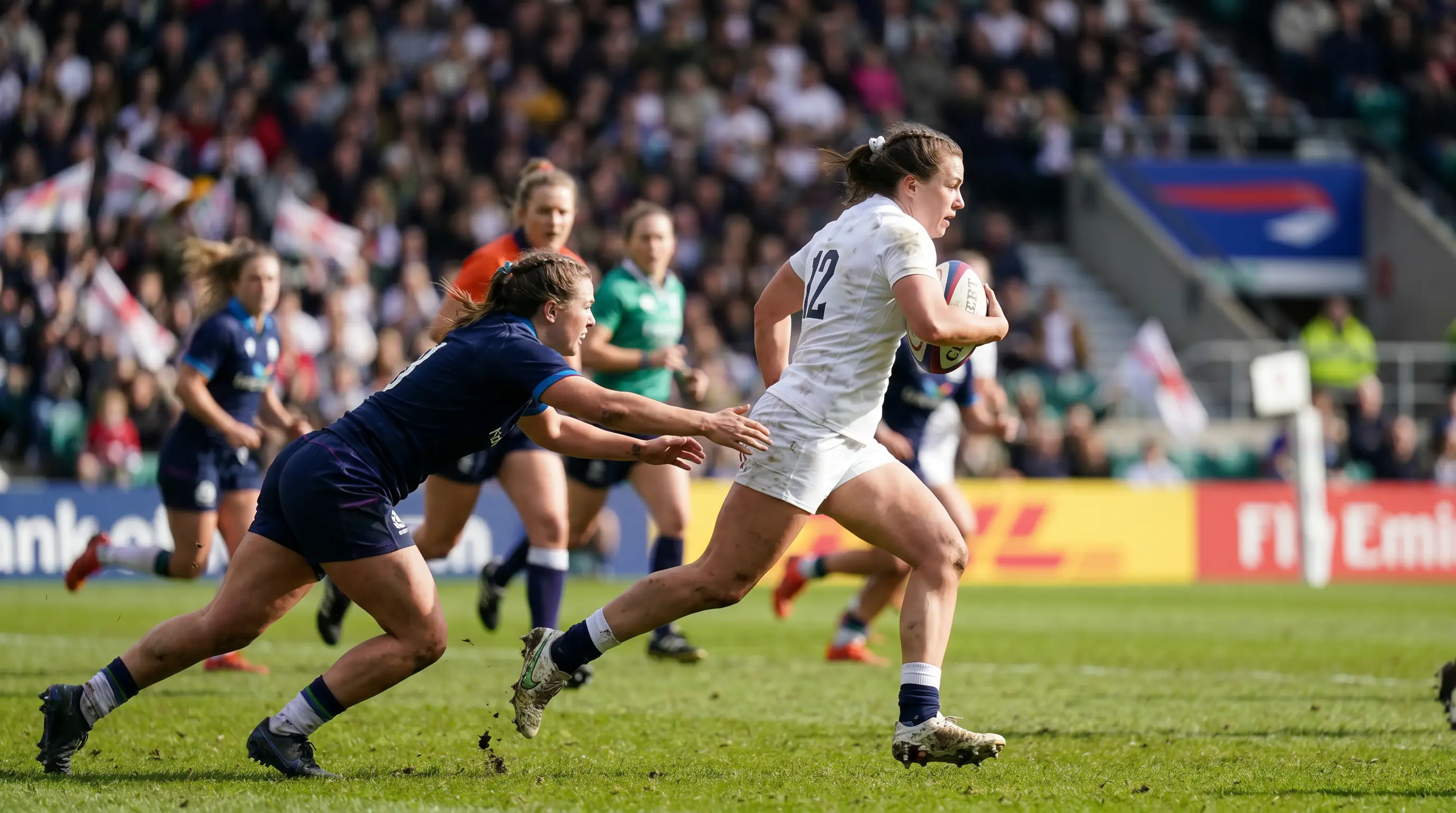
I have incorporated women's internationals into my regular betting rotation since late 2024, and the results have been positive precisely because the market is still immature. The books are catching up, but they are not there yet. That window will not stay open indefinitely.
Responsible Gambling: The Infrastructure That Keeps the Game Sustainable
A few years into my betting career, a friend — a sharp football punter with a decade of experience — told me he had self-excluded from every platform he used. The losses had not been catastrophic in financial terms, but the compulsive checking of live scores, the inability to watch a match without a stake riding on it, the arguments with his partner about time spent on betting apps — it had eroded the parts of his life that actually mattered. That conversation changed how I think about gambling as an industry, not just as a personal pursuit.
The UK data paints a picture that demands attention. The NHS recorded a 34% increase in referrals for gambling disorder between 2019 and 2024, and the estimated annual cost of gambling-related harm to the health service is approximately GBP 1.2 billion. Zoë Osmond, the CEO of GambleAware, has warned that the addictive potential of gambling carries severe consequences for finances, relationships, and personal stability, and that while rising treatment uptake is welcome, it also signals a deepening public health problem. She has voiced particular concern about how heavily normalised gambling has become for younger demographics across Great Britain.
The rate at which people are seeking help has improved — 30% of adults experiencing gambling problems accessed treatment or support in 2024, nearly double the 17% figure from 2020 — but that still means 70% of those in difficulty are not reaching out. An estimated 4.3 million adults in the UK are affected by someone else's gambling, a statistic that extends the harm radius far beyond the individual punter.
Every tool mentioned in this guide — the analytical frameworks, the staking models, the market analysis — exists within a context where real harm is possible. If you find that betting is causing financial stress, relationship strain, or an inability to stop when you planned to, the responsible step is to use the self-exclusion and deposit-limit tools available on every UKGC-licensed platform. GambleAware (0808 8020 133) and the National Gambling Helpline provide free, confidential support. The mandatory gambling levy, now collecting approximately GBP 100 million annually, funds treatment and prevention services designed specifically for this purpose.
I build deposit limits into my accounts at the start of every season — not because I have experienced a crisis, but because pre-commitment removes the temptation to override discipline during a losing run. Reality-check alerts (pop-ups showing how long you have been logged in and how much you have wagered) are slightly annoying by design. Use them. The minor inconvenience is vastly preferable to the alternative.

UK Gambling Regulation: What Every Punter Should Know
The regulatory landscape in UK gambling has shifted more in the past three years than in the previous fifteen. Understanding the current framework is not optional — it directly affects what you can bet, how much, and on which platforms.
Key Regulatory Developments
The Betting and Gaming Council (BGC), representing approximately 90% of licensed UK operators, released the 7th edition of its Code Handbook in March 2025. Among its provisions: at least 20% of gambling advertisements must include safer gambling messaging. The mandatory gambling levy, a landmark policy shift, requires operators to contribute approximately GBP 100 million annually toward harm prevention, treatment, and research — a significant escalation from the voluntary system it replaced.
The regulatory trajectory points clearly in one direction: tighter controls, greater transparency, and increased operator accountability. The front-of-shirt gambling sponsorship ban, set to take effect from the 2026/27 season in the Premier League, has already reshaped the football-gambling relationship, and pressure on rugby to follow is building. During the 2023/24 season, 11 of 13 Gallagher Premiership clubs carried a gambling sponsor, and 65% of rugby broadcasts contained visible gambling branding — figures that make rugby a likely target for similar restrictions in coming years.
For the punter, these regulatory shifts mean two things. First, affordability checks — where operators verify that your betting activity is proportionate to your financial situation — are becoming more rigorous and may occasionally delay withdrawals or require documentation. Second, promotional offers are being scrutinised more closely, and the extravagant sign-up bonuses of five years ago have largely been replaced by more modest, terms-heavy alternatives. Neither of these changes is inherently negative; they are the infrastructure of a market attempting to balance commercial freedom with public health responsibility.
Frequently Asked Questions About Rugby Betting in the UK
How do I place a rugby bet in the UK?
You need an account with a UK Gambling Commission-licensed operator. Registration typically requires proof of identity (passport or driving licence) and proof of address. Once verified, deposit funds, navigate to the rugby section, select your match and market, enter your stake, and confirm the bet. The entire process takes a few minutes on a first visit and seconds once your account is active.
Stake — the amount of money you wager on a single bet. Your potential return is calculated by multiplying the stake by the odds.
What are the most popular rugby betting markets?
Match result (picking the winner), handicap betting (backing a team to win or lose by a specified margin), and totals (over/under on combined match points) account for the bulk of rugby wagering volume in the UK. Try-scorer markets — first try scorer and anytime try scorer — are popular for individual-match entertainment, while outright tournament winner markets attract longer-term positions, especially during the Six Nations and Rugby World Cup cycles.
How does handicap betting work in rugby?
The bookmaker assigns a points advantage (positive handicap) to the perceived weaker team and a points deficit (negative handicap) to the favourite. If you back a team at -7.5, they must win by 8 or more points for the bet to pay out. If you back the underdog at +7.5, they can lose by up to 7 points and your bet still wins. The half-point eliminates the possibility of a push (tied result on the handicap).
Push — a result where the final margin exactly matches the handicap line (only possible with whole-number handicaps), causing the bet to be voided and the stake returned.
What is the difference between rugby union and rugby league betting?
Union features 15 players, a 5-point try, contested scrums, and complex set pieces that make forward dominance a significant betting factor. League uses 13 players, a 4-point try, play-the-ball restarts, and a faster, more structured attacking rhythm. Draws are extremely rare in league (under 1% of matches) but occur in 2-3% of union fixtures. These structural differences affect handicap lines, totals, and in-play dynamics. Union matches tend to be more predictable for handicap betting; league carries greater scoring variance.
How do fractional and decimal rugby odds work?
Fractional odds (e.g., 5/2) show profit relative to stake: a GBP 10 bet at 5/2 returns GBP 25 profit plus your GBP 10 stake. Decimal odds (e.g., 3.50) represent total return including stake: GBP 10 at 3.50 returns GBP 35 total. The two formats express exactly the same probability; the decimal format is increasingly standard on UK betting platforms because it simplifies comparison and calculation, particularly for accumulators.
Implied probability — the percentage chance of an outcome as suggested by the odds. Calculated as 1 divided by the decimal odds, multiplied by 100. Decimal odds of 2.00 imply a 50% probability.
Is online rugby betting legal in the UK?
Online sports betting, including rugby, is legal in the UK when conducted through an operator holding a valid licence from the UK Gambling Commission. The Gambling Act 2005 provides the legal framework, and all licensed operators are subject to regulatory oversight covering fairness, consumer protection, anti-money-laundering, and responsible gambling requirements. Betting with unlicensed offshore operators is not protected by UK consumer law and carries significant risk.
GGY (Gross Gambling Yield) — the total amount retained by operators after paying out winnings. It is the primary metric used by the Gambling Commission to measure industry size and is distinct from total wagering turnover.
What is the best tournament for rugby betting?
The Six Nations offers the strongest combination of market depth, data availability, and betting value for UK punters. Fifteen matches across five rounds, massive television audiences, and a well-documented history of scoring patterns make it the most analytically tractable tournament. The Rugby World Cup provides the deepest outright markets and the longest-duration positions but occurs only every four years. For consistent week-to-week wagering, the English Premiership and URC seasons offer the highest volume of fixtures and — because they attract less public attention — often the softest lines.
