
 Available in US
Content

A free bet is never free. I know that sounds cynical, but after a decade of dissecting promotional offers across the UK betting market, I have never encountered one where the operator did not engineer a mathematical advantage in their favour. That does not mean free bets are worthless — it means you need to understand the mechanics before deciding whether an offer is genuinely useful or just clever marketing.
The scale of promotional spending is tied to the broader market. The combined gross gambling yield for Remote Casino, Betting and Bingo reached GBP 7.8 billion for the year ending March 2025, a 13.1% increase year on year. Operators reinvest a portion of that yield into promotional incentives designed to acquire and retain customers, and rugby — particularly around marquee events — gets a meaningful share of that budget.
The Main Types of Rugby Betting Offers
Walk into any conversation about betting promotions and you will hear a dozen terms thrown around as if they are interchangeable. They are not. Each type of offer carries different conditions, different value, and different risk.

The matched deposit free bet is the most common structure for new customers. You deposit a set amount — say, GBP 10 — place a qualifying bet, and the operator credits your account with a free bet of equal value. The qualifying bet almost always needs to be placed at minimum odds, typically 1/2 or higher, which prevents you from parking it on an overwhelming favourite with no real risk. Free bet stakes are not returned with winnings, which is the detail most people overlook. If you use a GBP 10 free bet on a 5/1 shot and it wins, you receive GBP 50 in profit, not GBP 60.
No-deposit free bets are rarer and carry tighter restrictions. An operator gives you a small free bet — often GBP 5 — without requiring any deposit. The catch lives in the wagering requirements, which can demand you turn over the winnings three, five, or even ten times before withdrawal. A GBP 5 no-deposit free bet with a 5x wagering requirement means you need to place GBP 25 in additional bets before cashing out.
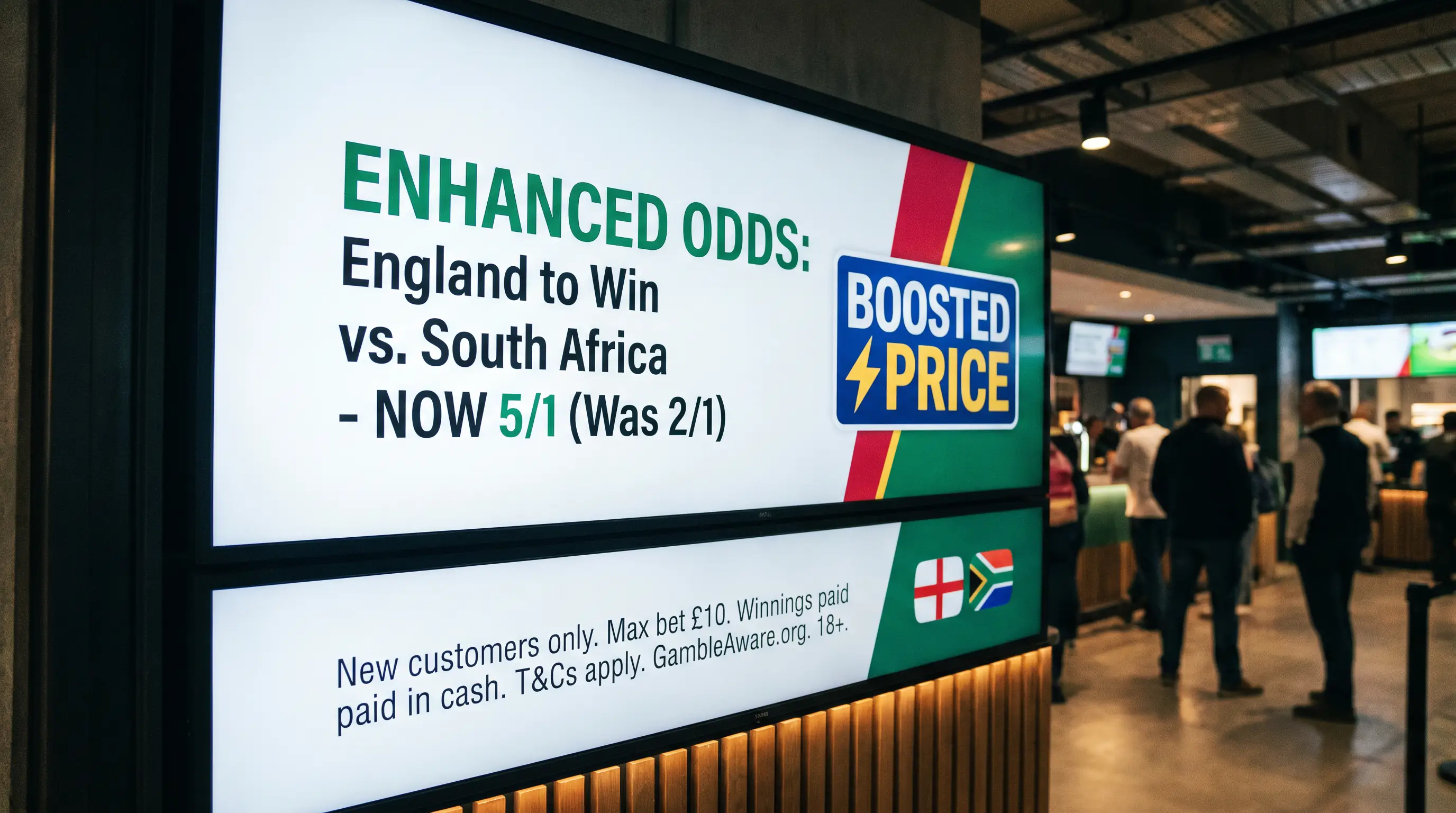
Enhanced odds promotions inflate the price on a specific outcome — a Six Nations winner at 10/1 instead of the market price of 5/2, for example. These almost always cap the maximum stake and pay the enhancement in free bets rather than cash. Read the small print before the big number excites you.
Decoding the Terms and Conditions
I once calculated that the average promotional terms page for a UK bookmaker runs to about 2,500 words. That is longer than this entire article. Most people never read past the first paragraph, which is precisely the point — the conditions that reduce the offer’s value are buried deep.

Wagering requirements are the central mechanism. A 3x wagering requirement on a GBP 20 free bet means you must place GBP 60 in bets before any winnings become withdrawable. Each of those turnover bets has the normal house edge applied, so you are effectively paying a tax on the promotion. The regulatory framework around gambling sponsorship in the UK has tightened, and the BGC’s Code Handbook — now in its seventh edition — requires that 20% of gambling advertisements carry safer gambling messaging, but the complexity of promotional terms remains an area where consumers need to protect themselves.
Minimum odds restrictions prevent you from using free bets on near-certainties. A typical threshold is 1/2 (1.50 in decimal), which forces you into markets with genuine uncertainty. Time limits matter too — most free bets expire within seven days, and some within 72 hours. I have lost count of the offers I have let lapse because no suitable rugby fixture fell within the expiry window. Market restrictions are less common but do exist: some offers exclude specific bet types like accumulators or system bets.
When Free Bets Add Genuine Value
Promotional offers are most useful when they align with bets you would have placed anyway. That sounds obvious, but the psychology of “free money” pushes people into markets they would never normally touch. I have watched friends use a free bet on an obscure prop market because they felt obligated to spend it, when their normal approach is strict match-winner betting.
The optimal use of a free bet — and I have modelled this across thousands of hypothetical scenarios — is on a selection at medium to long odds, typically between 3/1 and 8/1. Because the stake is not returned, the expected value of a free bet increases with the odds. A GBP 10 free bet on a 1/1 shot returns GBP 10 profit if it wins; the same free bet on a 6/1 shot returns GBP 60. The probability of winning is lower, but the mathematical expected return from the free bet itself is higher. Betting and gaming duties brought in GBP 1,786 million in the first five months of the 2025/26 fiscal year alone — operators are profitable enough that the occasional promotional outlay at longer odds barely dents their yield.

Tournament periods are the best windows for rugby free bets. Operators increase promotional spending around the Six Nations, autumn internationals, and World Cup cycles. The volume of available offers rises, the qualifying conditions sometimes soften, and you have a concentrated schedule of fixtures to use the bets on before they expire.
Pitfalls That Erode the Value
The biggest trap is treating promotional credit as house money. Behavioural research consistently shows that people take greater risks with perceived windfalls than with their own deposits. A GBP 20 free bet feels like a gift, so the temptation is to blow it on a ten-leg accumulator with astronomical odds. The expected return on that bet is effectively zero.

Stacking multiple offers from different operators seems clever in theory but often leads to poor record-keeping and forgotten expiry dates. I maintain a simple spreadsheet logging every active promotion: the operator, the offer value, the wagering requirement, and the expiry date. That fifteen-minute habit has saved me from letting hundreds of pounds in promotional value lapse unnoticed over the years.
Withdrawal restrictions catch people too. Some operators require you to wager your deposited funds before the free bet becomes available, effectively forcing you to put your own money at risk as a precondition. Others impose maximum withdrawal limits on winnings derived from free bets — you might win GBP 200 from a free bet but only be allowed to withdraw GBP 50. These conditions are legal, disclosed in the terms, and entirely designed to reduce the operator’s promotional liability. Read every word before you opt in.
Can I use free bets on rugby accumulator markets?
It depends on the operator and the specific promotion. Some free bets are restricted to single bets only, while others allow accumulator use. Always check the terms for market restrictions before attempting to place an acca with promotional credit, as violations can void the bet entirely.
What do wagering requirements mean on rugby free-bet offers?
Wagering requirements specify how many times you must bet through the free bet value or winnings before you can withdraw cash. A 3x requirement on a GBP 10 free bet means placing GBP 30 in additional qualifying bets. Each turnover bet is subject to the normal house edge, reducing the overall value of the promotion.
