
 Available in US
Content
- The Licensing Check You Should Never Skip
- Market Depth: Why More Options Mean Better Outcomes
- Odds Competitiveness: Fractions of a Point Add Up Over Hundreds of Bets
- Live Betting and Cash-Out: Features That Earn Their Place
- The Mobile Experience: Where Most Rugby Bets Are Placed Now
- Promotions Under the Microscope: What the Small Print Reveals
- Responsible Gambling Tools: The Feature Set That Actually Matters Most
- A Practical Framework for Making Your Choice
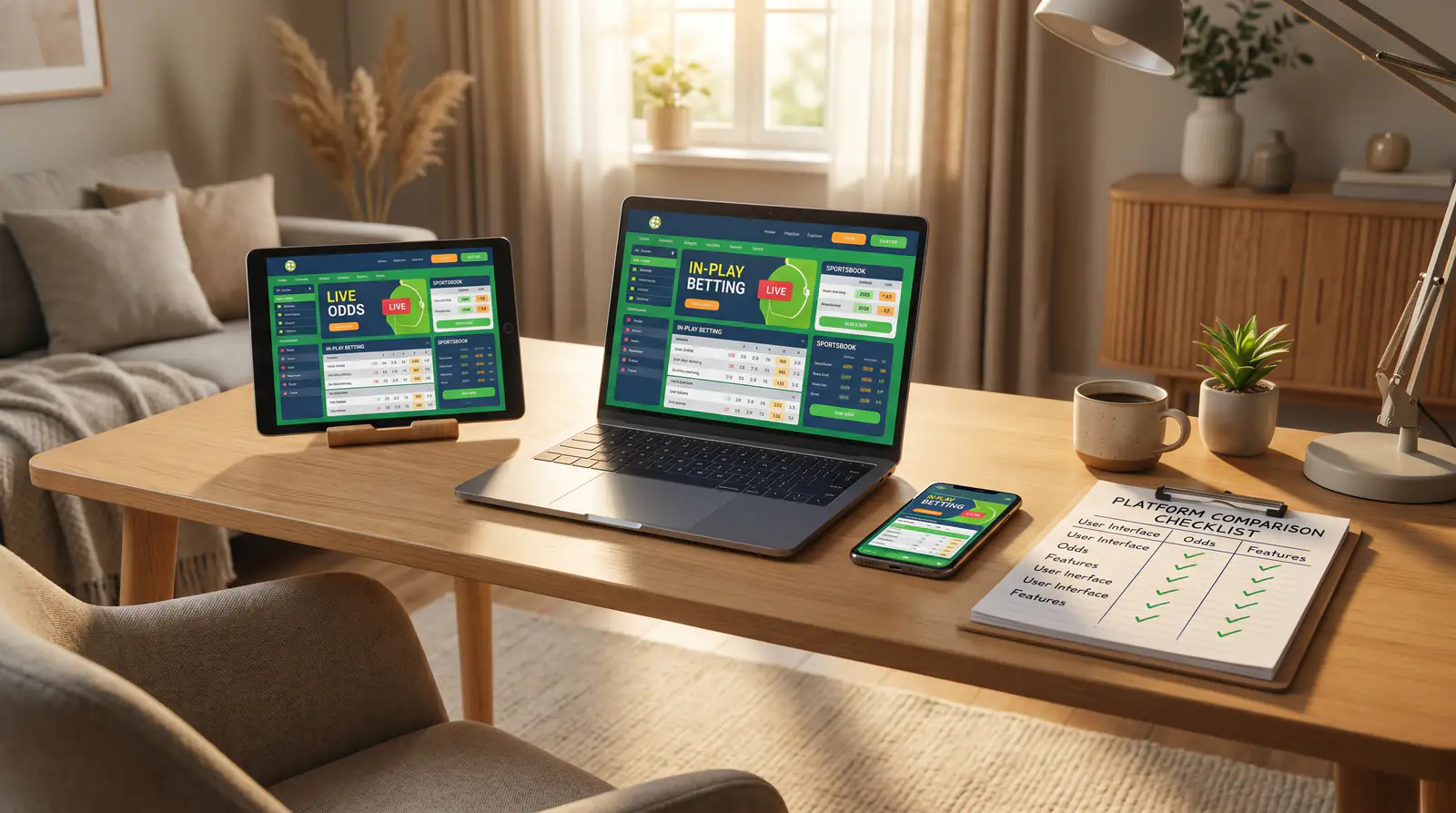
Three years ago, I was using two bookmakers. Today I use five, and I would use more if the administrative overhead were not a nuisance. That shift was not driven by chasing bonuses or sign-up offers — it was driven by a simple realisation: no single betting site offers the best odds, the deepest markets, and the most useful features across every rugby fixture. Choosing a platform is not a one-time decision. It is an ongoing assessment of which tools fit your betting approach at any given moment.
The UK has over 8,148 licensed gambling premises, including 5,669 betting shops, and the online landscape is just as crowded. The number of operators competing for your money is genuinely overwhelming if you approach it without a framework. Most “best sites” articles in this space are thinly disguised affiliate lists — they rank bookmakers by commission rate rather than by any metric that matters to the punter. This is not one of those articles. I am not here to tell you which site to use. I am here to give you the criteria for evaluating them yourself.
What follows is a structured assessment framework — the same one I apply when deciding whether to open a new account or close an existing one. Every criterion is weighted towards what actually affects your long-term results as a rugby bettor, not towards marketing gloss.
The Licensing Check You Should Never Skip
Chris Fawcett, founder of the industry analysis platform Sharp Betting, has pointed out that under recent Gambling Commission leadership, online betting turnover has dropped by approximately 30% in real terms, illegal betting has reached 9%, and operators have faced record fines alongside what he describes as an affordability checks shambles. Whether you agree with his assessment or not, it underlines something important: the regulatory environment in UK gambling is active, complex, and directly affects the platforms you use.
The first criterion in any evaluation is non-negotiable: does the operator hold a valid licence from the UK Gambling Commission? This is not a formality. A UKGC licence means the operator is subject to specific requirements around fair play, data protection, anti-money-laundering checks, and responsible gambling provisions. Operators without a UKGC licence are not authorised to offer gambling services to UK residents, and using them exposes you to risks that no potential saving on odds justifies.
Checking a licence takes thirty seconds. The Gambling Commission’s public register lets you search by operator name and verify their licence number, status, and the activities they are authorised to provide. If the licence is not current, walk away. If the operator is not on the register at all, do not even start the conversation. I check the register annually for every platform I use, because licence status can change — operators can be suspended or have conditions attached to their licence that affect the services they offer.

Beyond the binary question of “licensed or not,” the Gambling Commission’s enforcement history with a specific operator can tell you something about their reliability. Operators that have received regulatory sanctions — particularly for failings in customer protection or responsible gambling — may still hold a valid licence, but their track record warrants caution. The information is publicly available in the Commission’s enforcement decisions archive.
Market Depth: Why More Options Mean Better Outcomes
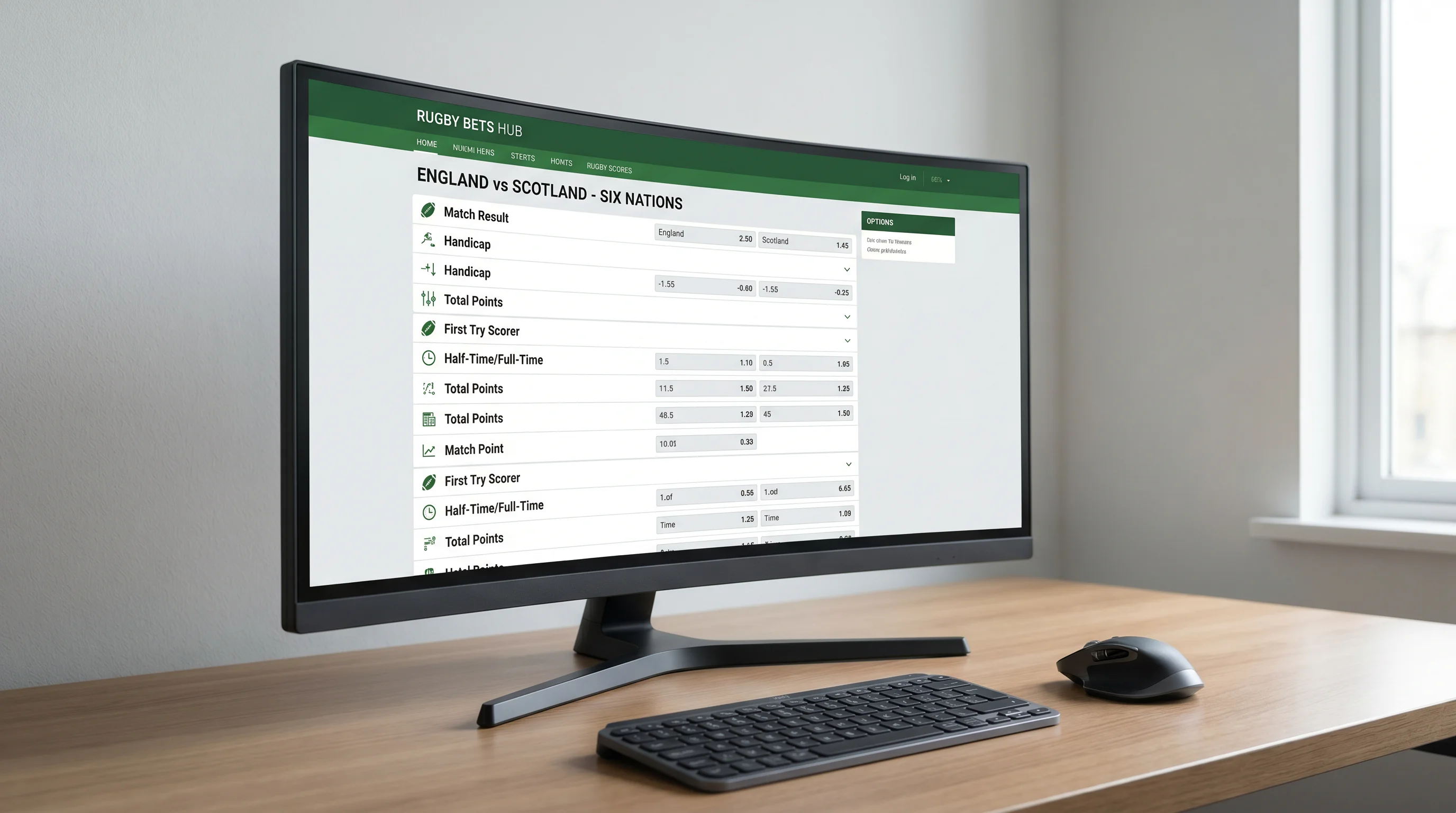
I keep a running tally of how many markets each of my active bookmakers offers for a standard Premiership match. The range is wider than you might expect — some operators list 40 or fewer, while others push past 100 markets for the same fixture. That difference matters. A site with 40 markets might cover match result, handicap, totals, and a couple of try scorer options. A site with 100-plus markets will also offer half-time result, half-time handicap, team totals, individual team try counts, player props, and various combination bets.
Market depth is particularly important if you bet on anything beyond the three core markets. The remote casino, betting, and bingo sector generated £2.12 billion in GGY during Q4 2025 alone, and operators are competing intensely for that revenue by expanding their market offerings. For rugby punters, this competition translates directly into more options. But more options are only useful if the options are relevant to your betting style. If you only ever bet match result and handicap, a site with 40 well-priced markets may serve you better than one with 120 markets and wider margins.
I assess market depth by checking three fixture types: a high-profile Six Nations match, a mid-table Premiership game, and a European fixture. The differences across these three checks reveal a lot. Most operators go deep on the Six Nations, because the volume of bets justifies the cost of pricing additional markets. Fewer operators maintain that depth for domestic and European club rugby. If your betting activity is concentrated in club competition, market depth becomes a stronger differentiator between platforms.
Odds Competitiveness: Fractions of a Point Add Up Over Hundreds of Bets
Over a single bet, the difference between odds of 5/4 and 11/8 feels negligible. Over 500 bets in a season, that difference compounds into a significant impact on your bottom line. Odds competitiveness is not about finding the “best odds” for one match — it is about consistently getting better prices across your entire betting activity.
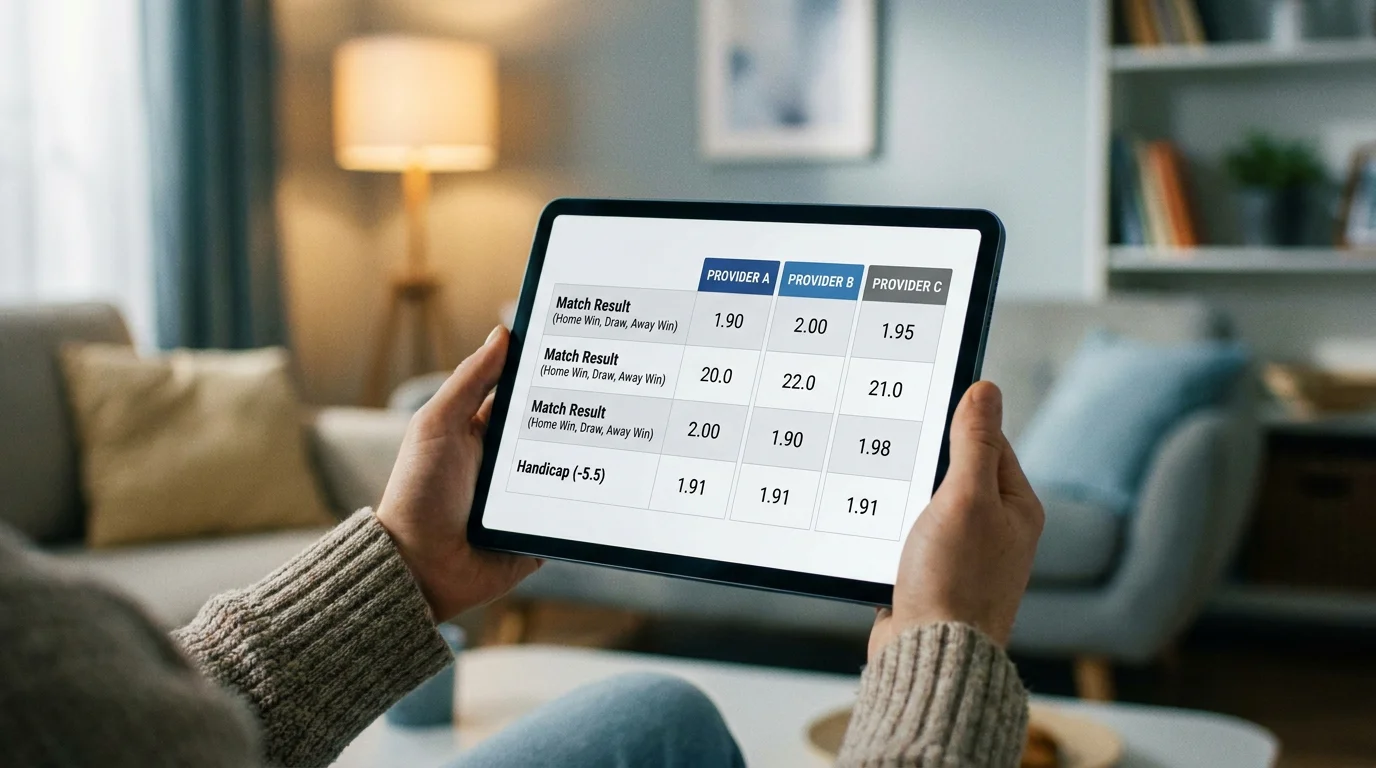
I compare odds across my active accounts for every bet I place. This takes about two minutes per bet and is the single highest-return activity in my entire process. The difference between the best and worst price on a rugby match result is typically 3-8% in terms of implied probability. On handicap and totals markets, the gap is often wider because fewer operators price these aggressively for rugby. Over a year, consistently taking the best available price across multiple accounts is worth several percentage points of ROI — the difference, for many punters, between a losing year and a profitable one.
Odds comparison tools exist for football but are less developed for rugby. I use a manual approach: I have the rugby section of each bookmaker bookmarked, and I open them side by side when I am ready to place a bet. It is not elegant, but it is effective. The alternative — accepting whatever odds your favourite site offers — is a luxury that serious bettors cannot afford.
Exchange betting platforms offer a different pricing model entirely. Instead of betting against the bookmaker, you bet against other punters, and the platform takes a commission on your winnings rather than building a margin into the odds. For popular rugby markets, exchange prices are often sharper than the best bookmaker price. The trade-off is lower liquidity: the amount of money available at a given price can be limited, especially for niche markets and lower-profile fixtures.
Live Betting and Cash-Out: Features That Earn Their Place
Every month, UK bettors place approximately 290 million online bets on real events, and a growing share of that volume occurs during the events themselves. Live betting capability is no longer a nice-to-have; it is a core feature that directly affects your ability to execute a modern rugby betting strategy.
Not all live betting implementations are equal. The key differentiators are speed of odds updates, range of in-play markets, reliability of the platform during high-traffic moments, and the quality of the cash-out feature. I have experienced every possible frustration during live rugby betting — odds freezing during a key moment, cash-out options disappearing when I need them most, markets being suspended for minutes at a time during a half. These are not minor inconveniences; they are lost opportunities.
Cash-out deserves specific attention because it is frequently misunderstood. The cash-out price is not the fair value of your bet — it is the fair value minus a margin that the bookmaker takes for offering you the option. This means that routine use of cash-out erodes your expected returns. I use cash-out sparingly, primarily in two scenarios: when new information changes my assessment of the bet’s prospects (a red card, a key injury during the match), or when the cash-out offer exceeds what I would accept as a guaranteed return given my revised view of the outcome. Using it to lock in small profits on every winning position is a habit that costs money in the long run.

The Mobile Experience: Where Most Rugby Bets Are Placed Now
I placed my last 50 rugby bets. Of those, 43 were placed on a mobile device — usually my phone, sometimes a tablet while sitting on the sofa watching the match. I am not unusual in this respect. The shift to mobile betting has been decisive, and any evaluation of a rugby betting platform that ignores the mobile experience is missing the point.
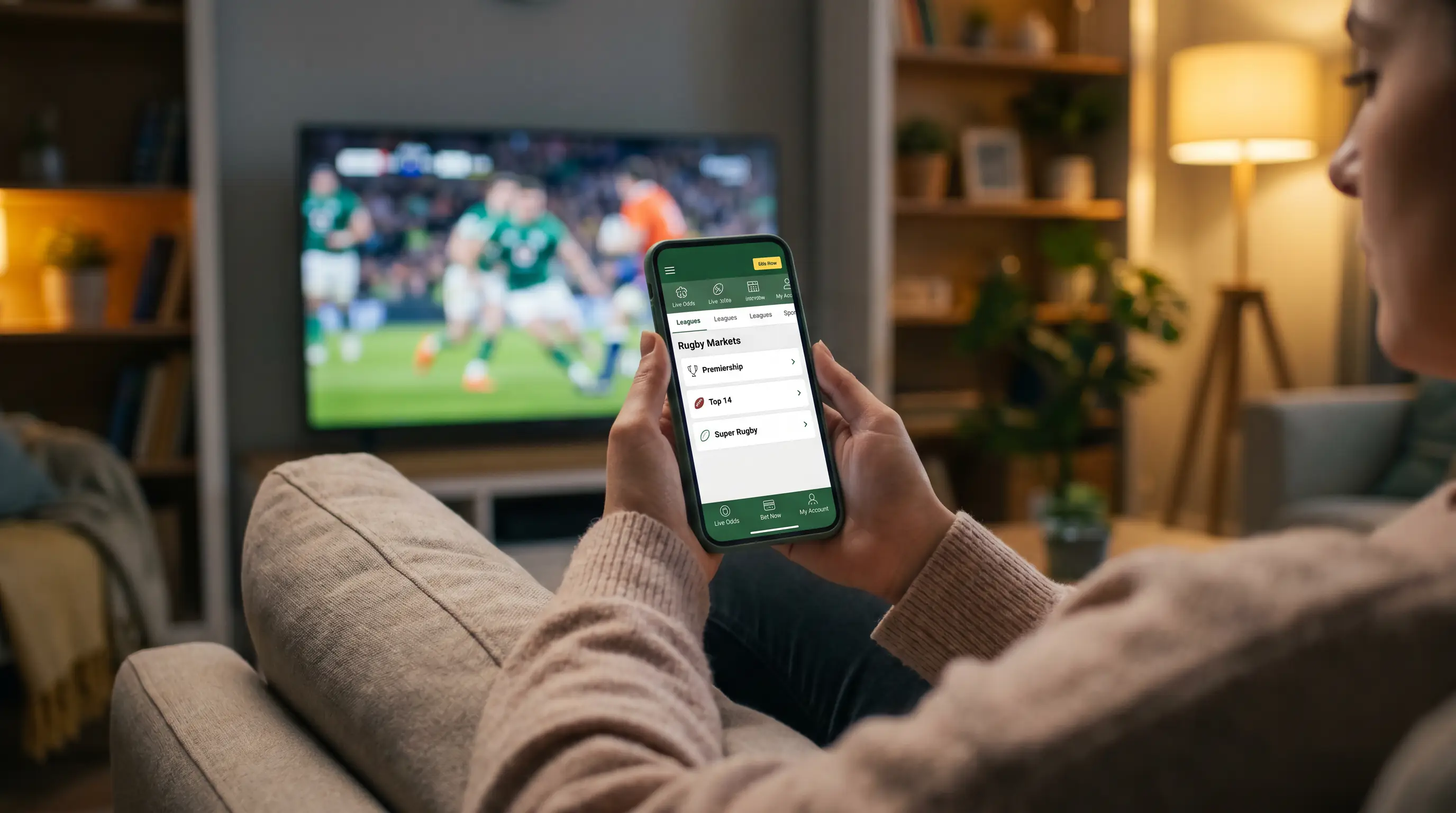
The criteria for a good mobile betting app for rugby are specific. Navigation to rugby markets should be fast — two taps from the home screen at most. The bet slip should function smoothly even when the app is handling live odds updates. Push notifications for odds changes, squad announcements, and bet settlements should be available but not intrusive. And the app should not drain your battery into the ground during an 80-minute match that you are watching and betting on simultaneously.
I test the mobile experience by placing the same type of bet — a pre-match handicap on a Premiership fixture — across all my active accounts and noting the time and number of taps required. The fastest app gets me from opening the app to placing the bet in under 15 seconds. The slowest takes nearly a minute, with extra steps for navigation and confirmation. Multiplied across a season, that difference in efficiency is meaningful, particularly for live bets where seconds matter.
Promotions Under the Microscope: What the Small Print Reveals
The Betting and Gaming Council represents roughly 90% of licensed UK operators, and its Code Handbook — now in its seventh edition since March 2025 — requires that 20% of gambling advertisements contain safer gambling messaging. That regulatory pressure has reshaped how promotions are presented, but it has not eliminated them. Free bets, enhanced odds, acca insurance, and money-back specials are still a core part of the competitive landscape. The question is not whether to use them but how to evaluate them honestly.
Every promotion has terms and conditions, and those terms determine whether the offer has genuine value or is simply a mechanism to increase your betting volume. The three critical terms to check are: wagering requirements (how many times you need to turn over the bonus before withdrawing), minimum odds per selection (which limits the markets you can use the free bet on), and expiry windows (how long you have to use the offer before it vanishes). A “free” bet with a 5x wagering requirement on minimum odds of 1/2 is not free in any meaningful sense — it is a structured incentive to bet more.
I evaluate promotions by calculating their expected value. A genuine free bet with no wagering requirement on a market where I would have bet anyway is worth approximately 70% of its face value, because you do not receive the stake back on a free bet win. A matched deposit bonus with a 3x wagering requirement at minimum odds of 4/5 is worth considerably less, because you need to place bets you might not otherwise make to unlock the bonus. I take promotions that align with bets I was already planning. I ignore promotions that require me to change my betting behaviour to qualify.
Responsible Gambling Tools: The Feature Set That Actually Matters Most
I include responsible gambling tools as a criterion in platform evaluation not because it makes for a good disclaimer paragraph but because the quality of those tools directly affects your ability to bet sustainably. This is a practical consideration, not a moral one — though the moral dimension is real too.
The numbers are sobering. In 2024, 30% of adults experiencing gambling problems sought help — nearly double the 17% who did so in 2020. Approximately 4.3 million adults in the UK are affected by someone else’s gambling. The mandatory gambling levy, introduced to fund harm prevention, is expected to collect around £100 million annually. These figures are not abstract. They describe an environment where betting without guardrails carries genuine risk, and the tools that operators provide are your first line of defence.
The responsible gambling features I assess on every platform are: deposit limits (daily, weekly, monthly), loss limits, session time limits, reality checks (periodic pop-ups that tell you how long you have been logged in and how much you have wagered), cooling-off periods, and self-exclusion options. A good platform makes these features easy to find and easy to activate — ideally accessible from the account settings in two taps, not buried in a sub-menu behind three layers of navigation.
I use deposit limits on every account I hold. My weekly deposit limit is set to a fixed percentage of my overall bankroll, and I adjust it at the start of each month based on my current position. This is not a restriction on my freedom — it is a structural safeguard that prevents me from making impulsive decisions during a losing streak. The platforms that make it easiest to set and adjust these limits are the ones that earn my long-term loyalty, because they demonstrate that their product is designed for sustained use rather than short-term extraction.

A Practical Framework for Making Your Choice
When I evaluate a new platform or reassess an existing one, I run it through a weighted checklist. Licensing is pass-fail — no licence, no account. The remaining criteria are scored on a scale, with odds competitiveness and market depth carrying the heaviest weight because they have the most direct impact on long-term profitability.
My weighting, developed through trial and error over the years, looks roughly like this: odds competitiveness and market depth together account for about 50% of the decision. Live betting quality and mobile experience account for about 25%. Responsible gambling tools account for about 15%. Promotions account for the remaining 10%. Your weighting will differ based on your betting style — a punter who bets exclusively pre-match on match result will weight mobile experience and live features lower than I do, while a punter who relies heavily on promotions for their edge will weight that criterion higher.
The practical outcome of this framework is that I maintain accounts with multiple operators. No single platform scores highest on every criterion. One might have the best odds on Six Nations handicaps, another might offer the deepest prop markets for Premiership fixtures, a third might have the best live betting interface. Spreading your activity across multiple accounts is more work than using one — you need to manage deposits, track balances, and keep records across platforms — but the cumulative benefit to your bottom line is substantial.
Review your platform selection at least twice a year: once before the Six Nations and once before the domestic season kicks into gear. Operators change their pricing models, update their apps, and adjust their market coverage. A site that was the best option 18 months ago may have been overtaken by a competitor. The platform market is dynamic, and your approach to it should be too.
How many rugby betting markets should a good UK site offer?
For a high-profile international match such as a Six Nations fixture, a strong platform will offer 80 to 120 or more individual markets, covering match result, handicap, totals, try scorers, half-time results, team totals, and player props. For a standard Premiership match, 40 to 80 markets is a reasonable benchmark. If a site consistently offers fewer than 40 markets on domestic fixtures, its rugby coverage is below the standard set by the leading operators.
What does a valid Gambling Commission licence number look like?
A UK Gambling Commission licence number is a numeric code assigned to each licensed operator. You can verify it by searching the operator’s name on the Gambling Commission’s public register at gamblingcommission.gov.uk. The register confirms whether the licence is active, lists the specific activities the operator is authorised to provide, and shows any regulatory actions taken against them. If an operator cannot produce a verifiable licence number, they are not legally authorised to offer gambling services in the UK.
Do all major UK bookmakers cover both rugby union and rugby league?
Most major UK-licensed bookmakers cover both codes, but the depth of coverage varies. Rugby union — particularly the Six Nations, Premiership, and international fixtures — receives the most comprehensive market treatment across nearly all platforms. Rugby league, including Super League and international fixtures, is covered by most operators but with fewer markets per match and occasionally wider margins. If rugby league is your primary focus, check the specific coverage on each platform rather than assuming equivalence with union.
How important is cash-out availability for rugby bets?
Cash-out is a useful risk management tool but not an essential one. It allows you to settle a bet before the event finishes, either locking in a profit or limiting a loss. The cash-out price always includes a margin in the operator’s favour, so habitual use will reduce your long-term returns. It is most valuable in specific situations — when new information materially changes the outlook for your bet — rather than as a routine part of your betting process.
